
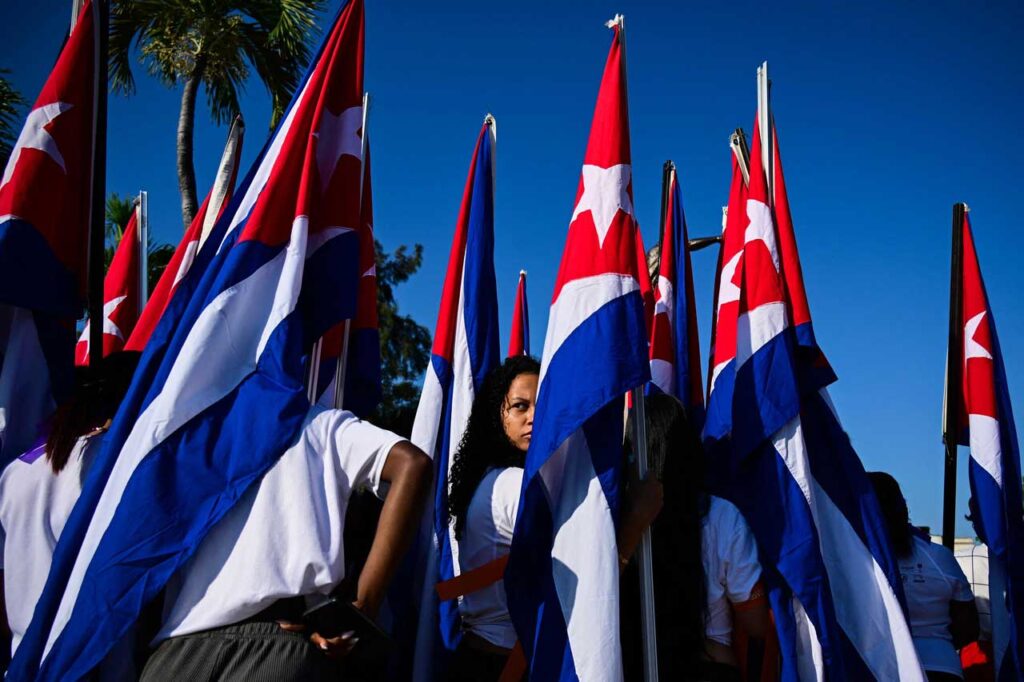
Cuban Women Lead Historic March Against US Blockade Crisis
In a powerful display of resilience and unity, thousands of Cuban women took to the streets of Havana in a historic march, directing global attention to the devastating human impact of the decades-long US economic embargo. Organized by the Federation of Cuban Women (FMC), this unprecedented mobilization highlighted how the blockade exacerbates daily hardships, particularly for women and families, transforming an abstract political issue into a vivid human story.
The Human Face of an Economic War
For over six decades, the US embargo has shaped life in Cuba, but recent years have seen conditions deteriorate sharply. The march, one of the largest of its kind, served as a poignant reminder that sanctions are not just government policy—they are felt in homes, hospitals, and schools. The protest underscored a central, often overlooked truth: economic warfare disproportionately impacts women, who bear the brunt of managing household shortages, caring for the sick without adequate medicine, and navigating an economy crippled by restrictions.
Marchers, dressed in white and purple, carried signs and chanted slogans calling for an end to the “blockade,” a term Cubans use to describe the comprehensive US sanctions. Their message was clear: the policy is a primary driver of the island’s profound economic crisis, characterized by severe shortages of food, medicine, and fuel, alongside rampant inflation.
Why Women Are on the Front Lines
The Federation of Cuban Women, a formidable organization with millions of members, framed the event not just as a protest but as a testimony to survival. Speakers and participants detailed the daily struggles that define life under the blockade:
- Healthcare Catastrophe: A critical lack of medicines, medical equipment, and even basic supplies like anesthesia forces doctors and families into impossible choices.
- Food Insecurity: Soaring prices and scarce availability of essential goods make putting meals on the table a daily challenge for mothers and caregivers.
- Energy Poverty: Blackouts lasting up to 18 hours a day disrupt work, study, and home life, with women often tasked to manage the added domestic burden.
This mobilization placed gender at the center of the anti-blockade discourse, arguing that the policy is inherently a women’s issue due to its direct attack on social welfare and family stability.
A Crisis Within a Crisis: Pandemic and Global Inflation
The march occurred against a backdrop of compounded crises. The COVID-19 pandemic strained Cuba’s resource-starved healthcare system to its limits, while global inflation and the war in Ukraine further tightened the economic noose. The US embargo prohibits most trade and financial transactions, making it extraordinarily difficult and expensive for Cuba to import necessities, even from third-party countries.
The Biden administration’s decision to keep the stringent sanctions in place, and even add new ones, has dashed hopes for a thaw in relations. This continuity of policy, despite international condemnation, has fueled desperation and unity among Cubans, as evidenced by the scale of the women’s march.
International Solidarity and Legal Condemnation
The Cuban women’s protest echoes a near-universal global consensus. For 30 consecutive years, the United Nations General Assembly has voted overwhelmingly to condemn the US embargo, with 187 of 193 member nations demanding its end in the latest vote. Human rights organizations like Amnesty International have repeatedly criticized the sanctions for violating international law and harming civilian populations. The march aimed to translate this diplomatic consensus into visible, grassroots pressure, leveraging the moral authority of women leading the fight for their families’ survival.
Beyond Politics: A Fight for Daily Survival
While the Cuban government officially supported the march, the grievances expressed were deeply personal and apolitical in nature. The focus was on tangible, human suffering rather than ideological rhetoric. Participants spoke of the inability to find antibiotics for sick children, the exhaustion of cooking without reliable electricity, and the heartbreak of seeing elderly relatives go without proper care.
This framing is strategic. By highlighting the humanitarian disaster, Cuban activists hope to appeal to the conscience of the American public and policymakers, circumventing the hardened political stalemate between governments. The message is that lifting the blockade is not a concession to a government but an act of compassion for 11 million people.
The Road Ahead: Challenges and Resilience
The historic women’s march marks a significant moment in Cuba’s long struggle against the embargo, but it does not signal an immediate solution. The US political landscape remains largely hostile to normalization with Cuba’s socialist government. However, the protest has succeeded in amplifying a critical narrative on the world stage.
The resilience of Cuban women, as demonstrated in the streets of Havana, has become a powerful symbol. It showcases their role not as passive victims, but as active leaders in a national fight for dignity and the right to a life free from externally imposed scarcity. Their call for solidarity is a reminder that in any conflict, the most vulnerable pay the highest price, and their voices are essential to any conversation about peace and justice.
A Call for Compassion and Change
The image of thousands of Cuban women marching peacefully but determinedly is a potent one. It transforms complex geopolitics into a simple, urgent plea. The ongoing US blockade continues to inflict profound suffering, undermining basic human rights to health, food, and development. As the world faces interconnected crises, the march from Havana argues that collective punishment is a failed and inhumane policy. The courage of these women offers a clear path forward: empathy, dialogue, and the lifting of a blockade that has long outlived any conceivable justification, harming ordinary people for generations.

