Canadian Drilling Activity Forecast Shows Modest 2025 Recovery
After a period of significant uncertainty and contraction, a glimmer of cautious optimism is emerging for Canada’s oil and gas drilling sector. According to the latest forecast from the Canadian Association of Energy Contractors (CAOEC), the industry is poised for a slight rebound in activity next year. While not a return to boom times, this predicted uptick signals a period of stabilization and measured growth, driven by a complex interplay of market forces, policy decisions, and long-term energy demand.
This anticipated recovery is a welcome shift for an industry that has faced formidable headwinds, from volatile commodity prices to intense global competition and evolving climate policies. The forecast provides a crucial roadmap for service companies, investors, and regional economies heavily reliant on the energy sector.
Breaking Down the 2025 Drilling Forecast
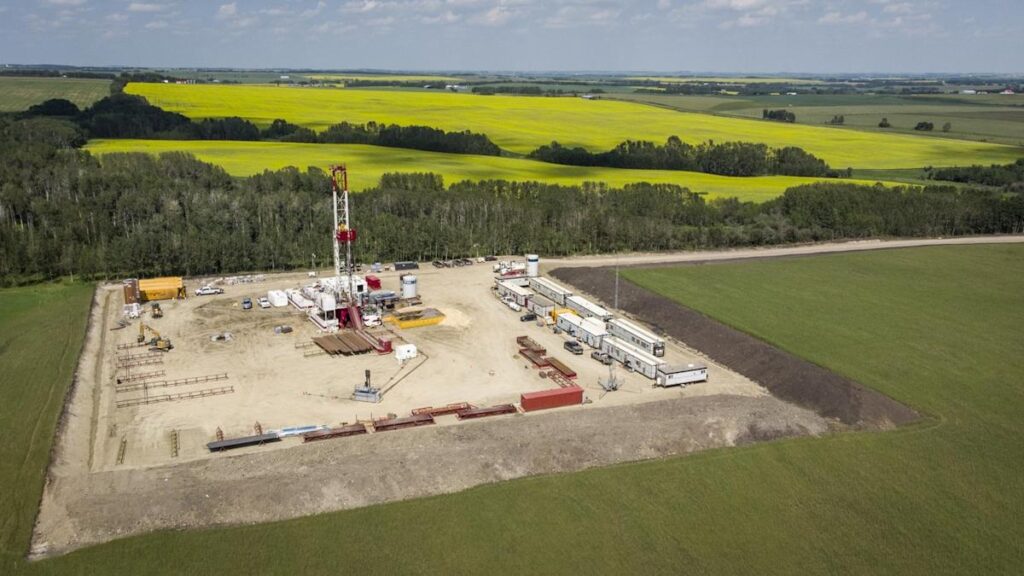
The CAOEC’s projection offers a data-driven snapshot of what the next year may hold. The central prediction is for 6,229 wells to be drilled across Canada in 2025. This figure represents a modest but meaningful increase of approximately 175 wells compared to the anticipated total for 2024.
To fully understand this forecast, it’s essential to look at the regional breakdown, which highlights where this growth is expected to be concentrated:
Regional Hotspots: Alberta Leads, BC Sees Growth
This geographical distribution is not accidental; it reflects areas with robust infrastructure, proven resource potential, and relative economic competitiveness.
The Driving Forces Behind the Projected Uptick
Several key factors are converging to create the conditions for this cautious recovery. Industry analysts point to a combination of market fundamentals and strategic developments.
Commodity Price Stability and LNG Horizon
A period of relatively stable, though not spectacular, global oil and natural gas prices is providing the foundational confidence for companies to plan and budget for increased drilling. More impactful, however, is the long-awaited advancement of Canada’s liquefied natural gas (LNG) export capacity. The imminent completion of LNG Canada’s Phase 1 terminal in Kitimat, B.C., is a game-changer. It is creating a tangible, long-term market for Canadian natural gas, incentivizing increased drilling activity, particularly in the gas-rich Montney formation, to supply future exports.
Technological Efficiency and Cost Discipline
The industry’s painful lessons from past downturns have led to a relentless focus on efficiency. Drilling contractors and operators have become adept at doing more with less—faster drilling times, improved well completion techniques, and stringent cost control. This enhanced efficiency means that companies can achieve economic returns at lower price thresholds than before, making modest activity increases viable in the current price environment.
Persistent Challenges on the Road to Recovery
Despite the optimistic forecast, the path forward is not without significant obstacles. The CAOEC and industry leaders are quick to temper expectations, highlighting systemic issues that could dampen growth.
Economic Ripple Effects: Beyond the Rig Site
The importance of drilling activity extends far beyond the oil and gas fields. It is a primary economic engine for numerous communities and service sectors across Western Canada. An increase of nearly 200 wells translates directly into:
This multiplier effect means that the forecasted modest recovery, while subtle in national statistics, can have a profound impact on local and regional economies that have weathered several tough years.
A Measured Outlook for Canada’s Energy Future
The CAOEC’s 2025 forecast paints a picture of an industry in a state of transition, not transformation. The predicted uptick is best characterized as a stabilization and a tentative step forward rather than a dramatic surge. It reflects an industry that has adapted to a new normal of capital discipline, environmental scrutiny, and global market complexity.
The success of this recovery will hinge on several variables: sustained commodity prices, the smooth ramp-up of LNG exports, and a regulatory environment that provides clarity and consistency for investors. Furthermore, the industry’s continued progress in reducing its emissions intensity and integrating innovative technologies will be critical to maintaining its social license to operate.
In conclusion, the forecast for a slight increase in Canadian drilling activity in 2025 is a positive signal after a prolonged slump. It demonstrates the sector’s resilience and its enduring role in the national economy. However, stakeholders should view this as the beginning of a gradual, hard-earned recovery journey—one that is cautiously optimistic but fully aware of the challenges that lie ahead. The coming year will be a crucial test of whether this fragile momentum can be sustained and built upon in the evolving global energy landscape.