Canada’s GDP Boom Sparks Economic Caution and Rate Hike Fears
The latest economic data from Canada has sent a powerful, and somewhat paradoxical, signal across the nation. While a booming Gross Domestic Product (GDP) is typically a cause for celebration, the recent blowout figures have instead raised red flags among economists and policymakers. The unexpected surge in economic growth is intensifying the debate about the Bank of Canada’s next move, with fears mounting that the central bank may be forced to resume its interest rate hiking campaign sooner than anticipated.
This isn’t a simple story of economic triumph. Instead, it’s a complex narrative about an economy running hotter than desired, persistent inflationary pressures, and the difficult balancing act faced by monetary authorities. The robust GDP numbers, while highlighting underlying economic strength, are forcing a sobering reassessment of the path to price stability.
The GDP Surprise: Stronger Than Anyone Predicted
Recent Statistics Canada reports have consistently outperformed expectations. The initial estimate for January GDP showed a 0.4% month-over-month increase, far surpassing forecasts. This strength was broad-based, with notable gains in sectors like wholesale trade, transportation, and “other” services.
Perhaps more telling was the upward revision to December’s growth, solidifying the picture of an economy that entered the new year with significant momentum. This combination of factors suggests that the economic slowdown many had hoped for has been delayed, if not derailed. The resilience is partly attributed to strong population growth, which is fueling demand across housing, services, and consumer goods, but it also indicates that the cumulative effect of previous rate hikes is not cooling demand as aggressively as needed.
Why Strong Growth is Now a Problem
In a normal economic cycle, strong GDP growth is the ultimate goal. However, in the current post-pandemic environment, the context is everything. The Bank of Canada’s primary mission is to return inflation to its 2% target. To do that, it needs to slow down the economy enough to reduce demand and ease price pressures.
The concern is straightforward: an economy growing too quickly makes it nearly impossible to sustainably lower inflation. When consumer spending remains robust and businesses continue to operate at full capacity, they maintain the pricing power that keeps inflation stubbornly high. The recent GDP data implies that the “output gap”—the difference between what the economy is producing and what it can sustainably produce—may not be opening as needed. This leaves inflation vulnerable to getting stuck well above the target.
The Inflation Conundrum and the Bank of Canada’s Dilemma
The core of the issue lies in the sticky nature of inflation. While headline inflation has fallen from its peak, key measures of core inflation (which strip out volatile items like food and energy) have proven frustratingly persistent. Services inflation, in particular, remains elevated, closely tied to domestic demand and wage growth.
The strong GDP figures directly contradict the assumption that the economy is succumbing to the restrictive pressure of high interest rates. This puts the Bank of Canada in a difficult position:
- Hold Rates and Risk Credibility: If the Bank pauses while the economy accelerates, it risks signaling that it is not fully committed to its inflation target. Markets and consumers might interpret this as tolerance for higher inflation, which could become self-fulfilling through increased spending and wage demands.
- Resume Hiking and Risk Over-tightening: Raising rates again could push the economy into a more severe downturn than necessary, especially with many households already strained by higher mortgage payments. The delayed impact of monetary policy means the full effect of previous hikes is still working its way through the system.
- The “Higher for Longer” Mantra Strengthens: At a minimum, the strong data obliterates any talk of near-term rate cuts. The conversation has decisively shifted from “when will rates fall?” to “will rates need to rise again?” This extends the timeline for financial relief for borrowers.
Sectoral Strengths Feeding the Fire
A closer look at where growth is coming from reveals why the Bank of Canada is concerned. The rebound isn’t isolated.
Consumer Resilience: Despite higher costs of living, consumer spending on services has held up, supported by a tight labor market and wage growth. Spending on travel, dining out, and entertainment continues to buoy the economy.
Housing Market Stirrings: After a period of correction, there are signs of life returning to the housing market in some regions. Increased residential construction activity and a pickup in home sales contribute directly to GDP. A reinvigorated housing market could add another layer of inflationary pressure.
Government Spending: Continued public sector expenditure and investments, while important for long-term goals, add to aggregate demand in the short term, complicating the Bank’s efforts to cool the economy.
What This Means for Canadians: From Mortgages to Markets
The implications of this economic strength are immediate and personal for households and investors alike.
- Mortgage Holders and Prospective Buyers: Anyone with a variable-rate mortgage or facing renewal is now staring down the prospect of the “higher for longer” interest rate environment becoming even more protracted. The hope for a 2024 rate cut is fading quickly, and budgeting for sustained high payments is essential.
- Savers and Investors: While higher rates offer better returns on savings accounts and GICs, they also create volatility in bond and equity markets. The uncertainty around the Bank’s next move can lead to market turbulence.
- Business Planning: Businesses must navigate the uncertainty of potentially higher borrowing costs while assessing whether strong consumer demand will persist. Investment and hiring decisions become more complex.
Navigating the Path Ahead: A Cautious Outlook
Economists are now parsing every piece of incoming data with heightened scrutiny. The upcoming CPI inflation reports and jobs data will be critical in determining if the first-quarter GDP strength was a temporary surge or the start of a renewed trend.
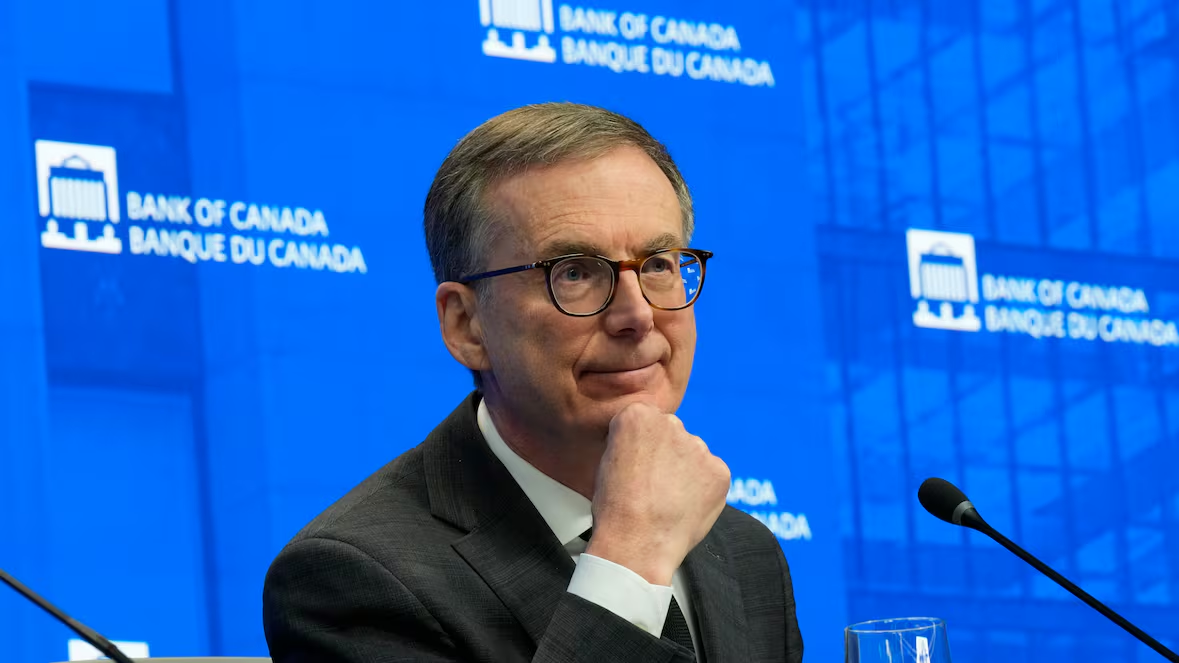
The Bank of Canada’s next interest rate announcement and Monetary Policy Report will be pivotal. Governor Tiff Macklem and his team will need to carefully communicate their assessment of this growth-inflation mix. Their language will be scrutinized for any hint of a hawkish pivot—a clear warning that further tightening is on the table.
The ultimate goal remains a “soft landing”—cooling inflation without triggering a deep recession. The recent GDP boom makes that narrow path even more challenging to navigate. It serves as a stark reminder that in the fight against inflation, sometimes too much of a good thing—economic growth—can be the biggest obstacle of all. For now, caution, not celebration, is the prevailing sentiment among those charting Canada’s economic course.