
The Hidden Struggle Behind Ellie Kildunne’s World Cup Triumph
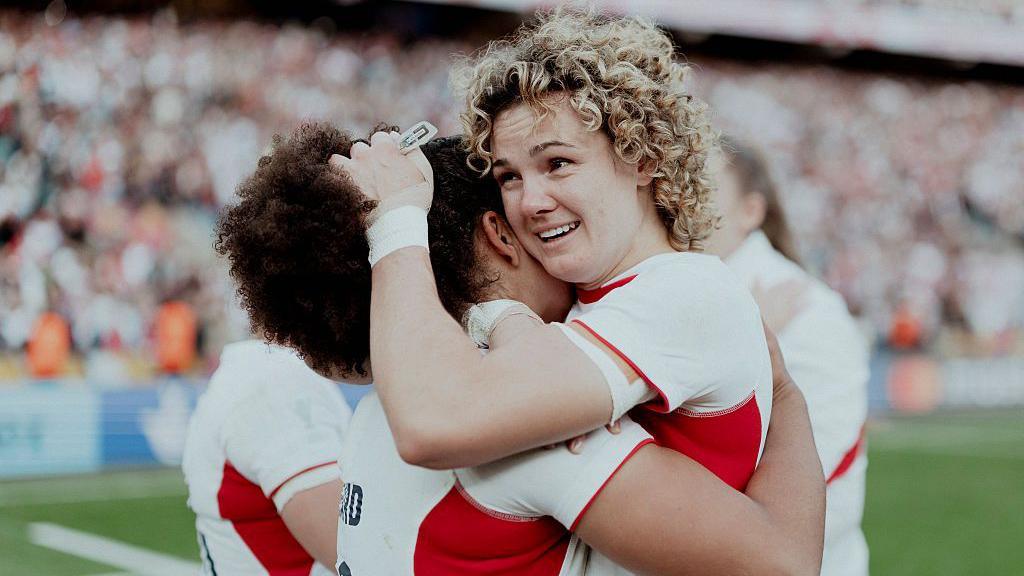
The image is iconic: Ellie Kildunne, beaming with unbridled joy, holding the Rugby World Cup aloft. For fans, it was the culmination of a tournament where she dazzled as one of the sport’s brightest stars. Yet, behind that golden moment and the try-scoring prowess lay a journey fraught with a silent, internal battle few knew about. This is the story of the resilience it took for Kildunne to reach the pinnacle, a testament to the fact that even our heroes face hidden struggles.
More Than Just a Sporting Star: The Weight of Expectation
By any metric, Ellie Kildunne’s 2021 season was extraordinary. A key figure for England, her speed and agility made headlines. To the outside world, she was living the dream, a professional athlete at the peak of her powers. However, beneath the surface, a different narrative was unfolding. The very spotlight that celebrated her became a source of immense pressure.
The constant scrutiny, the fear of making mistakes in front of thousands, and the internal drive for perfection began to take a toll. Kildunne has spoken candidly about suffering from anxiety and panic attacks during this period, a stark contrast to the confident player seen on the pitch. The expectation to consistently perform at an elite level, coupled with the normal pressures of life, created a perfect storm that threatened to undermine her talent and love for the game.
The Turning Point: Acknowledging the Struggle
The first and most crucial step in Kildunne’s journey back was recognition. Acknowledging that she was struggling was not a sign of weakness, but one of profound strength. In the high-performance, stoic environment of professional sport, admitting to mental health challenges can feel like an admission of failure. Kildunne chose a different path.
She began to open up to those closest to her—family, trusted teammates, and support staff within the England set-up. This decision to seek help and vocalize her feelings was the pivotal moment that changed her trajectory. It allowed her to access the tools and support systems necessary to manage her anxiety, transforming her approach to both sport and life.
Building a Toolkit for Resilience
Overcoming this hidden struggle wasn’t about simply “toughing it out.” Kildunne, with support, actively built a personal toolkit for mental resilience. This proactive approach was as integral to her training as any fitness drill or skills session.
Key components of this toolkit included:
- Professional Support: Engaging with sports psychologists and mental health professionals to develop coping strategies and understand her triggers.
- Mindfulness and Meditation: Incorporating practices to stay present, manage in-the-moment anxiety, and quiet the noise of expectation.
- Leaning on Her Support Network: Fostering open communication with her Red Roses teammates, creating an environment where vulnerability was accepted and supported.
- Reframing Perspective: Working to separate her self-worth from her performance on the field, understanding that a mistake in a game did not define her as a person.
This holistic work didn’t erase the anxiety, but it gave her the power to manage it, to prevent it from controlling her life and career.
Channeling the Struggle into Strength on the Field
The true measure of Kildunne’s journey is how she channeled this internal work into her external performance. The player who took the field in the World Cup was not just a faster or stronger version of her former self; she was a more complete and mentally fortified athlete.
By confronting her anxiety, she played with a newfound freedom and clarity. The fear of error was replaced by a focus on opportunity. Her electric breaks, her crucial tries, and her defensive solidity were all underpinned by a mind that had been trained for resilience as rigorously as her body had been trained for rugby. The World Cup triumph was, therefore, a victory on two fronts: a sporting conquest and a deeply personal one.
A Legacy Beyond the Trophy: Breaking the Stigma
While the World Cup winner’s medal is a tangible symbol of success, Ellie Kildunne’s most significant impact may be the legacy she is building off the pitch. By speaking openly about her experiences with anxiety and panic attacks, she has become a powerful voice in the ongoing conversation about mental health in sport.
Her story sends a vital message to aspiring athletes and fans alike:
- Mental health struggles do not discriminate; they can affect anyone, even those at the top of their game.
- Seeking help is a sign of courage, not a weakness, and is essential for long-term performance and wellbeing.
- Vulnerability and strength are not opposites; they can coexist and fuel one another.
In a world where athletes are often seen as invincible, Kildunne’s honesty provides a relatable and humanizing narrative. It helps break down the damaging stigma that still surrounds mental health, encouraging others to seek the support they need.
Conclusion: The Triumph of the Whole Self
Ellie Kildunne’s World Cup story is so much richer than statistics and silverware. It is a profound lesson in holistic excellence. Her triumph was not just about lifting a trophy, but about lifting the weight she had been carrying. It proves that the journey to the top of sport is not a linear path of physical improvement, but a complex expedition that involves the mind and heart just as much as the body.
The hidden struggle behind the triumph is what makes the achievement truly monumental. Ellie Kildunne didn’t just win a World Cup; she overcame a formidable internal opponent, emerging not only as a world champion but as a role model of resilience, authenticity, and the unwavering power of the human spirit. Her story reminds us that the greatest victories are often those we fight for within ourselves.

