
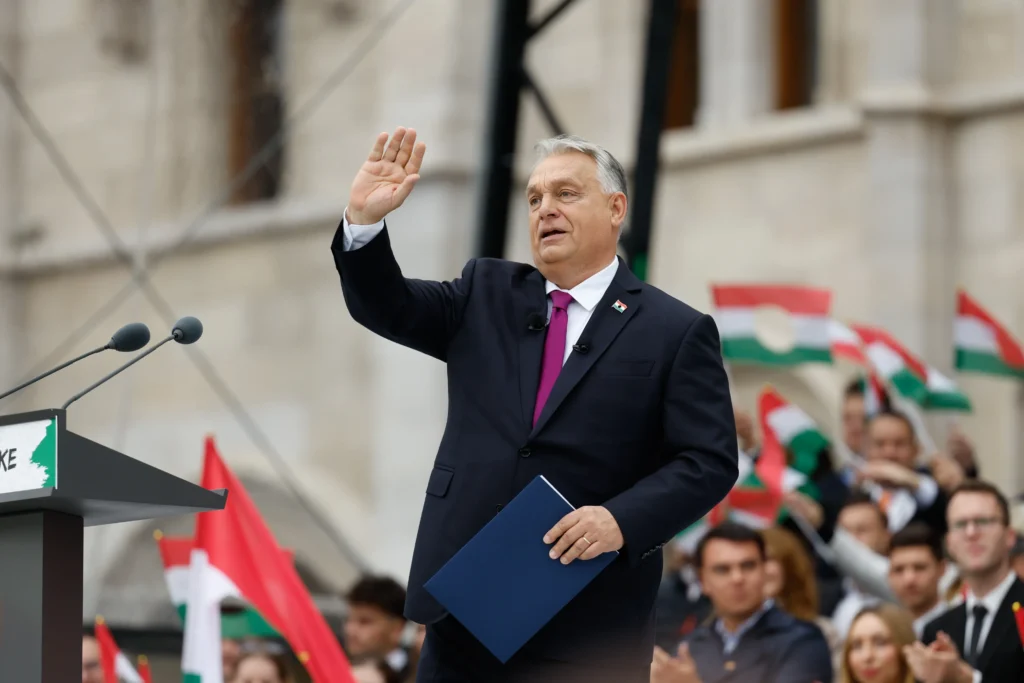
Hungary’s Election Results: A Historic Shift Away from Orbán’s Rule
For nearly a decade and a half, Hungarian politics was synonymous with one name: Viktor Orbán. His Fidesz party, through a combination of populist rhetoric, constitutional overhaul, and control of the media landscape, built what critics called an “illiberal democracy,” a formidable political machine that seemed unassailable. However, the parliamentary elections of April 2026 have delivered a seismic shock to the system, signaling a potential end to the Orbán era and a dramatic reorientation of Hungary’s place in Europe.
Preliminary results indicate that the united opposition, spearheaded by the newly formed Tisza Party led by lawyer and former Fidesz insider Péter Magyar, has achieved a narrow but workable majority. This outcome, still being finalized, represents not just a change of government but a profound rejection of the political model that has defined contemporary Hungary.
The Unraveling of a Political Dynasty
The road to this historic result was paved with years of growing discontent, even within Orbán’s own coalition. The catalyst for change emerged from within Fidesz itself. Péter Magyar, once a loyalist married to former Justice Minister Judit Varga, turned into the regime’s most potent whistleblower. His public accusations of high-level corruption and systemic rot, amplified by leaked audio recordings, cracked the veneer of invincibility Fidesz had cultivated.
Magyar’s Tisza Party became a vessel for this simmering frustration, attracting not only traditional opposition voters but also disaffected Fidesz supporters and those who had previously abstained. His message focused on:
- Restoring the Rule of Law: Promising to dismantle the patronage networks and rebuild independent institutions.
- Economic Revitalization: Addressing inflation, EU fund blockages, and corruption seen as stifling growth.
- Mending European Ties: Committing to a swift return to mainstream European Union values and cooperation.
A Campaign Defined by Contrasts
The campaign was a stark battle between two visions. Orbán ran on a familiar platform of national sovereignty, anti-immigration, and a continuation of his confrontational stance with EU “bureaucrats.” He framed the election as a choice between Hungarian stability and the chaos of a Western-backed opposition.
Magyar, conversely, offered a politics of normalization and reconciliation. He did not shy away from his past within Fidesz but used it to validate his criticisms. His campaign was less about fiery nationalism and more about pragmatic governance, anti-corruption, and a “return to Europe.” This pragmatic tone resonated with an electorate weary of constant political conflict and economic hardship exacerbated by the frozen EU funds.
The International Repercussions: A New Chapter for Europe
The ripple effects of this electoral earthquake are being felt from Brussels to Moscow. Viktor Orbán has been the EU’s most persistent internal critic, blocking or diluting collective action on aid for Ukraine and sanctions against Russia. His government was the last to maintain warm relations with the Kremlin within the EU and NATO.
A government led by Péter Magyar is expected to perform a dramatic U-turn in foreign policy. The immediate consequences are likely to include:
- Unblocking Support for Ukraine: Hungary is expected to swiftly drop its veto on EU financial and military aid packages for Ukraine, allowing for a more unified European front.
- Strengthening NATO’s Eastern Flank: A Magyar-led government will almost certainly align Hungary firmly with NATO’s strategic goals, ending Orbán’s obstructive stance.
- Releasing Frozen EU Funds: With a government committed to judicial and anti-corruption reforms, the European Commission is poised to unlock billions of euros in cohesion funds, providing a massive boost to the Hungarian economy.
This shift significantly alters the geopolitical landscape in Central Europe, removing a major point of friction within the EU and strengthening the alliance’s cohesion in the face of ongoing Russian aggression.
Challenges Ahead: Governing a Divided Nation
While the victory for Magyar’s coalition is momentous, the path forward is fraught with challenges. Orbán’s Fidesz remains a powerful force with deep roots in the media, local governments, and public institutions built over 14 years. The new majority will be slim, requiring disciplined cohesion among parties that only recently united to defeat Orbán.
The first major tests will be practical and symbolic:
- Forming a stable governing coalition and appointing a cabinet.
- Passing immediate legislation to begin the process of judicial and media reform.
- Navigating the technical process to access EU funds, which will require demonstrable actions, not just promises.
Furthermore, Magyar must govern for the nearly half of the country that still supports Fidesz and Orbán’s vision. Healing the deep political and social divisions will be a monumental task that extends far beyond any single election cycle.
The Legacy and Future of Viktor Orbán
The defeat marks an undeniable personal and political blow for Viktor Orbán, one of Europe’s longest-serving leaders. His model of illiberalism, once touted as the future of European conservatism, has now been rejected at the ballot box by his own people. While he will likely remain a potent opposition figure, his era of defining Hungarian politics from the helm of government appears to be over. The question now is whether Fidesz can transform without him or will remain a party defined by his legacy.
A Turning Point for Hungary
The April 2026 Hungarian election will be recorded as a definitive turning point. It proved that even the most entrenched political systems are vulnerable to change when faced with a compelling alternative and a populace yearning for a new direction. The vote was a clear demand for accountability, transparency, and a reintegration with the European mainstream.
The victory of Péter Magyar and the Tisza Party is not the end of a story, but the beginning of a profoundly challenging new chapter. Hungary now embarks on the arduous journey of dismantling an illiberal state, rebuilding trust with its allies, and addressing the grievances of all its citizens. The eyes of Europe and the world will be watching closely, hopeful that this historic shift leads to a renewed, democratic, and European Hungary.

