India’s Bold FTA Push with US, EU, and Canada Resumes
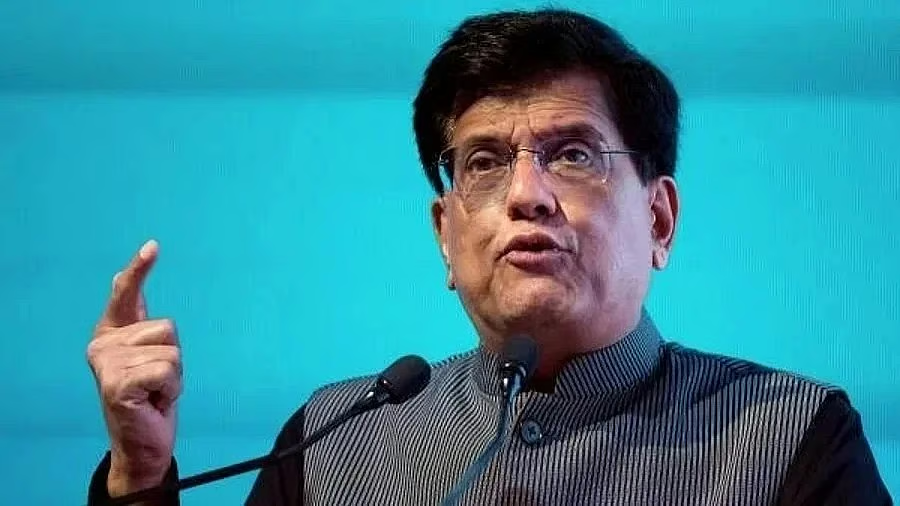
In a significant move that underscores its ambition on the global economic stage, India is aggressively accelerating negotiations for a series of Free Trade Agreements (FTAs) with some of the world’s largest economies. According to Commerce and Industry Minister Piyush Goyal, New Delhi is actively engaged in trade pact discussions with the United States, the European Union, and is set to resume crucial talks with Canada. This multi-pronged diplomatic and economic offensive marks a pivotal moment in India’s trade policy, signaling a strategic shift towards deeper integration with key Western markets.
This renewed vigor comes after the successful conclusion of a landmark trade deal with the European Free Trade Association (EFTA), a bloc comprising Switzerland, Norway, Iceland, and Liechtenstein. The success of this pact, which promises $100 billion in investments, appears to have injected fresh momentum into other, more complex negotiations, positioning India as a formidable and serious player in the global trade arena.
Why the Sudden Sprint on FTAs?
India’s FTA strategy was once characterized by caution. However, the current geopolitical climate and evolving economic necessities have prompted a more proactive approach. Several factors are driving this accelerated push.
Geopolitical Realignment and Supply Chain Diversification: The post-pandemic world and ongoing geopolitical tensions have forced nations to rethink their over-reliance on single sources, particularly China. The “China Plus One” strategy adopted by many Western corporations presents a golden opportunity for India. By securing FTAs with the US and EU, India positions itself as a compelling, stable, and democratic alternative for manufacturing and investment.
Boosting exports and economic growth: At its core, an FTA aims to reduce or eliminate tariffs, making a country’s exports more competitive. For an economy of India’s size and aspirations, gaining preferential access to the massive consumer markets of the US and the EU is a game-changer. Sectors like textiles, engineering goods, pharmaceuticals, and agricultural products stand to gain immensely.
Attracting Foreign Direct Investment (FDI): Modern trade agreements go beyond just goods. They encompass services, intellectual property, and investment protocols. A well-negotiated FTA sends a strong signal to global investors about a country’s commitment to a stable and predictable regulatory environment, thereby attracting much-needed capital for infrastructure and industrial growth.
A Deep Dive into the Key Negotiations
1. India-US Trade Pact: A Complex Dance
The trade negotiations between the world’s largest democracies are perhaps the most significant, yet also the most challenging. While a full-scale FTA is a long-term goal, both nations are likely focusing on a more limited “trade-package” or an “early progress” deal to begin with.
Key focus areas and hurdles include:
The success of these talks will depend on both sides’ ability to find a middle ground that addresses their core sensitivities while unlocking the enormous potential of a closer economic partnership.
2. India-European Union FTA: Reviving a Stalled Giant
The India-EU Broad-based Trade and Investment Agreement (BTIA) negotiations have been stalled since 2013. The resumption of talks is a testament to the renewed political will on both sides. The EU is India’s second-largest trading partner, and a comprehensive deal could be transformative.
Critical negotiation points are:
A balanced FTA with the EU could help Indian companies integrate into global value chains while giving European firms a stronger foothold in a booming market.
3. Resuming Talks with Canada: Picking Up the Threads
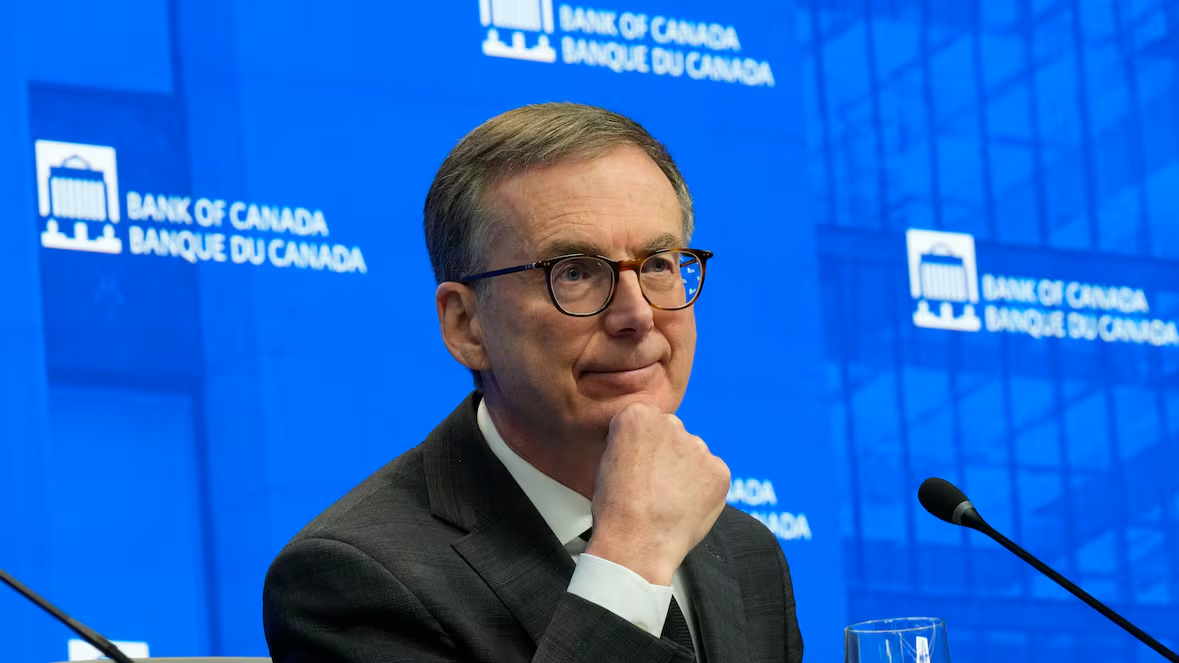
The decision to resume negotiations with Canada for a Comprehensive Economic Partnership Agreement (CEPA) is another critical piece of the puzzle. Talks were paused last year, but both governments are now set to re-engage.
The potential synergies are strong:
The Road Ahead: Opportunities and Cautions
India’s aggressive FTA push is a clear signal of its intent to become a $5 trillion economy. The potential benefits are substantial, from job creation and export growth to enhanced geopolitical influence. However, the path is fraught with challenges.
The government must walk a tightrope, ensuring that these agreements:
In conclusion, India’s synchronized FTA push with the US, EU, and Canada is a defining moment in its economic history. It represents a strategic bet on its own manufacturing capabilities and its role in the new global order. While complex negotiations lie ahead, the very act of pursuing these deals with such determination marks India’s arrival as a confident and assertive economic power, ready to write its own rules of engagement in international trade. The world is watching, and the stakes have never been higher.