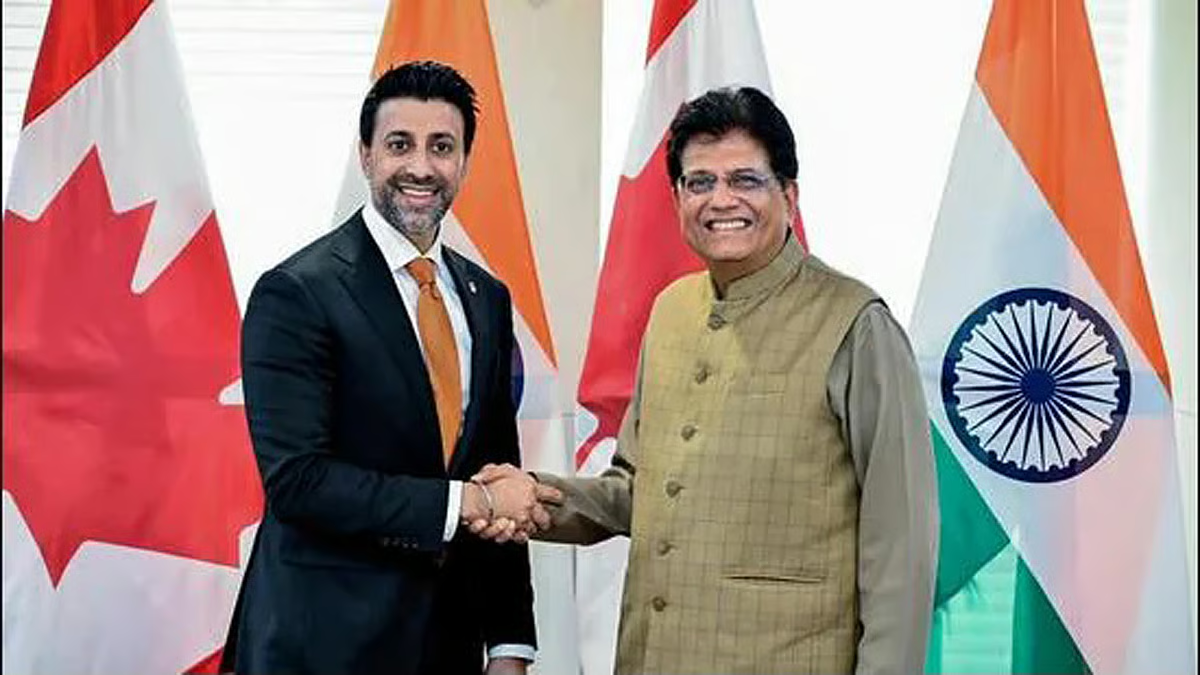
India and Canada Advance Trade Agreement Talks for Economic Growth
The global economic landscape is witnessing a significant realignment, and at the heart of this shift are strategic partnerships being forged across continents. One of the most promising dialogues currently underway is between India and Canada. Recent high-level discussions have injected fresh momentum into negotiations for a comprehensive India-Canada Economic Partnership Agreement (CEPA), signaling a mutual commitment to unlocking a new era of bilateral trade and investment. This potential pact is more than just a trade deal; it’s a blueprint for future-oriented growth, innovation, and shared prosperity between two of the world’s largest democracies.
Renewed Momentum: From Dialogue to Concrete Action
After a period of slower progress, talks between India and Canada have been revitalized. Officials from both nations have been actively engaging to define the core structure and ambitious scope of the agreement. The focus has moved from exploratory talks to tackling the substantive contours of the pact, including market access for goods and services, digital trade protocols, and mechanisms for resolving disputes.
This renewed vigor stems from a clear recognition of the immense, yet underutilized, potential that exists. Both economies possess unique and complementary strengths. Canada offers advanced technology, abundant natural resources, and expertise in sectors like clean energy and agriculture. India brings a massive consumer market, a powerhouse in IT and services, and a rapidly growing manufacturing base. A well-structured trade agreement is the key to bridging these strengths, creating a synergy that can boost economic output, generate employment, and enhance competitiveness for businesses on both sides.
Core Pillars of the Negotiations
The ongoing discussions are centered on several foundational pillars that will define the success of the agreement:
- Goods and Market Access: A primary goal is the significant reduction or elimination of tariffs on a wide range of products. Canadian exporters are keen on greater access for pulses, fertilizers, and agricultural machinery, while Indian industries like textiles, apparel, and pharmaceuticals see a major opportunity in the Canadian market.
- Services and Mobility: This is a critical area for India. Facilitating the temporary movement of professionals (Mode 4 in trade terms) in sectors like IT, engineering, and healthcare is a top priority. Streamlining visa and work permit processes is essential to truly liberalize trade in services.
- Digital Trade and Innovation: Recognizing the digital future, the pact aims to establish modern rules for e-commerce, data flows, and intellectual property. This will foster collaboration in emerging tech fields like artificial intelligence, fintech, and cybersecurity.
- Investment Protections: Creating a stable, predictable, and protective environment for cross-border investments is crucial. This will give businesses the confidence to make long-term capital commitments in each other’s countries.
- Sustainable Development: Both nations are expected to integrate chapters on labor and environmental standards, ensuring that economic growth is inclusive and aligned with climate objectives.
Why This Deal Matters: The Strategic Imperative
The push for a strengthened economic partnership is driven by powerful strategic and economic imperatives for both India and Canada.
For India, a deal with Canada is a strategic step in its broader trade diversification agenda. As New Delhi actively engages with multiple partners, an agreement with a G7 nation like Canada would:
- Provide access to advanced technology and sustainable resources.
- Offer an alternative and reliable partner in the Indo-Pacific region.
- Boost the “Make in India” initiative by attracting high-quality Canadian investment.
- Create new avenues for its skilled workforce and dynamic service sector.
For Canada, this agreement is central to its Indo-Pacific Strategy, which identifies India as a critical partner. The benefits are equally compelling:
- Diversify trade away from over-reliance on any single market.
- Tap into India’s booming middle-class consumer base of over a billion people.
- Leverage Indian talent and innovation to boost Canadian competitiveness.
- Strengthen its geopolitical and economic footprint in a rapidly growing region.
Navigating Challenges and Sensitivities
While the potential is enormous, the path to an agreement is not without its challenges. Negotiators must carefully navigate sensitive issues. In agriculture, both countries have protective stances on certain products—Canada on dairy, and India on segments like wheat and soybeans. Finding a balanced approach that protects farmers while allowing for new trade opportunities will be key.
Furthermore, non-tariff barriers, such as differing standards and certification processes, can be as restrictive as tariffs themselves. The agreement must include strong cooperation mechanisms to align regulations and smoothen customs procedures. Lastly, the political will to conclude the negotiations and sell the benefits domestically to various stakeholders, including businesses, labor groups, and farmers, will be the ultimate test.
The Road Ahead: A Partnership for the Future
The active discussions on the India-Canada trade pact represent a forward-looking vision. It’s an acknowledgment that in an interconnected world, prosperity is best achieved through collaboration. The agreement has the potential to be a model for 21st-century trade—one that is comprehensive, inclusive, and digitally enabled.
As the negotiations progress, businesses in both countries should prepare to seize the opportunities that will arise. From Canadian clean-tech firms finding a vast market in India’s green transition, to Indian tech startups collaborating with Canadian AI research hubs, the possibilities are transformative.
The conclusion of a balanced and ambitious India-Canada Economic Partnership Agreement would send a powerful signal to the world. It would demonstrate that democracies can craft innovative trade deals that drive economic growth, foster people-to-people ties, and build resilient supply chains. The ongoing talks are not just about tariffs and quotas; they are about laying the foundation for a dynamic and enduring partnership that will shape the economic destiny of both nations for decades to come. The momentum is building, and the finish line, while requiring careful navigation, promises a prize worth the effort for over 1.8 billion people combined.