Iran Claims Evidence of Downed US Fighter Jet in Leaked Photos
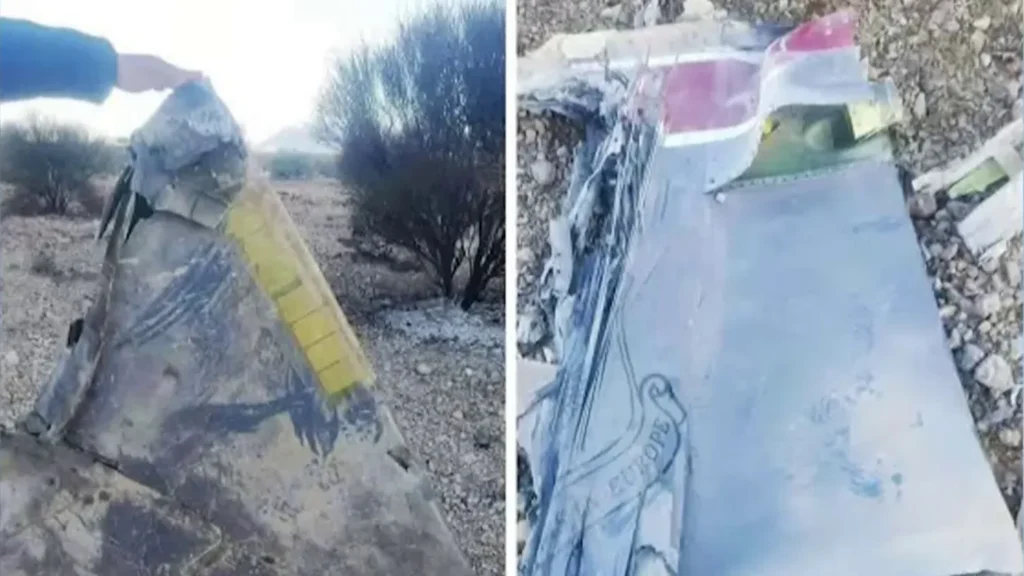
The geopolitical landscape of the Middle East was jolted this week by a startling claim from Tehran. Iranian military officials have released what they assert is photographic evidence proving they shot down a sophisticated U.S. fighter jet, a revelation that, if verified, would mark a significant and dangerous escalation in regional tensions. The images, leaked to state-affiliated media, purport to show wreckage of an advanced aircraft, specifically pointing to components they identify as belonging to an F-35 Lightning II or similar stealth platform.
This development comes against a backdrop of simmering proxy conflicts and direct confrontations, raising immediate and urgent questions about the veracity of the claims, the potential for a military response, and the new reality of aerial warfare in one of the world’s most volatile regions.
Deciphering the Evidence: A Close Look at the Leaked Imagery
The core of Iran’s claim rests on a series of grainy, often unclear photographs and short video clips. Iranian analysts presented these materials, circling specific pieces of debris they argue are incontrovertible proof.
Key pieces of evidence highlighted include:
- A twisted composite material fragment claimed to feature the distinct radar-absorbent coating and hexagonal patterning unique to F-35 canopy framing.
- Scorched electronic components and wiring bundles said to be from the jet’s advanced AN/APG-81 AESA radar system.
- What appears to be a section of an engine blade, with analysts insisting its composition and design match the Pratt & Whitney F135 turbofan engine.
Western military analysts and aviation experts who have reviewed the images urge extreme caution. Initial assessments suggest the debris could be from a number of sources. Some components bear a vague resemblance to parts from older aircraft, possibly even from drones previously downed in the region. The low quality of the images makes definitive identification nearly impossible without physical inspection.
The Official Response: Denial, Dismissal, and Strategic Silence
The reaction from the United States has been swift and unequivocal. A Pentagon spokesman flatly denied the loss of any U.S. aircraft, stating, “All U.S. assets are accounted for. This is disinformation, a fabrication intended for domestic and regional consumption.” U.S. European Command and Central Command have both confirmed no missing fighters or combat air patrols that would align with Iran’s narrative.
However, the strategic silence on certain details is telling. The U.S. has not explicitly denied an incident occurred. Instead, officials have pointedly noted that advanced capabilities, including stealth aircraft, operate routinely in international airspace for surveillance and deterrence. The possibility of a covert mission, or an incident involving a partner nation’s aircraft, remains an unspoken subtext in all official statements.
Motives and Implications: Why Make the Claim Now?
Understanding why Iran would publicize such a high-stakes claim requires examining the complex chessboard of Middle Eastern politics. Several compelling motives emerge:
Domestic Propaganda and Morale: Presenting the Islamic Revolutionary Guard Corps (IRGC) as capable of defeating America’s most prized stealth technology is a powerful tool for regime consolidation. It projects strength and technological parity to a domestic audience facing economic hardship.
Regional Deterrence and Posturing: The claim serves as a stark warning to regional rivals, particularly Israel and Saudi Arabia, about Iran’s air defense capabilities. It aims to alter the strategic calculus of adversaries who might rely on U.S. air supremacy.
Negotiation Leverage: In the fragile context of indirect nuclear talks and regional de-escalation efforts, such a claim could be used as a bargaining chip—a demonstration of disruptive power meant to extract concessions.
Testing Responses and Gathering Intelligence: By releasing partial evidence, Iran may be gauging the technical and intelligence responses of the U.S. and its allies, learning what they know and how they react to a potential crisis.
A Precedent of Tensions and the Fog of War
This incident does not exist in a vacuum. It follows years of hair-trigger encounters:
- The 2019 downing of a U.S. Navy RQ-4A Global Hawk drone by Iran.
- The 2020 assassination of IRGC Quds Force commander Qasem Soleimani and subsequent Iranian ballistic missile strikes on U.S. bases in Iraq.
- Ongoing skirmishes involving Iranian-backed militias and U.S. forces in Syria and Iraq.
The environment is characterized by a persistent “fog of war,” where cyber operations, drone warfare, and proxy conflicts blur the lines of direct confrontation. In this context, the line between factual incident and strategic fabrication becomes intentionally obscured.
Expert Analysis: Plausibility and Technical Challenges
Military technology experts are deeply divided on the plausibility of Iran’s claim. On one hand, Iran boasts a layered, Russian-influenced air defense network featuring systems like the S-300 and domestically produced Bavar-373. These systems are theoretically capable of detecting and engaging low-observable aircraft, especially at closer ranges.
However, successfully targeting a fifth-generation fighter like the F-35 is an enormously complex task. It would require:
- Integrating radar, electronic warfare, and infrared data to maintain a track on a stealth aircraft.
- Overcoming the jet’s sophisticated electronic countermeasures and jamming suites.
- A command and control system capable of making a shoot/no-shoot decision in minutes, if not seconds.
“While not impossible, it would represent a significant intelligence and tactical failure on the part of the U.S., and a monumental achievement for Iranian air defenses,” notes a former U.S. Air Force electronic warfare officer. “The more likely scenarios are misidentification, a strike on a drone or less-capable aircraft, or a complete fabrication.”
The Path Forward: De-escalation or Dangerous New Normal?
The immediate danger lies in miscalculation. If either nation fully believes the other has crossed a red line—by downing a prized asset or by falsely claiming to have done so—the cycle of retaliation could accelerate rapidly.
The international community, including European powers and the UN, has called for maximum restraint and transparency. The demand for an independent investigation, however, is a non-starter, as neither nation would permit access to sensitive crash sites or intelligence methodologies.
Ultimately, this event underscores a chilling new phase. The era of plausible deniability and asymmetric warfare is giving way to an era of direct claims of conventional victory. Whether based on fact or fiction, Iran’s assertion that it can hunt the West’s most advanced jets is now a central part of the narrative, reshaping deterrence and risk assessment for all actors involved. The leaked photos may be unclear, but the message they are intended to send is crystal clear: the rules of engagement are changing, and the skies are no longer a sanctuary.