
Iran Defies Trump Threats as Nuclear Tensions Reach Boiling Point
The geopolitical chessboard of the Middle East is once again trembling, as a stark ultimatum from former U.S. President Donald Trump collides with Iran’s unwavering defiance. The immediate spark? A social media post from Trump vowing to “obliterate” Iran’s energy infrastructure if he returns to the White House, should Tehran attack U.S. assets. This incendiary threat, delivered with a 48-hour deadline for compliance, has been met not with submission, but with a cold, calculated dismissal from Iranian officials. The exchange signals that the long-simmering crisis over Iran’s nuclear program is now at a perilous boiling point, with the potential for miscalculation higher than ever.
A Stark Ultimatum Meets Unyielding Resistance
The confrontation was ignited on Trump’s Truth Social platform, where he issued a characteristically blunt warning. He stated that any Iranian aggression against American interests would be met with a devastating and rapid response targeting the lifeblood of the Iranian economy: its oil production and energy facilities. The implicit message was a return to the “maximum pressure” campaign that defined his previous term.
Iran’s response was swift and contemptuous. Nasser Kanaani, the spokesperson for Iran’s Foreign Ministry, dismissed the threat as “not worthy of a response.” He framed Trump’s rhetoric as political theatrics aimed at a domestic audience, rather than a serious foreign policy declaration. This public rebuff underscores a critical reality: after years of surviving severe sanctions and targeted strikes, Iranian leadership has cultivated a posture of resilient defiance, particularly towards threats from Washington.
The Shadow of the “Maximum Pressure” Campaign
To understand the current escalation, one must look back. The Trump administration’s decision in 2018 to unilaterally withdraw from the landmark 2015 nuclear deal, known as the JCPOA, and impose crushing sanctions shattered a fragile diplomatic equilibrium. The policy aimed to force Iran into negotiating a broader agreement but instead had several critical consequences:
- Iran Ramps Up Nuclear Activity: Freed from the deal’s restrictions, Tehran has progressively advanced its nuclear program. It now enriches uranium to 60% purity—a short technical step from weapons-grade levels—and has amassed a stockpile far beyond the agreed limits.
- Regional Proxy Conflicts Intensified: The economic stranglehold fueled a cycle of retaliation, with Iran-aligned groups launching attacks across the region and U.S. forces responding in kind.
- Diplomatic Channels Broke Down: The withdrawal eroded trust and left a vacuum where dialogue once existed, replacing it with a cycle of threats and counter-threats.
Why Energy Infrastructure is the Ultimate Target
Trump’s specific focus on energy infrastructure is strategically significant and exceptionally dangerous. Iran’s oil and gas sector is the central pillar of its economy, providing the vast majority of government revenue. A credible threat to destroy these facilities is a threat to the regime’s very survival. However, such an attack would constitute a massive escalation with unthinkable consequences:
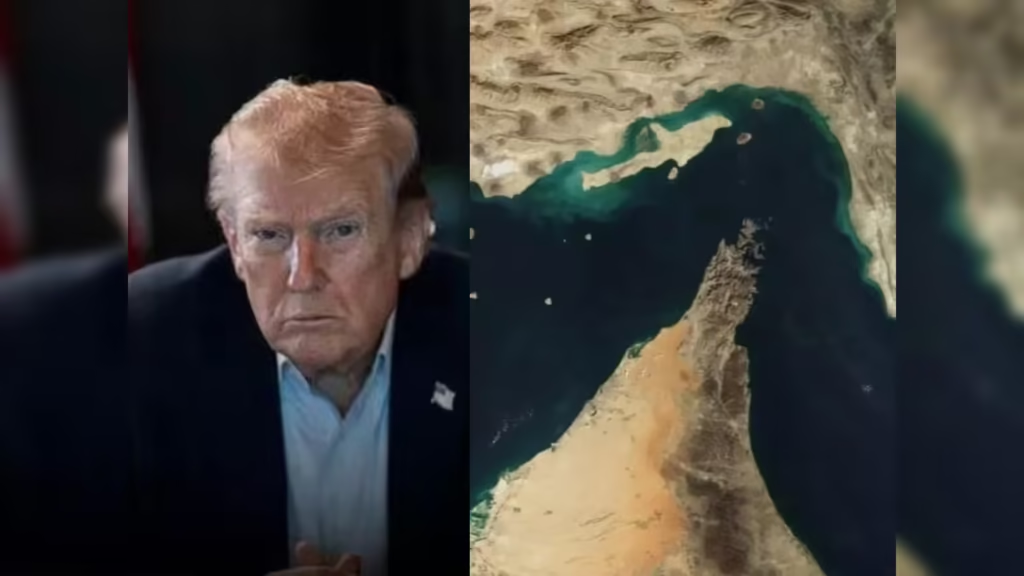
- Global Economic Shockwaves: Even the threat of disruption from the Strait of Hormuz, a chokepoint for about 20% of the world’s oil traffic, sends markets into a frenzy. Actual attacks would trigger a global energy crisis.
- Humanitarian Catastrophe: Destroying a nation’s power grid and energy distribution networks has devastating humanitarian implications, affecting hospitals, water supplies, and basic civilian life.
- Guaranteed Regional War: Iran would be compelled to respond massively, likely targeting energy infrastructure across the Gulf and launching barrages of missiles at U.S. bases and allied nations. The conflict would not remain contained.
The Biden Administration’s Delicate Balancing Act
Caught in the middle of this volatile exchange is the current Biden administration. President Biden entered office seeking to revive the JCPOA, but indirect negotiations have been stalled for years. The administration now faces the dual challenge of containing Iran’s nuclear advances while preventing a full-scale war. Officials have consistently stated their commitment to defending U.S. personnel and interests, but they have also emphasized diplomacy. Trump’s re-emergence into the political spotlight with such threats complicates this already delicate dance, potentially emboldening hardliners in Tehran who argue that America is an unreliable partner under any administration.
The Path Forward: Diplomacy or Disaster?
As the 48-hour deadline from Trump’s post fades into the background, the underlying crisis remains acute. The world is left watching a high-stakes standoff where both sides believe backing down is a sign of fatal weakness. The current trajectory points toward a dangerous cycle of provocation and response.
The urgent need for an off-ramp is clear. This may require:
- Quiet, Back-Channel Diplomacy: Open negotiations may be politically impossible, but secret talks could establish red lines and prevent miscalculation.
- De-escalatory Gestures: Small, reciprocal steps—such as a temporary freeze on advanced centrifuge installation in exchange for limited sanctions relief—could build minimal trust.
- International Mediation: Powers like Oman, Qatar, or even China, which recently brokered a Saudi-Iran détente, could play a crucial intermediary role.
The alternative is a continuation of the current path, where verbal threats and incremental nuclear advancements slowly erode the barriers to conflict. In an environment where a single incident—a drone strike, a tanker seizure, or a militant attack—could spark a conflagration, the margin for error is vanishingly thin. Iran’s defiance of Trump’s latest threat is not an isolated event; it is the latest chapter in a protracted struggle that has brought the Middle East to the brink. The coming weeks and months will test whether cooler heads can prevail, or if the boiling point will finally spill over into a war with catastrophic consequences for the region and the world.

