
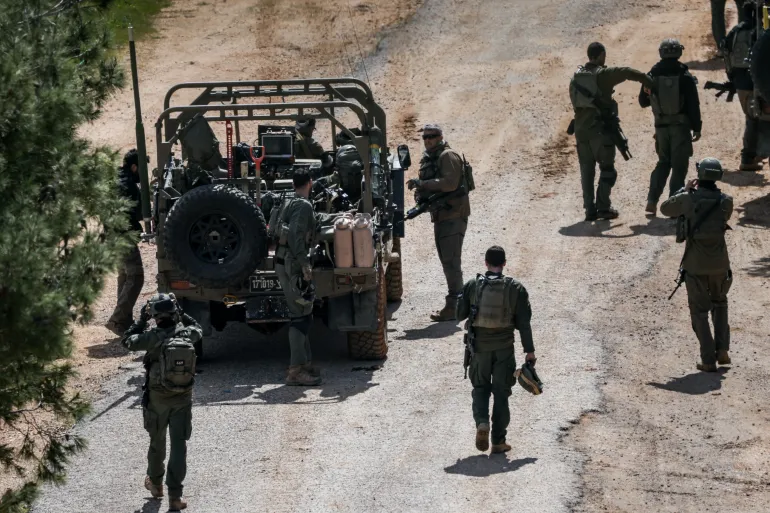
Israel Expands Security Zone in Lebanon Amid Rising Tensions
The already volatile border between Israel and Lebanon is poised for a significant and potentially dangerous shift. In a move that signals a major escalation, the Israeli military has announced plans to further expand its self-declared security zone inside Lebanese territory. This decision comes after months of intensifying cross-border exchanges of fire with Hezbollah, the powerful Iran-backed militant group. The expansion threatens to deepen the conflict, raising fears of a full-scale war that neither side may be able to easily control.
A Strategic Decision with High Stakes
For decades, the “Blue Line”—the UN-demarcated border between Israel and Lebanon—has been a flashpoint. The latest Israeli strategy involves pushing its operational boundary northward, creating a wider buffer zone. The stated objective is clear: to push Hezbollah’s elite Radwan forces and their rocket launchers farther from Israeli towns and cities, particularly those in the northern Galilee region. Israeli officials argue that the security reality established after the 2006 war is no longer tenable, necessitating a more aggressive posture to ensure civilian safety.
This is not merely a tactical adjustment; it is a strategic recalibration. The planned expansion signifies a move from reactive strikes to a proactive, ongoing military presence on the ground in Lebanon. Analysts suggest this aims to create a new de facto security arrangement, one that would be enforced by the Israel Defense Forces (IDF) rather than through diplomatic agreements.
The Catalyst: October 7th and the Northern Front
The simmering tensions along the Lebanon-Israel border erupted into near-daily warfare following the horrific Hamas attacks on Israel on October 7th. In solidarity with Hamas and as part of the self-proclaimed “Axis of Resistance,” Hezbollah opened what it calls a “support front.”
Since then, the border area has witnessed:
- Sustained rocket and anti-tank missile fire from Hezbollah into northern Israel.
- Precision Israeli airstrikes targeting Hezbollah operatives, command centers, and weapons depots deep inside Lebanon.
- The displacement of tens of thousands of civilians on both sides of the border, creating a humanitarian and political crisis.
- An escalating casualty count, including both combatants and, tragically, journalists and civilians.
This relentless cycle of violence has made the previous status quo obsolete, compelling the Israeli government to seek a more definitive—and militarily enforced—solution.
What Does a “Security Zone” Expansion Actually Mean?
The term “security zone” carries heavy historical baggage. From 1985 to 2000, Israel maintained a long-term occupation of a strip of southern Lebanon, a period marked by guerrilla warfare and significant casualties for the IDF, primarily at the hands of Hezbollah. The current expansion plan is distinct in its declared scope but risks reviving a similar dynamic.
Military analysts outline several potential components of the expanded zone:
- Increased Ground Patrols and Outposts: A more persistent IDF ground presence to deter Hezbollah infiltration.
- Enhanced Surveillance and Control: Seizing key terrain to improve sightlines and control over movement.
- Pre-emptive Clearance Operations: Actively seeking out and destroying Hezbollah infrastructure, including extensive tunnel networks, before they can be used.
- A “Kill Zone” for Anti-Tank Teams: Creating an area where any Hezbollah operatives approaching the border would be immediately targeted.
Critically, this expansion would likely occur without the consent of the Lebanese government, which has limited authority in the Hezbollah-dominated south. This constitutes a direct challenge to Lebanese sovereignty and sets the stage for prolonged conflict.
Regional and International Reactions: A Path to Wider War?
The international community has watched the escalating situation with growing alarm. The United States and European powers have been engaged in intense, behind-the-scenes diplomacy, attempting to broker a deal that would see Hezbollah pull its forces north of the Litani River (as stipulated in UN Security Council Resolution 1701) in exchange for Israeli restraint.
Israel’s decision to unilaterally expand the security zone is widely seen as an indication that these diplomatic efforts have, for now, stalled. The risks are profound:
- Direct Confrontation with Iran: A full-scale Israel-Hezbollah war could draw in Iran, Hezbollah’s principal backer, directly or through its proxies in Iraq and Syria, potentially sparking a regional conflagration.
- Undermining the Lebanese State: Further military action could devastate Lebanon’s already crippled economy and push its fragile state institutions toward total collapse.
- Straining U.S.-Israel Relations: While supportive of Israel’s right to defend itself, the Biden administration has repeatedly warned against actions that could lead to a disastrous regional war, creating a point of strategic friction.
Hezbollah’s Calculated Response
Hezbollah has vowed to retaliate fiercely against any permanent Israeli expansion into Lebanese territory. Secretary-General Hassan Nasrallah has warned that “all of Israel” is within reach of the group’s vast arsenal, estimated to include over 150,000 rockets and missiles. For Hezbollah, its military presence in the south is non-negotiable—it is the core of its identity as the “Resistance” to Israel. Any attempt to forcibly displace it would be met with what the group promises would be an unprecedented response.
The Human Cost and an Uncertain Future
Beyond the geopolitical maneuvering lies a dire human reality. Entire communities on both sides of the border are living in a state of suspended animation. Over 90,000 Israelis and an estimated 100,000 Lebanese have been displaced from their homes for months, with no clear path to return. Farms are untended, businesses are shuttered, and daily life is consumed by the threat of sirens and explosions.
The expansion of the security zone promises not security, but a deeper entrenchment of the conflict. It moves the situation from a war of attrition across a border to a potential war of occupation and insurgency within Lebanon. While the Israeli military may gain temporary tactical advantages, it risks igniting a broader, more intractable conflict that could last for years.
The coming weeks are critical. The world watches to see if diplomacy can forge a last-minute off-ramp, or if the logic of escalation will prevail, dragging two nations and the wider Middle East into a devastating new chapter of violence. The decision to expand the security zone is more than a military order; it is a gamble with the future of the entire region.

