
Escalating West Bank Violence: Settler Attacks Target Palestinian Villages
The already volatile situation in the occupied West Bank has witnessed a dangerous and violent surge, as attacks by Israeli settlers against Palestinian communities intensify. Recent incidents, marked by arson, property destruction, and confrontations, have drawn international condemnation and raised urgent concerns about a spiraling cycle of retaliation and entrenched conflict. These events underscore a deepening crisis that extends beyond the headline-grabbing war in Gaza, revealing a parallel front of tension and human suffering.
A Pattern of Destruction: Recent Incidents in Focus
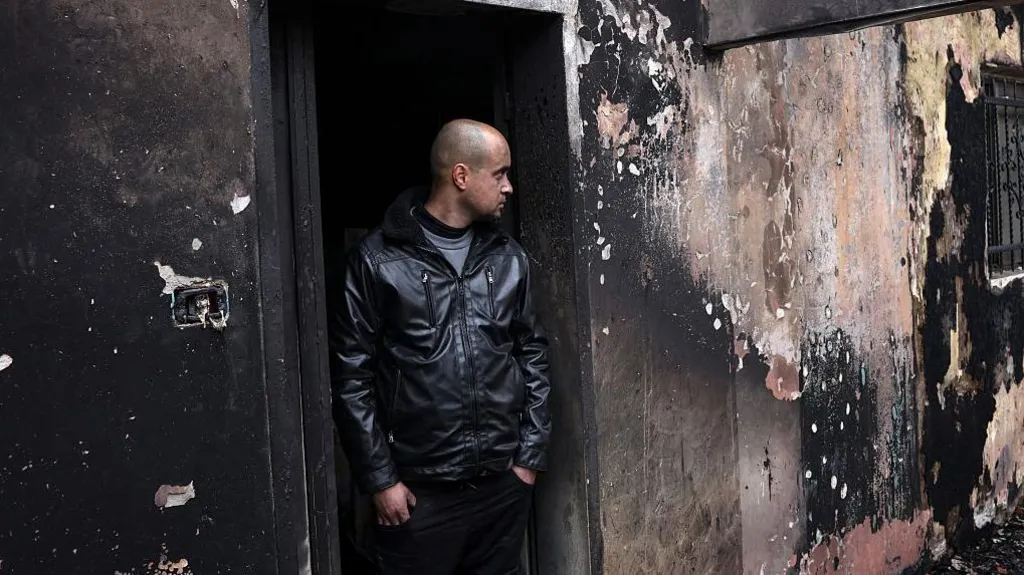
Reports from the ground detail a consistent pattern of aggression. In one alarming episode, dozens of settlers, some armed and masked, descended upon the village of Mughayir. The assault resulted in the burning of at least five homes and numerous vehicles, leaving families displaced and traumatized. Similar attacks were reported in the villages of Deir Dibwan and Beitin, where settlers set fire to buildings and cars. These are not isolated events but part of a broader, escalating trend of settler violence that has increased dramatically in recent months.
The immediate trigger for this latest wave is often linked to the broader Israeli-Palestinian conflict, particularly after attacks by Hamas on October 7th. However, analysts and human rights organizations point out that settler violence against Palestinian communities has been a longstanding issue, now supercharged by the current climate of war and impunity.
The Human Toll: Displacement and Fear
Behind the statistics of burned buildings are shattered lives. The attacks create an atmosphere of pervasive fear, forcing many Palestinians to flee their ancestral homes and lands. This displacement is not merely a temporary inconvenience; it represents a form of coercive transfer, a tactic that alters facts on the ground and undermines the possibility of a future contiguous Palestinian state.
- Loss of Livelihood: Burning agricultural fields and killing livestock destroys the economic foundation of these rural communities.
- Psychological Trauma: Families, including children, live under constant threat of violence, with lasting mental health consequences.
- Erosion of Security: With perceived impunity for attackers, Palestinian villagers feel abandoned by law enforcement, deepening their vulnerability.
The Context of Impunity and Expansion
A critical factor fueling this violence is the widespread perception of impunity. Palestinian residents and international watchdogs consistently report that Israeli security forces frequently fail to intervene during settler attacks, and legal consequences for the perpetrators are rare. This environment effectively enables the violence, allowing extremist settlers to operate with little fear of accountability.
Furthermore, these attacks are inextricably linked to the political project of settlement expansion. By terrorizing Palestinian communities, extremist settlers aim to depopulate areas of the West Bank, thereby clearing land for the expansion of Israeli settlements. These settlements are considered illegal under international law by most of the world, yet they continue to grow, systematically fragmenting Palestinian territory.
International Reaction and Legal Scrutiny
The escalating violence has not gone unnoticed by the international community. Several countries, including key Israeli allies, have condemned the settler attacks and imposed sanctions on individuals accused of leading or participating in the violence. These measures, targeting travel bans and asset freezes on specific settlers, represent a growing frustration with the Netanyahu government’s perceived inaction.
Moreover, the situation in the West Bank is now under intense legal scrutiny. The International Court of Justice (ICJ) is examining the legality of Israel’s occupation, and the International Criminal Court (ICC) has been investigating alleged war crimes in the Palestinian territories for years. The recent surge in settler violence and allegations of state complicity are likely to be central to these proceedings.
The Vicious Cycle: Violence Breeds More Violence
The settler attacks are creating a dangerous feedback loop. They often spark retaliatory actions by Palestinians, which in turn are met with harsh Israeli military raids. This cycle entrenches hatred, makes daily life unbearable for civilians on both sides, and pushes any prospect of peaceful coexistence further out of reach. The Israeli military finds itself in the difficult position of trying to maintain order while also protecting settlement outposts, some of which are illegal even under Israeli law.
- Radicalization: The environment fosters radicalization among both Palestinian youth and extremist settlers.
- Undermining Moderate Voices: Cycles of violence empower hardliners on all sides, silencing those who advocate for dialogue and a two-state solution.
- A Parallel Front: While the world focuses on Gaza, the West Bank is simmering, threatening to ignite a wider conflagration.
A Path Forward? Challenges and Stalemate
Addressing the crisis requires confronting deeply entrenched issues. First and foremost, there must be a consistent and forceful application of the rule of law to hold perpetrators of violence accountable, regardless of their nationality. This requires political will from the Israeli government to dismantle violent extremist outposts and prosecute settlers who attack Palestinians.
Secondly, the underlying driver—the ongoing settlement expansion—must be addressed. As long as the policy of building and legitimizing settlements on occupied land continues, the conflict over land and resources will persist, providing a fertile ground for violence. The international community faces the challenge of moving beyond condemnation to enacting policies that meaningfully discourage settlement growth.
Finally, restoring a political horizon is essential. The complete stagnation of the peace process and the absence of hope for a political solution create a vacuum filled by violence. While a comprehensive resolution seems distant, immediate steps to protect civilians, curb incitement, and support economic stability in Palestinian areas are urgent necessities to prevent a total collapse.
Conclusion: A Crisis Demanding Attention
The escalating settler violence in the West Bank is more than a series of isolated clashes; it is a systemic crisis with profound implications. It is devastating Palestinian lives, destabilizing the region, and eroding the foundations for a future peace. The world’s focus on Gaza must not come at the expense of ignoring this parallel escalation. Without decisive action to protect vulnerable communities, enforce the law, and address the root causes of the conflict, the West Bank risks descending into an even deeper and more intractable cycle of bloodshed and despair. The time for urgent international attention and concerted diplomatic pressure is now, before the flames consume what little hope remains.

