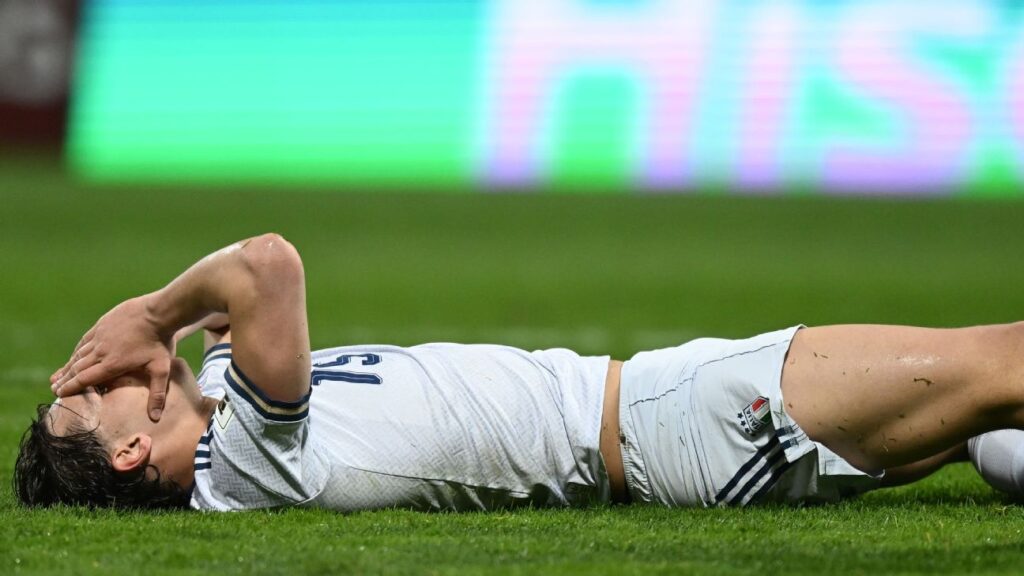
Italy’s World Cup Dream Ends in Penalty Heartbreak Against Bosnia
The unthinkable has happened. In a night of high drama and crushing tension, the Italian national football team has been eliminated from 2026 FIFA World Cup qualification, falling to a heroic Bosnia and Herzegovina side in a penalty shootout. The Stadio Olimpico in Rome, a fortress expecting a coronation, was instead left in a state of stunned silence, its dreams shattered from twelve yards.
For Italy, a nation with four World Cup stars on its crest, this represents a catastrophe of historic proportions. To miss a single World Cup was a trauma; to miss two in a row is an unprecedented nightmare that will send shockwaves through the footballing world and prompt a deep, painful introspection.
A Night of Missed Opportunities and Rising Tension
The match began as most predicted, with Italy controlling possession and probing the Bosnian defense. Chances came and went: a Gianluca Scamacca header whistled past the post, a Federico Chiesa cut-back found no one, a Nicolò Barella shot was parried away. As the minutes ticked by without a breakthrough, a familiar anxiety began to seep into the Italian play and the Roman crowd.
Bosnia, organized and resilient, grew in belief. Led by the evergreen Edin Džeko, they threatened on the counter-attack, with the veteran striker himself forcing a smart save from Gianluigi Donnarumma. The visitors’ game plan was executed perfectly: absorb pressure, disrupt rhythm, and seize any fleeting moment.
Extra Time Agony and the Inevitable Penalty Drama
With the score locked at 0-0 after 90 grueling minutes, the specter of extra time loomed. Italy threw everything forward, but the final pass was consistently lacking. Bosnia’s defense, a wall of determination, repelled everything. The whistle for penalties felt like a fate Italy desperately wanted to avoid, given their haunted history from the spot.
The shootout was a brutal test of nerve:
- The ever-reliable Jorginho, whose hop-skip technique had faltered before, saw his opening penalty saved.
- Bosnia converted their first two with cold precision.
- Italy’s young stars, Davide Frattesi and Chiesa, held their nerve to keep hopes alive.
- With the score at 4-3 to Bosnia, up stepped veteran defender Leonardo Bonucci. His shot, aimed for the top corner, rattled the crossbar and flew over.
In an instant, it was over. The Bosnian players erupted in a frenzy of joy, collapsing into a pile on the hallowed Olimpico turf. The Italian players fell to their knees, disbelief etched on their faces. The dream of Canada, Mexico, and the USA in 2026 was gone.
The Aftermath: A Nation in Footballing Mourning
This result is more than a simple qualification failure. It is a systemic collapse that raises profound questions about the state of Italian football. The failure to qualify for the 2018 World Cup was seen as a rock-bottom moment that would catalyze renewal. Yet, here we are again.
Where is the next generation of clinical Italian strikers? The inability to score against a disciplined but beatable side over 120 minutes is a chronic issue. The tactical approach, once the pride of the nation, seemed predictable and lacking in invention when it mattered most.
The coach, the federation, and the entire player development pipeline will now face a firestorm of criticism. This is a defeat that will be analyzed, agonized over, and remembered as one of the darkest nights in Azzurri history.
Bosnia’s Historic Triumph: A Story for the Ages
While Italy mourns, the football world must stand and applaud Bosnia and Herzegovina. This is arguably the greatest result in their nation’s football history. To go into the home of the four-time world champions, withstand immense pressure, and triumph in a penalty shootout is the stuff of legend.
For players like Džeko, Miralem Pjanić, and their teammates, this is a crowning achievement. They have carried the hopes of their nation for over a decade and have now delivered a moment of unbridled joy, securing a place in the 2026 World Cup finals. Their celebration was a powerful reminder of football’s capacity to inspire and unite.
Looking Ahead: A Long and Painful Road to Recovery
For Italy, the road back is long and fraught with difficulty. The 2026 World Cup will proceed without one of its most iconic teams and passionate fanbases. The focus must now shift entirely to Euro 2024 and, beyond that, the 2030 World Cup qualification cycle.
A radical overhaul is needed. This means:
- Investing aggressively in youth development, with a focus on producing creative, attacking players.
- A serious philosophical debate about the style of football the modern Azzurri should play.
- Finding a core of leaders who can shoulder the immense weight of the famous blue jersey and restore its fear factor.
The heartbreak in Rome is not just the end of a campaign; it feels like the end of an era. The icons of the Euro 2020 triumph—Bonucci, Giorgio Chiellini, Jorginho—have likely seen their World Cup journeys end in the cruelest fashion. A new cycle must begin, but it starts from a place of profound disappointment.
The beautiful game is often defined by fine margins. A crossbar, a saved penalty, a moment of brilliance or a lapse in concentration. For Italy, those margins have now conspired to create a sporting tragedy. For Bosnia and Herzegovina, they have forged an immortal night of glory. Football, as always, writes the most dramatic of stories.