
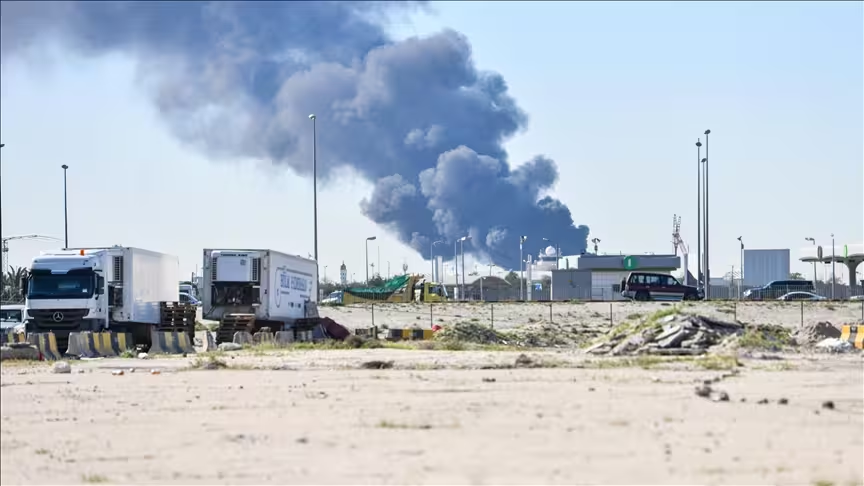
Drone Attack Ignites Major Fire at Kuwait’s Shuwaikh Oil Complex
A sudden and alarming drone attack has sent shockwaves through the global energy sector, setting ablaze a critical oil facility in the heart of Kuwait. In the early hours, a strike targeted the Shuwaikh industrial complex, a key hub for the nation’s oil and gas operations, triggering a massive fire and raising immediate concerns about regional stability and energy security.
While emergency services rushed to contain the blaze, the incident marks a dangerous escalation in the use of low-cost aerial technology to threaten vital economic infrastructure. This event forces a stark re-evaluation of security protocols for energy assets worldwide.
A Dawn Attack on a Critical Energy Hub
The tranquility of the early morning was shattered by the impact and subsequent explosion at the Shuwaikh complex, located near Kuwait City. According to state media reports, the fire erupted following a drone strike on the facility, which houses numerous companies and warehouses linked to the country’s all-important petroleum industry.
Witnesses reported seeing thick, black plumes of smoke billowing into the sky, visible from miles away. Kuwaiti firefighting teams, supported by civil defense units, responded with urgency. Their primary objectives were twofold: to extinguish the fierce flames and to prevent the fire from spreading to adjacent, potentially more sensitive installations within the complex.
Immediate Aftermath and Response
The immediate focus for Kuwaiti authorities was damage control—both physical and informational. Key actions included:
- Rapid Firefighting Deployment: Multiple firefighting brigades were dispatched to the scene, battling the blaze for hours before bringing it under control.
- Safety First Protocol: Initial reports emphasized that there were no immediate casualties, a testament to the likely timing of the attack and the swift implementation of safety measures.
- Securing the Perimeter: Security forces cordoned off the area to allow emergency services to work unimpeded and to begin preliminary investigations into the attack’s origin.
While the full extent of the material damage is still being assessed, the symbolic damage is profound. An attack on Kuwaiti soil targeting its economic lifeline represents a clear and present threat.
Geopolitical Tensions: Reading Between the Lines
This attack did not occur in a vacuum. Kuwait, a major OPEC member and key U.S. ally, sits in a region fraught with geopolitical rivalry. While no group immediately claimed responsibility, the attack bears the hallmarks of proxy conflicts that have increasingly utilized drone technology as a tool of asymmetric warfare.
The Shuwaikh complex, while not a primary crude oil production site, is a vital logistical and support nerve center. Disrupting such a node can cause significant operational delays, instill fear in global markets, and send a potent political message. The choice of target is calculated to demonstrate capability and to test the defensive resilience of a nation perceived as stable within the volatile Gulf region.
The Drone Threat: A New Normal for Energy Security
The incident at Shuwaikh is a stark reminder of a shifting threat landscape. Commercially available drones, modified for offensive purposes, present a low-cost, high-impact challenge to traditional security infrastructure designed to thwart larger, manned aircraft or ground assaults.
For energy-exporting nations, this means:
- Vulnerability of Distributed Infrastructure: Vast oil fields, pipelines, and storage facilities are inherently difficult to defend comprehensively against small, low-flying drones.
- Escalation of Regional Proxy Wars: Non-state actors and regional powers can leverage drone attacks to exert pressure without engaging in direct, conventional warfare.
- Urgent Need for Advanced Air Defense: The event will accelerate investments in counter-drone technology, including radar detection, jamming systems, and interception networks.
Potential Impact on Global Oil Markets
In the immediate aftermath, global oil prices experienced a noticeable uptick. Traders reacted to the “fear premium” associated with any disruption in the Gulf, a region responsible for a substantial portion of the world’s seaborne oil trade. While the fire at a support complex is unlikely to cause a major, sustained disruption to Kuwait’s crude exports, the market’s reaction was telling.
It underscored a deep-seated anxiety about the fragility of global supply chains. Any successful attack, even on peripheral infrastructure, raises questions about the potential for more devastating strikes on core production assets in the future. This psychological impact can be as powerful as a physical disruption to supply.
Looking Ahead: Security, Stability, and Sovereignty
The Kuwaiti government now faces a multifaceted challenge. The immediate investigative phase will seek to definitively identify the perpetrators and the launch point of the drone. This forensic work is crucial for formulating a diplomatic and strategic response.
Beyond attribution, long-term implications loom large:
- Reinforcing Defensive Capabilities: Kuwait will almost certainly review and upgrade its air defense posture, particularly focused on countering unmanned aerial systems (UAS). This may involve closer cooperation with allied nations.
- Diplomatic Repercussions: The attack will be a key topic in regional dialogues and with international partners. It may harden positions and complicate ongoing efforts to de-escalate tensions in the Middle East.
- A Precedent for the Industry: Energy companies worldwide, not just in the Gulf, will study this event to harden their own facilities. The era of assuming remote infrastructure is safe from aerial harassment is over.
A Wake-Up Call for the World
The fiery scenes from Kuwait’s Shuwaikh complex are more than a local news story. They are a global wake-up call. As drone technology becomes more accessible and sophisticated, the list of potential targets grows. Critical national infrastructure—from power grids and chemical plants to ports and refineries—must be re-evaluated through this new lens of vulnerability.
The attack underscores that in today’s interconnected world, regional instability and the weaponization of emerging technology can have instantaneous global consequences, flickering across trading screens and influencing strategic calculations in capitals far from the desert smoke. The response to this incident will shape the security paradigm for the energy sector and beyond for years to come.

