
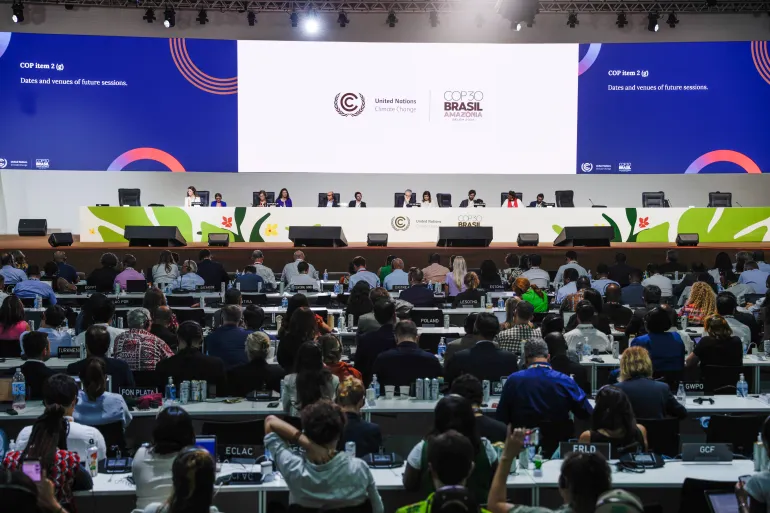
Global Leaders Forge Historic Climate Deal at 2025 Summit
The world has taken a decisive, unified step back from the brink. In a marathon overnight session that stretched into the early hours, negotiators at the 2025 United Nations Climate Change Conference (COP30) announced a groundbreaking international agreement hailed as the most significant since the Paris Accord. This landmark deal, emerging from a summit marked by both heightened tension and unprecedented cooperation, sets legally binding emissions targets for the world’s largest economies and establishes a new framework for climate finance and adaptation.
A Breakthrough Forged in Crisis and Cooperation
The path to this agreement was far from smooth. The summit opened under the shadow of another year of devastating climate-fueled disasters, from record-breaking heatwaves and droughts to intensifying storms and flooding. This palpable sense of urgency, felt by both vulnerable nations and major polluters, became the catalyst for compromise.
Key to the breakthrough was a significant shift in position from several major emerging economies, who agreed to accelerate their net-zero timelines in exchange for guaranteed access to technology and substantial, predictable financial support. Similarly, developed nations, long criticized for moving too slowly, committed to front-loaded funding and accepted stricter, five-year review cycles with independent verification—a major point of contention in previous summits.
The Pillars of the 2025 Climate Accord
The newly minted agreement rests on three interconnected pillars designed for accountability, equity, and rapid implementation.
- 1. The 2035 Net-Zero Pact: For the first time, the G20 nations, collectively responsible for over 80% of global emissions, have committed to a legally binding target of achieving net-zero carbon emissions by 2035. This moves the goalpost a full decade earlier than many previous national pledges. Each country is required to submit a detailed, sector-by-sector roadmap within 12 months.
- 2. The Global Climate Finance Mechanism: Addressing the long-standing rift between the global north and south, a new financing architecture was established. Developed nations agreed to collectively mobilize $1.5 trillion annually by 2030, combining public funds with leveraged private investment. This money will flow into a streamlined fund for clean energy transition, climate-resilient infrastructure, and loss and damage in the most vulnerable countries.
- 3. The Nature & Transition Accelerator: Recognizing the critical role of natural ecosystems, the deal includes a global pact to halt and reverse deforestation by 2030. It also creates a “Just Transition Accelerator” to support workforce retraining and economic diversification in regions and communities dependent on fossil fuel industries.
Immediate Reactions and the Road Ahead
The announcement was met with a mixture of exhaustion, relief, and cautious optimism. The UN Secretary-General called it “a triumph for multilateralism and for future generations.” Leaders from small island developing states, who have been the most vocal advocates for aggressive action, expressed tempered relief, emphasizing that the true test will be in the immediate execution of the finance and adaptation provisions.
However, not all reactions were celebratory. Some environmental groups immediately labeled the 2035 target as still insufficient to limit warming to 1.5°C, pointing to the need for even steeper, immediate cuts. Industry representatives from high-emission sectors voiced concerns about the feasibility of the transition timeline, calling for more clarity on government support and technological pathways.
What This Means for the Global Economy and Energy
The implications of this deal are profound and will ripple across every sector of the global economy.
- Energy: The accord effectively signals the end of the investment pipeline for new coal, oil, and gas projects. It will trigger an unprecedented acceleration in renewable energy deployment, grid modernization, and energy storage technologies. Analysts predict a massive surge in green hydrogen and advanced nuclear projects.
- Technology & Innovation: The demand for carbon capture, sustainable agriculture tech, and next-generation battery storage will skyrocket. The agreement’s technology-sharing clauses are expected to foster new international research partnerships.
- Finance: Trillions of dollars in capital are expected to be reallocated. Sustainable finance and ESG (Environmental, Social, and Governance) criteria will move from voluntary to mandatory frameworks in many jurisdictions. Carbon markets are set for a major overhaul with stricter global pricing mechanisms.
The Human and Geopolitical Impact
Beyond economics, the deal is poised to reshape global geopolitics. The successful collaboration between historical rivals on this single, existential issue could open doors for cooperation in other fraught areas. It also solidifies the leadership role of the European Union and a coalition of climate-progressive nations, while creating a new template for engagement with major emerging economies.
For citizens around the world, the agreement promises a tangible shift. It means accelerated investments in public transit, cleaner air in cities, and more resilient food and water systems. It aims to provide a structured, supported pathway for workers in transitioning industries and greater security for communities on the front lines of climate change.
A Historic Milestone, But the Work is Just Beginning
The 2025 Climate Summit will be remembered as the moment the world finally aligned its rhetoric with the scale of action required. The forging of this historic deal demonstrates that when faced with an undeniable common threat, international cooperation can prevail over short-term national interests.
Yet, as every leader present acknowledged, the signing of the agreement is not the finish line, but the starting gun. The meticulously negotiated text now must be translated into national laws, concrete investments, and real-world emissions reductions. The newly established review bodies will face the critical task of holding nations accountable.
The pressure from civil society, the scientific community, and the growing economic power of the green transition must remain steadfast. The legacy of the 2025 summit will not be written in the document produced, but in the plummeting emission curves and the stabilized climate it is designed to achieve. The world has finally agreed on a common destination and a shared map. Now, the arduous journey of walking the path begins.

