
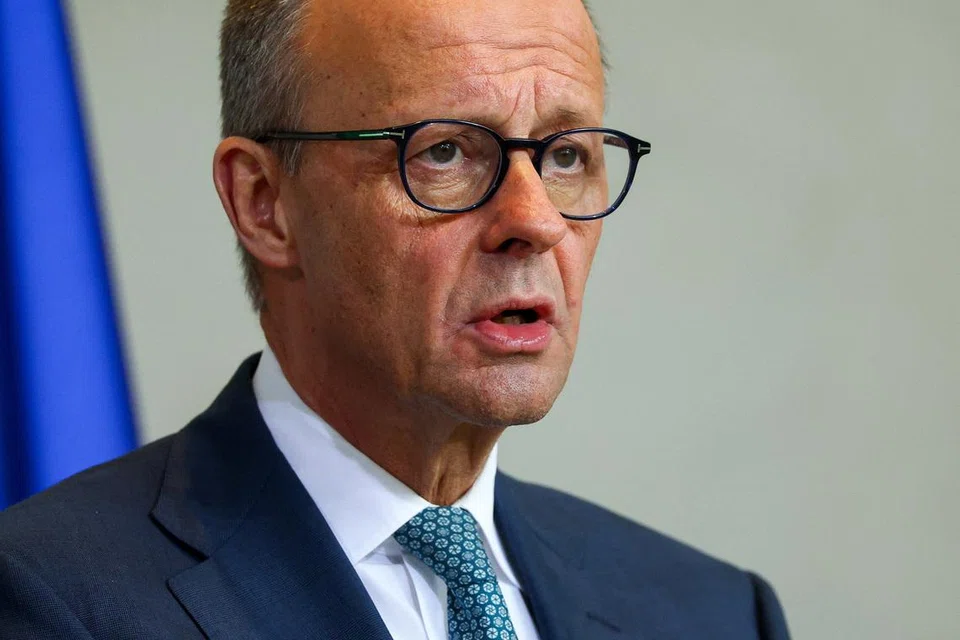
Friedrich Merz Ignites Political Firestorm with Comments on Sending Syrians Back
In a move that has sharply divided public opinion and drawn fierce condemnation from across the political spectrum, Friedrich Merz, leader of Germany’s Christian Democratic Union (CDU), has sparked a major controversy. His recent remarks suggesting the forced repatriation of Syrian refugees have thrown a spotlight on the nation’s ongoing debate over migration, integration, and the legacy of the 2015 refugee crisis.
The comments, made during a public discussion, have been labeled as inflammatory and dangerously simplistic by critics, while highlighting the hardening stance of Germany’s largest opposition party on asylum policy. This incident is more than a political misstep; it’s a reflection of the deep and often painful conversations Germany continues to navigate nearly a decade after opening its doors to over a million people fleeing war.
The Core of the Controversy: What Merz Actually Said
While speaking on the complex issue of migration, Friedrich Merz addressed the situation of Syrians who sought protection in Germany. His central, and most contentious, argument was that with the civil war in Syria largely over, the original grounds for asylum for many have expired. He pointed to the declared end of large-scale combat operations and the re-establishment of diplomatic relations between several Arab states and the Assad regime as evidence that the country is becoming safer.
From this premise, Merz concluded that Germany should begin the process of returning Syrians to their homeland. He framed this not just as a legal necessity but as a matter of political and social imperative for Germany, linking it to broader concerns about integration capacity and public resources. This stance immediately raised alarm bells, as it seemed to advocate for large-scale, state-organized returns to a nation still widely considered unstable and ruled by a regime accused of severe human rights abuses.
A Wave of Immediate Condemnation and Political Backlash
The reaction to Merz’s proposal was swift and severe. Chancellor Olaf Scholz of the Social Democratic Party (SPD) dismissed the idea as wholly unrealistic, emphasizing that Germany has a legal and moral responsibility towards those it has granted protection. The Green Party, part of the governing coalition, accused Merz of playing with fire and pandering to far-right narratives for political gain.
Perhaps most damning was the criticism from within his own political family. The Christian Social Union (CSU), the CDU’s Bavarian sister party, while traditionally taking a tough line on migration, distanced itself from the rhetoric. More tellingly, internal voices from the CDU’s own ranks expressed discomfort, warning that such statements risked alienating centrist voters and undermining the party’s credibility as a responsible governing alternative.
Human rights organizations and refugee advocacy groups were unequivocal in their condemnation. They argued that Merz’s characterization of Syria as “safe” is dangerously misleading.
Why Syria is Not Considered “Safe” for Return
The human rights perspective presents a starkly different picture from the one suggested by Merz:
- Ongoing Conflict and Instability: While major frontlines have shifted, parts of the country remain contested, and violence, including bombings and clashes, continues.
- Systematic Persecution by the State: The Assad government is accused of crimes against humanity. Returnees, particularly those who fled conscription or were opposed to the regime, face extreme risk of arbitrary detention, torture, and disappearance.
- Collapsed Infrastructure and Humanitarian Crisis: The country’s economy and public services are in ruins, with millions internally displaced and dependent on aid for survival.
- Lack of International Monitoring: There are no reliable, independent mechanisms to ensure the safety of returned individuals, making deportation a potential death sentence.
Legal Realities vs. Political Rhetoric
Merz’s comments clash sharply with the current legal framework in Germany and the European Union. The German Federal Office for Migration and Refugees (BAMF) has not issued a general country-wide assessment that Syria is safe. Individual cases are reviewed, and protections can be withdrawn if an individual’s specific region of origin is deemed secure, but this is a case-by-case judicial process, not a blanket political decision.
Forced mass returns to Syria would likely violate the European Convention on Human Rights (ECHR) and the principle of *non-refoulement*—the cornerstone of international refugee law which forbids returning a person to a territory where they would face threat to life or freedom. Legal experts were quick to point out that Merz’s proposal, if enacted as policy, would embroil Germany in lengthy international court battles and damage its reputation as a nation committed to the rule of law.
The Broader Political Strategy Behind the Remarks
Analysts suggest that Merz’s inflammatory statement is not an isolated gaffe but a calculated political maneuver. The CDU, trailing in polls behind the far-right Alternative for Germany (AfD), is under immense pressure to recapture conservative voters who have drifted towards more radical anti-immigration positions. By taking a hardline stance, Merz aims to signal that the CDU can be “tough” on migration without crossing into the extremist territory of the AfD.
This strategy, however, is fraught with risk. It threatens to:
- Normalize rhetoric previously confined to the political fringes.
- Alienate the CDU’s more liberal and urban voter base who value a compassionate and lawful approach.
- Oversimplify a profoundly complex humanitarian and legal issue into a soundbite, poisoning constructive debate.
The Human Cost and the Path Forward
Beyond the political point-scoring lies the human reality for hundreds of thousands of Syrians who have built lives in Germany over the past nine years. Many are now well-integrated, learning the language, working, and sending their children to German schools. The uncertainty and fear generated by such high-level political discourse have a profound psychological impact on these communities, making them feel unwelcome and perpetually temporary.
The path forward for Germany requires nuance, not soundbites. It involves:
- Continued, robust individual case reviews based on actual conditions in specific Syrian regions, not political declarations.
- Investment in integration for those who will remain, recognizing their potential and contribution to an aging German society.
- Honest political dialogue that addresses public concerns over migration without resorting to demonization or legally dubious proposals.
- Leading European efforts to find sustainable, humane solutions to global displacement, rather than unilateral actions that undermine international cooperation.
Friedrich Merz’s comments have opened a wound in the German political landscape. They have served as a potent reminder that the questions raised by the 2015 refugee crisis are far from settled. The outcry they provoked demonstrates that while the debate over migration is intense, a significant portion of the German political establishment and public remains committed to a response grounded in human dignity, legal integrity, and practical reality—principles that any discussion of repatriation must ultimately uphold.

