
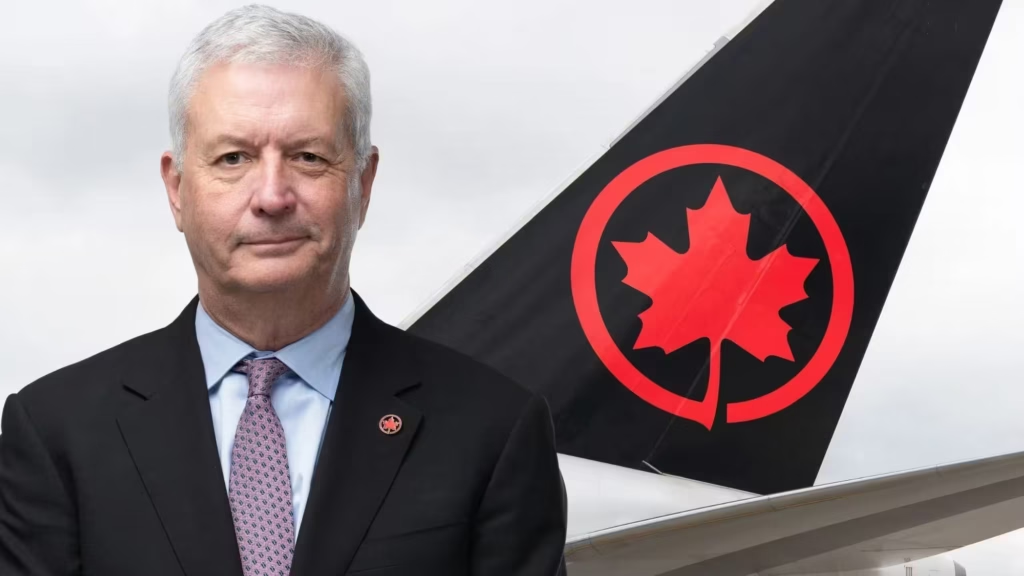
The Changing of the Guard: What Michael Rousseau’s Departure Means for Air Canada
The skies over Canada’s largest airline are shifting. In a move that signals a pivotal transition for the nation’s flag carrier, Air Canada has announced that Michael Rousseau will step down as President and Chief Executive Officer later this year. This planned leadership change comes at a critical juncture for the aviation industry, as airlines worldwide navigate the turbulent post-pandemic recovery, intense competitive pressures, and the daunting challenge of decarbonizing air travel.
The board of directors has initiated a comprehensive search for a successor, aiming to ensure a smooth handover. Rousseau is expected to stay on until a new CEO is appointed and will then serve in an advisory capacity to facilitate the transition. This marks the end of a significant, albeit relatively short, tenure at the helm for Rousseau, who took the top job in February 2021, arguably one of the most difficult times in aviation history.
A Tenure Forged in Crisis and Recovery
Michael Rousseau’s ascent to CEO was not a conventional one. A longtime finance executive, he served as Air Canada’s Chief Financial Officer for over a decade, earning a reputation as a shrewd financial manager and a key architect of the airline’s strategy. When he succeeded Calin Rovinescu, he was tasked with an unimaginable challenge: steering Air Canada through the final, brutal waves of the COVID-19 pandemic.
His tenure can be broadly defined by two monumental tasks:
- Navigating the Survival Phase: Rousseau took over as the airline was burning through cash, its fleet largely grounded, and its future uncertain. He oversaw the execution of a massive financial restructuring, including a critical equity financing deal and the renegotiation of government aid packages, which provided the liquidity needed to survive.
- Leading the Rebound: As travel restrictions eased, Rousseau pivoted to managing one of the industry’s most aggressive recoveries. The focus shifted to rebuilding the network, recalling staff, and managing operational meltdowns that plagued the sector in the summer of 2022. Financially, the airline returned to profitability under his watch, a notable achievement given the depth of the crisis.
However, his leadership was not without controversy. A speech in late 2021, where he admitted to living in Montreal for over a decade without learning French, sparked a major political and public relations firestorm. The incident put a lasting mark on his public persona and highlighted the unique cultural pressures facing leaders of major Quebec-based corporations.
The Challenges Left on the Tarmac
Whoever assumes the CEO role will inherit a company in a stronger financial position than in 2021 but facing a new and complex set of headwinds. The post-pandemic “revenge travel” boom is normalizing, and the industry is settling into a new reality.
The next leader must grapple with several persistent issues:
- Operational Resilience: Ensuring consistent, reliable service amidst ongoing supply chain issues, air traffic control constraints, and volatile weather patterns.
- Cost Pressures: Managing elevated costs for fuel, labour, and new aircraft while keeping fares competitive, especially against aggressive ultra-low-cost carriers.
- Strategic Positioning: Defining Air Canada’s competitive identity—balancing its full-service global network with the need to compete on price and efficiency in a crowded market.
- The Sustainability Imperative: Making tangible progress on the airline’s ambitious goal of net-zero emissions by 2050, a journey requiring massive investment in new technology, sustainable aviation fuels, and fleet renewal.
The Search for a New Captain
The board’s search for a successor will be one of the most closely watched executive hunts in Canadian business. The decision will signal the company’s strategic direction for the coming decade. Key questions abound: Will the board seek another financially-minded leader to solidify the balance sheet, or a commercial operator to sharpen the airline’s market edge? Will they look internally from the deep bench of executives, or seek an external candidate with fresh perspectives?
The choice will also be scrutinized through a lens of national symbolism and linguistic politics. As a former Crown corporation and enduring national icon, Air Canada’s leadership is always under a microscope. The ability to connect with both the financial markets on Bay Street and the public and political spheres in Quebec and Ottawa is a rare but crucial skill set.
Investor and Industry Reactions
The market’s initial reaction to the news was measured, suggesting the transition was anticipated by some and is viewed as part of a natural corporate evolution. Analysts will be keenly focused on the succession plan’s clarity and the credentials of the incoming CEO. Stability and a clear strategic vision will be paramount to maintaining investor confidence.
Within the industry, competitors will be watching closely. A leadership change at a giant like Air Canada can create opportunities for rivals if the transition period leads to strategic hesitation. Conversely, a smooth handover to a dynamic new leader could reinvigorate the airline’s competitive stance.
Looking Ahead: The Flight Path for Canada’s Flag Carrier
Michael Rousseau’s legacy will be that of the crisis CEO who steadied the ship. He guided Air Canada from the brink of a financial abyss back to operational and fiscal stability. The foundational work of survival and initial recovery is complete.
The next chapter requires a different kind of leadership. The future CEO must be a builder, an innovator, and a visionary. Their mission will be to:
- Define and articulate a compelling long-term strategy for growth and profitability.
- Foster a strong, positive corporate culture and rebuild public trust.
- Navigate the technological transformation of aviation, from fleet modernization to digital customer experience.
- Champion the expensive and complex journey toward sustainable aviation.
The departure of a CEO is always more than a personnel change; it is a strategic inflection point. For Air Canada, this moment represents a transition from an era defined by survival to one that must be defined by ambition and adaptation. The global aviation landscape is changing faster than ever, with new competitors, new technologies, and new passenger expectations. The choice of who sits in the captain’s seat will determine whether Canada’s flag carrier soars confidently into that future or finds itself battling unexpected turbulence.
The board’s coming decision is not just about hiring an executive; it is about charting the course for a national symbol in an age of disruption. All eyes will now be on the search committee as they select the pilot for the next leg of Air Canada’s journey.

