
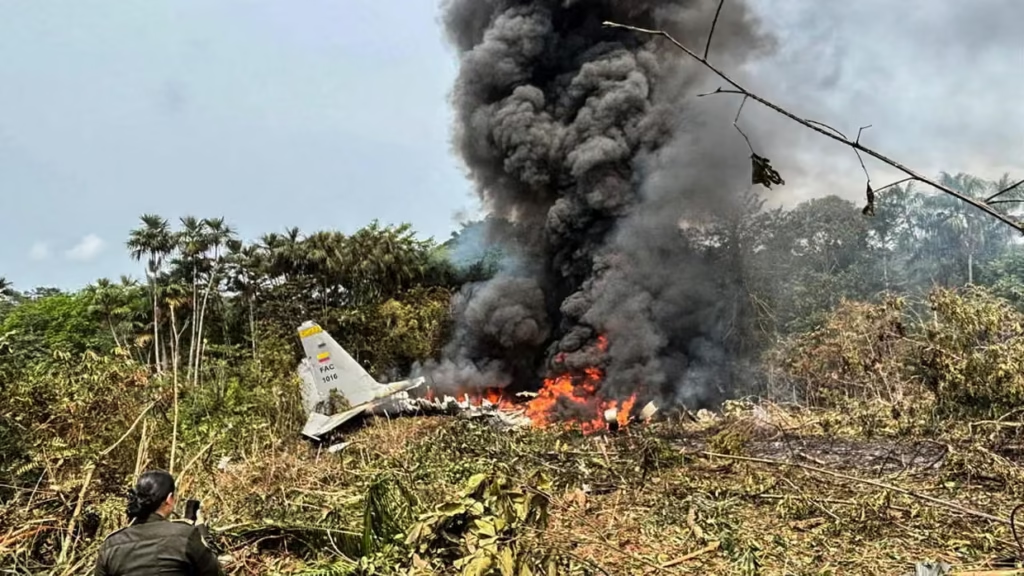
Colombian Military Plane Crashes in Southwestern Cauca Region
A Colombian military aircraft has crashed in a remote, mountainous area of the country’s southwest, according to a statement from the nation’s defense minister. The incident, which occurred in the department of Cauca, has prompted a large-scale search and rescue operation amid challenging terrain and weather conditions.
The crash adds to a somber history of aviation incidents in Colombia’s complex topography and underscores the ongoing challenges faced by the military in regions still grappling with armed group activity.
Details of the Crash and Immediate Response
The aircraft, identified as a IAI Arava, a twin-engine utility plane used extensively by the Colombian Air Force (FAC), went down near the municipality of Santa Rosa in Cauca. Initial reports indicate the plane was on a routine logistical mission, a common flight path for military transports in the region which is known for its lack of major road networks.
Defense Minister Iván Velásquez confirmed the crash, stating that authorities were alerted to the situation and immediately mobilized emergency response teams. The area of the crash is characterized by steep, verdant mountains and is often shrouded in fog, complicating both flight operations and ground-based rescue efforts.
Launching the Search and Rescue Mission
Following the alert, a multi-agency operation was launched involving:
- The Colombian Air Force, deploying helicopters equipped for search and rescue (SAR).
- Army ground troops stationed in the Cauca region.
- The Colombian Civil Aviation Authority and the Colombian Disaster Risk Management Unit (UNGRD).
The primary objectives of the mission are twofold: to locate the exact crash site and to find any possible survivors. Given the remote location, teams are facing significant logistical hurdles. Rescuers are contending with dense jungle, unpredictable weather, and the difficult topography that defines much of the Colombian Andes’ western range.
The Human Element: Crew and Passengers
While official details are still being confirmed, early reports suggest the aircraft was carrying a complement of seven individuals. This number typically includes a flight crew and military personnel being transported. The families of those on board have been notified as the military proceeds with its established protocols for such incidents.
The nation now waits anxiously for updates from the search teams. Every aviation accident is a profound tragedy, but within the close-knit structure of the armed forces, the impact is deeply and personally felt across the ranks.
The IAI Arava: Workhorse of the Colombian Air Force
To understand the context of this crash, it’s helpful to know the aircraft involved. The IAI Arava is a short-takeoff-and-landing (STOL) utility transport plane designed by Israel Aerospace Industries. It has been a stalwart in the FAC’s fleet for decades, prized for its ability to operate from rough, short airstrips—a critical capability in a country like Colombia.
Operational History and Prior Incidents
The Arava’s rugged design makes it ideal for accessing remote areas where the military maintains outposts or conducts supply runs to communities. However, its operational history in Colombia has not been without incident. The challenging flight environment, combining high mountains, rapidly changing microclimates, and sometimes limited navigational aids, has tested both man and machine over the years.
This latest crash will inevitably lead to an investigation to determine the probable cause. Investigators will examine a range of factors, including:
- Mechanical failure: A thorough inspection of maintenance records and any recovered wreckage.
- Weather conditions: Analysis of meteorological data for the route and time of the flight.
- Human factors: Review of crew training, flight hours, and operational decisions.
- Terrain and navigation: Assessment of the flight path relative to the mountainous terrain.
Cauca: A Region of Strategic Importance and Conflict
The choice of Cauca as the setting for this tragedy is not coincidental. This department is one of the most strategically complex and volatile in Colombia. For decades, it has been a focal point of the armed conflict, with a strong historical presence of the now-demobilized FARC guerrilla group, and currently, dissident factions and other armed organizations vying for control of drug trafficking routes and illegal mining operations.
Military Presence and Aviation Risks
The persistent instability necessitates a significant and constant military and police presence. This, in turn, requires a steady flow of personnel rotations, supplies, and equipment—much of which is moved by air due to security risks on the ground and the poor state of rural roads. The frequent flight operations in this demanding environment inherently carry risk.
The crash serves as a stark reminder of the dangers faced by Colombian service members beyond direct combat. The daily logistics of maintaining security and state presence in these remote zones are a monumental and hazardous undertaking.
National and International Reactions
News of the crash has been met with concern both domestically and internationally. President Gustavo Petro and other high-ranking government officials have expressed their solidarity with the families of those on board and have pledged all necessary resources for the search operation.
Internationally, neighboring countries with experience in Andean search and rescue, such as Ecuador and Peru, have likely offered assistance given the shared geographical challenges. The incident also resonates with global military and aviation communities, which closely monitor such events for lessons that can improve safety protocols worldwide.
Looking Forward: Investigation and Legacy
As the search continues, the focus remains on the hope of finding survivors. In the subsequent days and weeks, the focus will shift to a meticulous investigation. The Colombian Air Force and aviation authorities will work to piece together the final moments of the flight to prevent future tragedies.
The loss of this aircraft and its crew is a blow to the nation’s armed forces. Each flight into Colombia’s remote frontiers is a mission of service, and those who undertake them do so with an awareness of the risks. This event underscores the high cost of maintaining connectivity and security in a nation whose beautiful yet formidable landscape presents constant challenges.
The people of Colombia now unite in hope for the missing and in mourning for the lives lost, honoring the service and sacrifice made in the line of duty. The story of this crash is more than an aviation headline; it is a chapter in the ongoing story of a nation navigating the difficult path toward peace and stability in every corner of its territory.

