
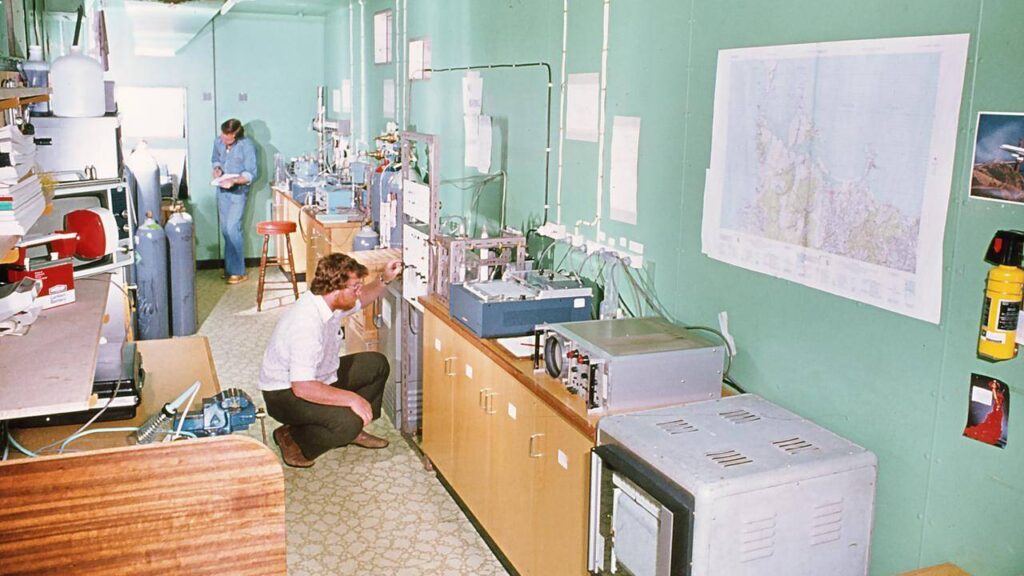
NASA’s 50-Year Climate Mission at the Edge of the World
For half a century, at a remote outpost where the Southern Ocean howls and the next landmass is Antarctica, a quiet scientific vigil has been kept. At Cape Grim, on the far northwestern tip of Tasmania, the air is some of the cleanest found anywhere on Earth. It is here, in this pristine and windswept landscape, that NASA and its Australian partners have been conducting one of the planet’s most crucial long-term climate experiments. This 50-year record isn’t just data; it’s the definitive fingerprint of how human activity has fundamentally altered our atmosphere.
The Pristine Laboratory: Why Cape Grim is the Perfect Sentinel
Cape Grim’s value lies in its profound isolation. When the “Cape Grim” winds blow from the southwest—which they do about 40% of the time—they carry air that has traversed thousands of kilometres of open ocean, untouched by continents, cities, or industrial activity for up to two weeks. This makes it a perfect baseline, a snapshot of the well-mixed background atmosphere of the Southern Hemisphere.
Scientists liken it to taking the planet’s vital signs from a place free of local pollution. Any changes detected in this pure air sample are not local anomalies but global signals. The station, officially known as the Cape Grim Baseline Air Pollution Station, is a joint facility of the Australian Bureau of Meteorology and the CSIRO, with NASA providing critical long-term instrumentation and collaboration. It forms a key part of a global network monitoring the Earth’s atmospheric health.
The Unmistakable Signal: What 50 Years of Data Reveals
The graphs plotted from Cape Grim’s data tell a story more compelling than any scientific paper. The lines tracking key greenhouse gases show a relentless, upward march.
- Carbon Dioxide (CO2): When measurements began in 1976, CO2 levels were around 330 parts per million (ppm). Today, they have surged past 417 ppm, a increase of over 25%. This curve is the primary driver of human-caused global warming.
- Methane (CH4): An even more potent greenhouse gas, methane levels have more than doubled since pre-industrial times, with a significant portion of that rise captured in Cape Grim’s modern record.
- Nitrous Oxide (N2O): Often overlooked, this long-lived gas, primarily from agriculture, also shows a steady and concerning climb.
Beyond the raw numbers, Cape Grim’s data has been instrumental in identifying specific human “signatures.” Researchers can distinguish between methane from natural wetlands and methane from fossil fuel extraction or livestock. They can trace the global phase-out of ozone-depleting CFCs and the rise of their replacements. This station provides the incontrovertible evidence that the composition of our atmosphere is changing due to industrial and agricultural emissions.
More Than Just Gas: A Full Atmospheric Autopsy
While greenhouse gases are the headline, Cape Grim’s scientists conduct a full atmospheric autopsy. They collect data on a stunning array of components:
- Aerosols: Measuring tiny particles from sea spray, dust, and pollution that influence cloud formation and the Earth’s reflectivity.
- Ozone: Monitoring protective stratospheric ozone and problematic tropospheric ozone.
- Radiation: Precisely tracking how much solar energy is entering and leaving the Earth system, the fundamental metric of climate change.
- Weather Patterns: The long-term meteorological data itself is a climate record, showing subtle shifts in the dominant wind patterns that bring that pristine air.
This holistic approach means Cape Grim doesn’t just tell us what’s in the air; it helps us understand the complex knock-on effects those changes are causing to the entire climate system.
The Human Element: Life at the Edge of the Scientific World
Maintaining a continuous, precise record for five decades is a monumental human achievement. It requires the dedication of technicians and scientists who live and work in this remote location, ensuring instruments are calibrated and samples are collected, even in the fiercest gales. The station has evolved from manually drawn glass flasks to a suite of fully automated, state-of-the-art analyzers, but the mission’s core principle remains unchanged: consistency.
This long-term consistency is its superpower. In climate science, short-term trends can be noisy, influenced by events like volcanic eruptions or El Niño. Cape Grim’s 50-year record smooths out that noise, revealing the clear, long-term trajectory driven by human activity. It acts as a calibration point for global climate models and for satellite observations, grounding high-tech space data in the reality of on-the-ground measurement.
A Legacy for the Future: The Next 50 Years
As the station celebrates this golden anniversary, its work has never been more critical. The data it provides is the bedrock of international climate assessments, including those by the Intergovernmental Panel on Climate Change (IPCC). It is the evidence presented to policymakers and the public to demonstrate the pace and scale of change.
Looking ahead, Cape Grim’s role will evolve to track new challenges. Scientists will monitor the atmospheric impacts of a transitioning global energy system, the potential rise of new industrial gases, and the continuing feedback loops within the climate itself. The station is also now detecting minute increases in atmospheric helium—a direct tracer of natural gas extraction and leaks—showcasing its evolving forensic capabilities.
The vigil at the edge of the world continues. Each breath of clean, Southern Ocean air analyzed at Cape Grim adds another data point to humanity’s longest and most important climate record. It is a story written not in words, but in parts per million, a stark and silent testimony to a changing planet, and a reminder that our actions are written in the very air we all share. This 50-year mission stands as a testament to the power of patient, precise science to reveal truths that are essential for our collective future.

