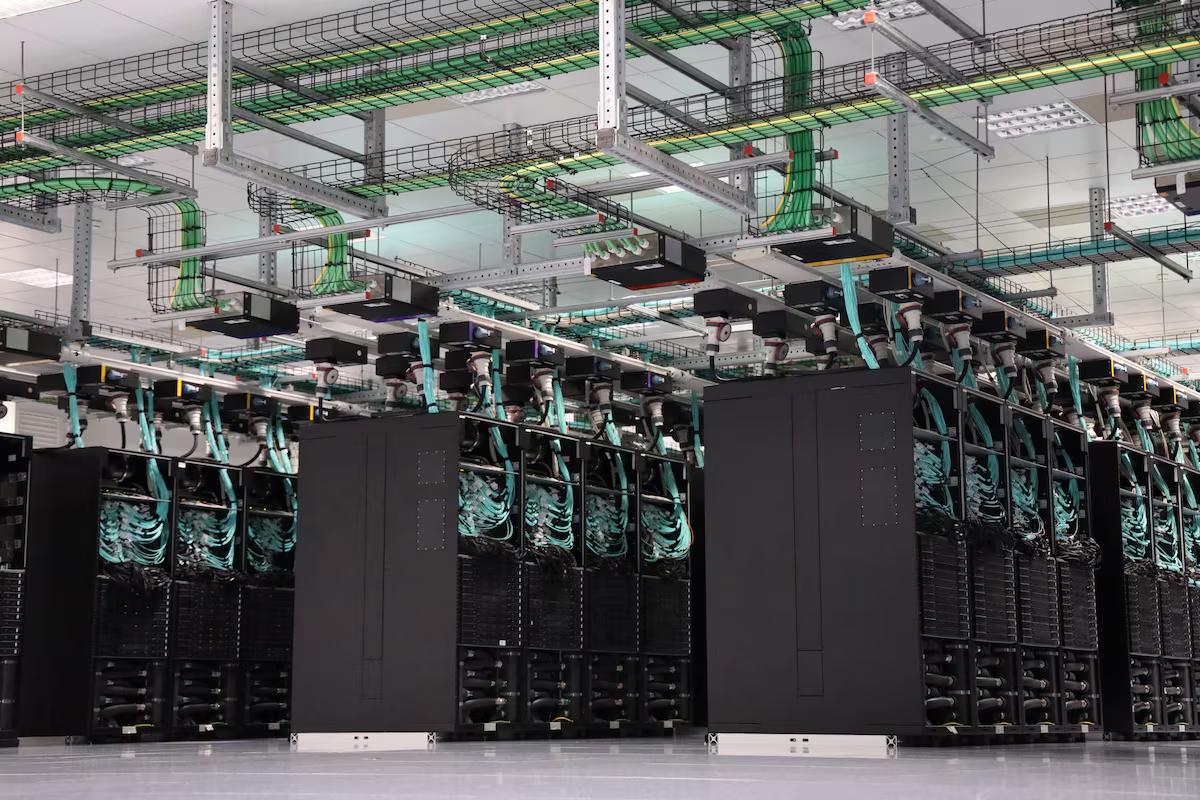
Why Canada Must Build Sovereign Supercomputers for Its Future
In an era defined by data, the nations that control the most powerful computational tools will shape the 21st century. From simulating climate change and discovering new pharmaceuticals to pioneering artificial intelligence and securing national infrastructure, supercomputers are the engines of modern sovereignty. Yet, as a recent Globe and Mail opinion piece highlighted, Canada faces a critical juncture: continue relying on foreign-owned and operated high-performance computing (HPC) systems, or invest decisively in building its own sovereign capability. The choice we make will determine our economic resilience, scientific independence, and national security for decades to come.
The High Stakes of Computational Sovereignty
A sovereign supercomputer is more than just a fast machine on Canadian soil. It represents control over the hardware, the software, the data it processes, and the expertise required to run it. Currently, Canada’s reliance on foreign systems, primarily from U.S.-based tech giants, creates a series of intertwined risks.
1. Data Security and Privacy at Risk
When sensitive research—be it in genomics, proprietary engineering, or defence—is processed on foreign-owned infrastructure, it falls under a different legal jurisdiction. This exposes Canadian data to foreign laws, such as the U.S. CLOUD Act, which can compel companies to hand over data regardless of its physical location. For a nation committed to strong privacy standards, this is an untenable vulnerability.
2. Economic and Intellectual Capital Flight
Renting computational power from abroad is akin to renting the tools for innovation. The real value—the cutting-edge expertise in HPC operations, system architecture, and specialized software development—accumulates elsewhere. By not building our own, we are exporting our brightest minds and our future intellectual property, stunting the growth of a crucial domestic knowledge economy.
3. Strategic Vulnerability in Crisis
Access to foreign computational resources is a privilege, not a right. In times of international tension or geopolitical conflict, these resources could be restricted or cut off entirely. Canada cannot allow its ability to model pandemic responses, manage its energy grid, or conduct essential scientific research to be held hostage by the strategic interests of another nation.
The Pillars of a Sovereign Canadian HPC Strategy
Building a sovereign supercomputing ecosystem is not about isolationism; it is about building a foundation for stronger, more secure international collaboration. A successful national strategy must rest on three core pillars.
Investment in Homegrown Hardware and Infrastructure
This requires sustained, significant public investment to deploy world-class supercomputing facilities owned and operated by Canadian institutions. These must be:
Cultivation of a Domestic Talent Pipeline
The machines are nothing without the people who run them. We must:
Strategic Public-Private Partnerships
Sovereignty does not mean the government must do it all alone. A collaborative model can accelerate success:
Beyond Science: Sovereign Compute as an Economic Engine
The benefits of this investment extend far beyond the laboratory. A sovereign HPC capability is a powerful economic catalyst.
Driving Innovation Across Sectors: From designing more efficient aircraft and sustainable materials to accelerating drug discovery and optimizing agricultural yields, domestic supercomputing provides a competitive edge to Canadian industries. It reduces time-to-market and lowers the barrier for startups to engage in compute-intensive innovation.
Creating High-Value Jobs: The ecosystem surrounding a world-leading HPC facility creates hundreds of direct, high-skilled jobs and thousands more indirect positions in software, advanced manufacturing, and research services.
Attracting and Retaining Global Talent: Top-tier researchers and companies are drawn to locations with premier research infrastructure. A sovereign supercomputing centre would act as a magnet, reversing the brain drain and positioning Canada as a global hub for computational science and AI.
A Call for National Ambition and Action
The path to sovereign supercomputing requires confronting a history of underinvestment and fragmented strategy. It demands a shift in mindset—from viewing HPC as a cost centre for academia to recognizing it as a strategic national asset, as critical as highways or the electrical grid.
The federal government, through agencies like the Digital Research Alliance of Canada (DRAC), has begun to lay groundwork. But the scale of ambition must match the urgency of the challenge. This is a long-term commitment that must transcend political cycles and involve coordinated action across provincial governments, research institutions, and the private sector.
The alternative is a future of continued dependency, where Canada remains a tenant in the digital economy, paying rent with its data and its potential. The moment to decide is now. By choosing to build our own computational foundation, we are not just purchasing processing power; we are investing in our sovereignty, our security, and our capacity to shape a future that is made in Canada. The question is not if we can afford to do this, but whether we can afford not to.