Rewilding Vancouver: A Vital Urban Strategy for People and Wildlife
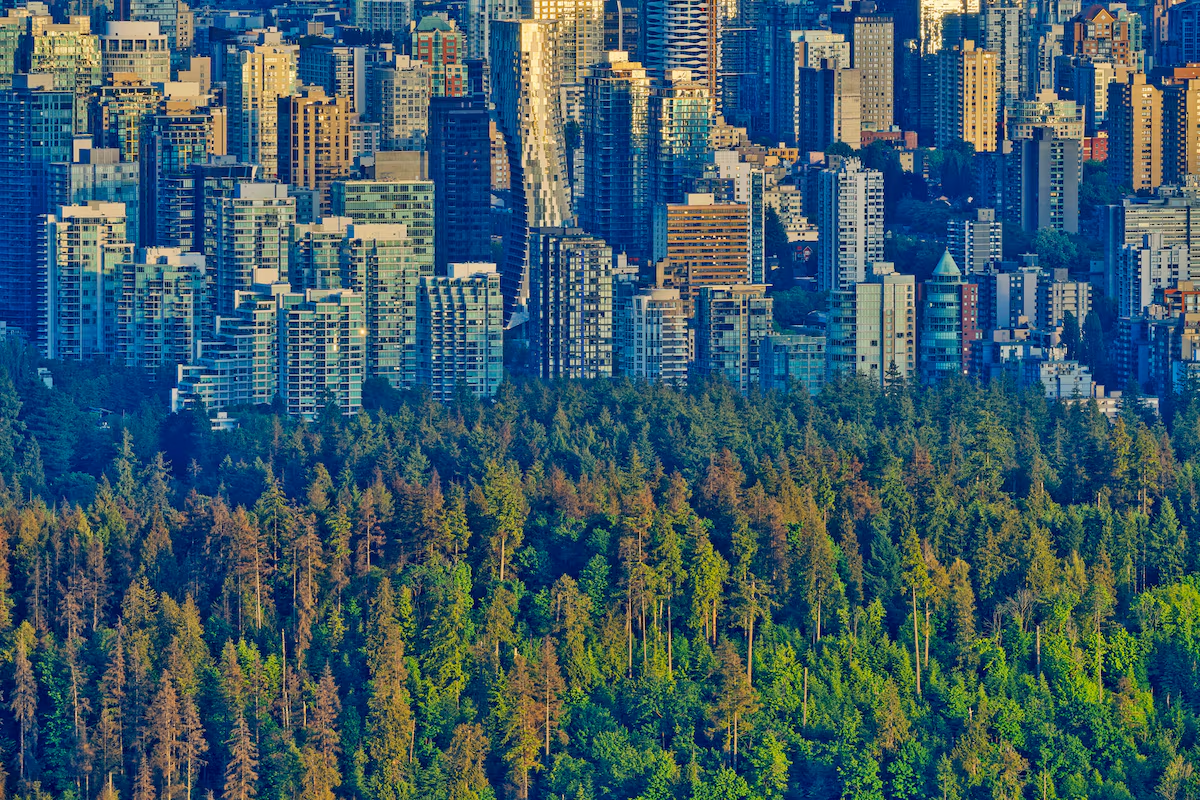
In the heart of Vancouver, a quiet revolution is taking root. It’s not about new skyscrapers or transit lines, but about something far more fundamental: the city’s living, breathing green canopy. As one of Canada’s most densely populated urban centres, Vancouver faces the constant tension between development and nature. Yet, a growing movement is championing a powerful solution—rewilding. This isn’t just about planting more trees; it’s a comprehensive strategy to restore ecological processes, create vital corridors for wildlife, and fundamentally reimagine how a modern city can coexist with the natural world. For Vancouver, embracing rewilding is not a nostalgic luxury; it’s an urgent necessity for climate resilience, public health, and the very soul of the city.
The Shrinking Canopy: More Than Just Lost Trees
Vancouver’s famed urban forest is under threat. Mature trees are lost daily to development, old age, disease, and the mounting pressures of climate change. Each loss is a blow to the city’s ecological integrity. An urban tree is not merely a decorative object; it is a complex ecosystem unto itself.
What we lose when a mature tree falls extends far beyond shade:
The piecemeal loss of these natural assets fragments habitats into isolated islands, trapping wildlife and weakening the overall resilience of the urban ecosystem.
What Does “Rewilding” a City Actually Mean?
Rewilding Vancouver moves beyond traditional landscaping and arboriculture. It is a proactive, ecological approach with several core principles:
1. Creating Connected Corridors, Not Just Green Pockets
The goal is to weave together parks, street trees, backyards, boulevards, and green roofs into a continuous network. This ecological connectivity allows wildlife like birds, pollinators, and small mammals to safely move, forage, and migrate across the city. It transforms isolated green patches into a living, functioning web of life.
2. Prioritizing Native Biodiversity
Rewilding favours planting native species—like Pacific dogwood, red flowering currant, and Douglas-fir—which have co-evolved with local wildlife. These plants provide the specific food and shelter that native insects, birds, and animals rely on, strengthening the entire food web from the bottom up.
3. Letting Nature Lead
This strategy involves a shift in perspective: less manicured control, more natural processes. It means leaving fallen logs as habitat, allowing leaf litter to nourish soil, and designing naturalized wetlands that manage stormwater while creating rich biodiversity hotspots. It’s about working with natural succession, not constantly fighting it.
The Blueprint for a Wilder Vancouver: Key Strategies in Action
Implementing this vision requires bold, concrete policies and community action. Vancouver’s Forest Strategy provides a framework, but its success hinges on execution and expansion.
Critical actions must include:
The Profound Benefits: Why This Matters for Everyone
The argument for rewilding is compelling because its rewards are shared by every city resident, human and non-human alike.
For Wildlife:
It provides a fighting chance for survival in an urbanizing world. From the migratory birds that use the Pacific Flyway to the endangered pollinators crucial for our food systems, connected habitats are a lifeline. It’s about fostering coexistence, where sightings of coyotes, owls, and eagles become a point of civic pride, not fear.
For People:
We are not separate from nature; we are part of it. A rewilded city is a healthier, more equitable, and more joyful place to live.
Cultivating a New Urban Ethic
Rewilding Vancouver is ultimately about a shift in mindset. It asks us to see the city not as a human project that tolerates nature, but as a shared habitat. It challenges the notion that urban progress is measured only in glass and concrete. The true mark of a world-class city in the 21st century will be its ecological vitality—its ability to sustain both a thriving human community and a thriving natural community.
The path forward requires courage from policymakers, innovation from developers, and participation from every resident. It means valuing a towering cedar for the complex life it supports as much as for its beauty. By committing to this ambitious rewilding strategy, Vancouver can do more than just preserve its “Greenest City” moniker. It can pioneer a new model of urban life, where the sounds of birdsong and the rustle of leaves in the canopy are not remnants of a past world, but the vibrant, essential soundtrack of a living, breathing, and truly wild future.