Alberta’s Use of the Notwithstanding Clause Explained
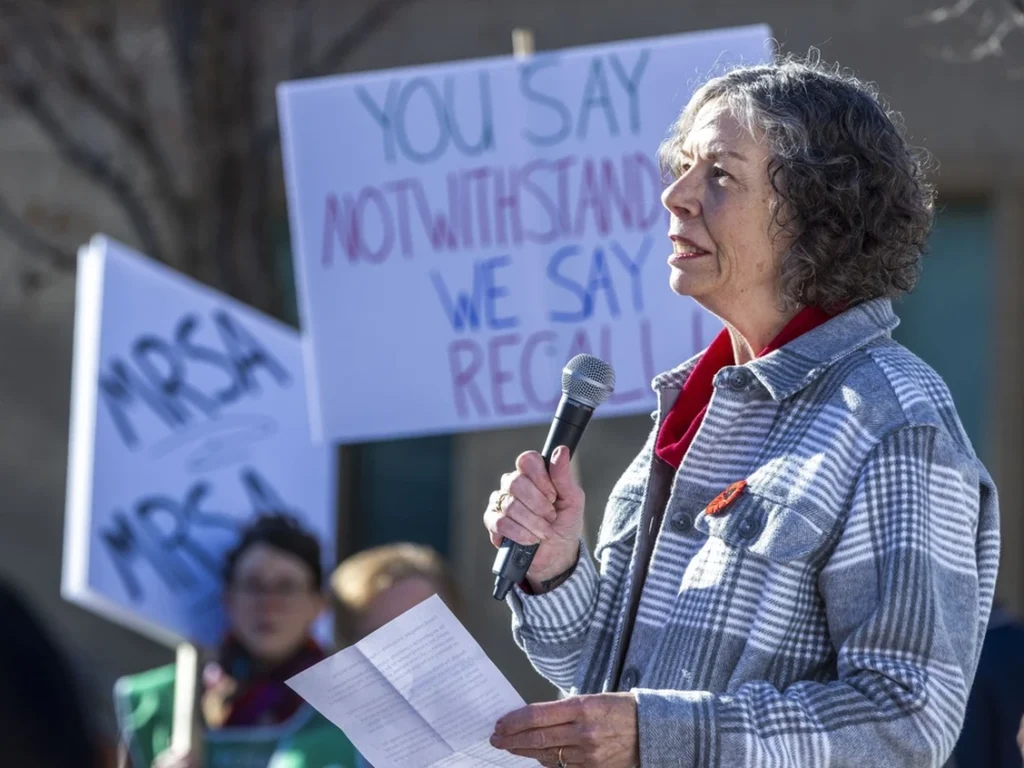
The political landscape in Canada is witnessing a significant shift, with provincial governments increasingly reaching for a powerful constitutional tool once considered a last resort. At the center of this shift is Alberta, where Premier Danielle Smith’s government has proactively invoked the notwithstanding clause in recent legislation, signaling what many commentators are calling the arrival of a “Wild West” era for this contentious section of the Charter of Rights and Freedoms. This move has ignited a fierce national debate about provincial power, federal oversight, and the very nature of our rights.
What Is the Notwithstanding Clause?
To understand the current controversy, we must first demystify the clause itself. Officially known as Section 33 of the Canadian Charter of Rights and Freedoms, the notwithstanding clause is a unique and powerful provision. It allows federal or provincial legislatures to pass laws that will operate notwithstanding—or in spite of—certain fundamental freedoms and legal rights guaranteed by the Charter.
Specifically, it can override:
- Section 2: Fundamental freedoms (conscience, religion, thought, belief, opinion, expression, assembly, association).
- Sections 7 to 14: Legal rights (life, liberty, security of the person, unreasonable search/seizure, etc.).
- Section 15: Equality rights (effective 1985).
Its use is not permanent or absolute. A Section 33 declaration is only valid for a five-year term, after which it must be renewed by the legislature if the government wishes to keep the override in place. This was originally conceived as a compromise during the Charter’s drafting in 1981, intended to preserve a degree of parliamentary sovereignty and reassure provinces wary of too much judicial power.
Alberta’s Proactive Stance: A New Precedent
Historically, the notwithstanding clause was treated as a measure of last resort, typically used reactively after a court had struck down a law. Alberta’s recent approach breaks from this tradition. The Smith government has moved to pre-emptively invoke Section 33 in new legislation, most notably in Bill 18, the Provincial Priorities Act, and in amendments to the Alberta Sovereignty Within a United Canada Act.
This proactive use is the core of the “Wild West” analogy. By embedding the clause at the bill’s inception, the government is essentially stating that the law will stand regardless of any potential Charter challenges related to specific sections. This strategy aims to bypass lengthy legal battles and assert provincial authority from the outset.
The Stated Rationale: Provincial Autonomy and Efficiency
The Alberta government defends its use of Section 33 as a necessary tool to protect provincial jurisdiction and deliver on its mandate without federal interference or judicial delay. In the case of the Provincial Priorities Act, which aims to control federal funding agreements with provincial entities like cities and universities, the government argues it is safeguarding Alberta’s constitutional autonomy.
Key arguments from the province include:
- Asserting Constitutional Authority: They claim the clause is a legitimate part of the Constitution, placed there for a reason, and using it is a valid exercise of democratic will.
- Preventing Judicial Overreach: There is a perspective that unelected judges should not have the final say on complex policy matters best left to elected legislatures.
- Streamlining Policy Goals: Pre-emptive use avoids years of uncertainty and legal costs associated with Charter challenges, allowing policies to be implemented immediately.
The Critics’ Case: Erosion of Rights and a Dangerous Trend
Opponents, including constitutional scholars, opposition politicians, and civil liberties groups, view Alberta’s tactic as a dangerous normalization of what was meant to be an extraordinary measure. Their concerns are multifaceted and profound.
The primary criticisms are:
- Cheapening the Charter: Using Section 33 as a standard legislative tool, rather than an exceptional one, risks making fundamental freedoms conditional and subject to the political whims of the governing party.
- Undermining Judicial Review: The courts play a vital role in protecting minority rights from majority rule. Pre-emptively overriding the Charter sidesteps this essential check and balance.
- Creating a “Legislative Bulletproof Vest”: Critics argue it allows governments to insulate potentially controversial or rights-infringing laws from any meaningful scrutiny under our highest law.
- Inspiring a National Race to the Bottom: There is a genuine fear that Alberta’s approach will encourage other provinces to routinely invoke the clause, leading to a patchwork of rights across Canada and a weakened national commitment to the Charter.
The Bigger Picture: Canada’s Constitutional Tension
Alberta’s actions cannot be viewed in isolation. They are part of a broader trend of increased provincial assertiveness and strained federal-provincial relations. The use of Section 33 has become more frequent in recent years, notably by Quebec and Ontario, though often in different contexts.
This trend highlights a persistent tension in the Canadian federation: the balance between uniform national rights and provincial self-determination. The notwithstanding clause is the constitutional embodiment of that tension. Alberta’s proactive use is testing the boundaries of how that balance is maintained, pushing the clause from a dormant “nuclear option” to an active instrument of daily governance.
What Comes Next? The Future of Section 33
The “Wild West” era of the notwithstanding clause raises critical questions for Canada’s future:
- Will voters accept this as a legitimate use of power, or will they see it as an overreach at the ballot box?
- Could this provoke a federal response, such as attempts to amend or restrict Section 33—a politically fraught endeavor requiring substantial provincial consent?
- How will the courts respond if a pre-emptively shielded law is challenged on grounds outside the overridden sections?
The trajectory suggests that the notwithstanding clause is no longer a relic of constitutional compromise but a live and potent political weapon. Its increasing normalization means that the debate over our rights is moving decisively from the courtroom to the legislatures and the public square.
Conclusion: A Nation at a Constitutional Crossroads
Alberta’s explanation for using the notwithstanding clause is rooted in a forceful defense of provincial priorities and legislative efficiency. However, the implications of this strategy extend far beyond any single piece of legislation. By choosing to pre-emptively employ Section 33, Alberta has ignited a fundamental debate about the hierarchy of rights, the role of the judiciary, and the very rules of engagement in Canadian democracy.
Whether this represents a prudent reassertion of democratic sovereignty or a perilous erosion of Charter protections is the defining constitutional question of the moment. One thing is clear: the “Wild West” of the notwithstanding clause has indeed arrived, and its impact will shape the landscape of Canadian law and politics for years to come.