
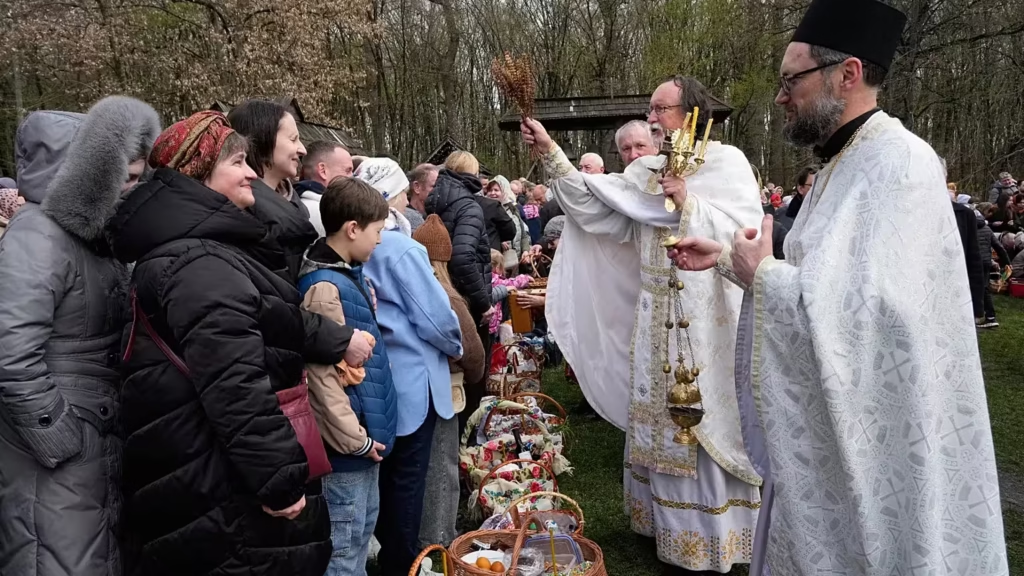
Russia and Ukraine Trade Blame Over Broken Orthodox Easter Truce
The hope for a brief moment of peace during one of Christianity’s holiest occasions was shattered this past weekend, as a proposed ceasefire for Orthodox Easter quickly collapsed amid renewed shelling and accusations. Both Moscow and Kyiv declared unilateral truces to mark the holiday, but the silence was short-lived, with each side blaming the other for violating the pause in hostilities almost immediately.
The incident underscores the deep-seated distrust and the immense challenges of negotiating any cessation of fire in a conflict where the front lines stretch for hundreds of miles and involve a myriad of military units.
A Holiday Pause Proposed and Quickly Abandoned
The concept of an Easter truce was first floated by the head of the Russian Orthodox Church, Patriarch Kirill, a staunch supporter of President Vladimir Putin’s war. The Kremlin subsequently announced a 36-hour unilateral ceasefire, stating it was so Orthodox Christians could attend services.
Ukraine and its Western allies met the proposal with profound skepticism. President Volodymyr Zelenskyy dismissed it as a “propaganda” move, suggesting it was a cynical attempt by Russia to halt Ukrainian advances on the battlefield and buy time to reinforce its own exhausted and battered units. Despite these doubts, Ukraine indicated it would not actively conduct operations during the period but stopped short of formally agreeing to the truce.
The Accusations Fly: Who Broke the Ceasefire?
Almost as soon as the ceasefire was meant to begin at midnight Moscow time on Friday, reports of violations emerged. The narrative from both capitals was predictably contradictory.
The Russian Narrative: Russian defense officials and state media were quick to claim that Ukrainian forces had ignored the ceasefire. They alleged that Ukrainian troops continued shelling Russian positions and settlements in the Donbas region, as well as targeting places of worship. Moscow claimed it had observed the truce fully, returning fire only in response to what it called Ukrainian provocations.
The Ukrainian Counter: Ukrainian officials presented a starkly different picture. Military authorities reported that Russian shelling continued unabated in eastern and southern Ukraine. They provided accounts of attacks on cities like Zaporizhzhia and Kramatorsk, and alleged that Russian strikes on civilian infrastructure persisted. For Ukraine, the Russian ceasefire declaration was nothing but empty words, a tactical feign with no intention of being honored on the ground.
Independent verification in an active war zone is extremely difficult, but reports from international observers and journalists on the ground suggested that fighting, while potentially reduced in some sectors, did not stop.
The Strategic Calculus Behind a Holiday Truce
To understand why this ceasefire failed, one must look beyond the religious symbolism to the hard military and political realities.
For Russia, the potential benefits were multifaceted:
- Operational Pause: A genuine ceasefire would have allowed Russian forces, which have suffered heavy losses and are reportedly low on morale and ammunition, a critical breather to regroup and resupply.
- Propaganda Victory: By proposing a “humanitarian” pause, Russia aimed to portray itself as the reasonable party, concerned with Christian values, in contrast to a Ukraine it frames as a Western puppet.
- Dividing Western Opinion: The move was likely designed to appeal to certain factions within Europe who might pressure Ukraine to accept any offer of peace, however temporary or disingenuous.
For Ukraine, the risks of accepting were clear:
- Loss of Momentum: Ukrainian forces have been preparing for a anticipated spring counteroffensive. Halting all operations, even for 36 hours, could disrupt planning and allow Russia to fortify defensive lines.
- Trust Deficit: Given Russia’s history of broken agreements and the brutality of the invasion, Kyiv has zero trust in Moscow’s word. Accepting the truce could be seen as naive and dangerous.
- Moral Hazard: Agreeing to a truce proposed by the aggressor could be interpreted as legitimizing Russia’s position and its illegal occupation of Ukrainian territory.
The Broader Implications: Peace Talks and the Path Ahead
The collapsed Easter truce is a microcosm of the larger diplomatic stalemate. It highlights several key obstacles to any future negotiations:
1. The Fundamental Issue of Trust
There is no trust between the warring parties. Every statement, proposal, and action is viewed through a lens of maximal suspicion. Without a third-party guarantor with immense leverage, any agreement is seen as inherently fragile and likely to be broken for tactical advantage.
2. The Role of Narrative Warfare
The conflicting stories about who fired first on Easter are not just about the facts of a single event. They are part of the ongoing information war, where each side seeks to control the global narrative, painting the other as the irrational and untrustworthy aggressor. This makes discerning truth for the international community—and for populations at home—incredibly challenging.
3. The Shifting Battlefield Reality
With Ukraine preparing for new operations and Russia digging in for a protracted defense, neither side currently feels sufficient pain or pressure to make meaningful concessions. Temporary truces are unlikely to hold when both militaries believe they have strategic objectives within reach on the battlefield.
A Symbolic Failure with Real-World Consequences
The failure of the Orthodox Easter ceasefire is more than a missed opportunity for a day of prayer. It is a sobering reminder of the entrenched nature of this conflict. The holy day, meant to symbolize renewal and hope, instead became another platform for accusation and violence.
For the civilians caught in the crossfire, especially in frontline towns and cities, the continued shelling was a brutal message that the war offers no respite, not even for the most sacred of days. It reinforces the grim reality that until the fundamental calculus of the war changes—through decisive military outcomes, severe economic pressure, or a dramatic shift in political will—the prospect of even temporary peace, let alone a lasting settlement, remains a distant hope.
The echoes of Easter hymns were drowned out by the sound of artillery, a poignant metaphor for a war where dialogue has been silenced by the relentless drumbeat of violence. The path to peace, it seems, will be forged not by symbolic gestures, but by the unforgiving and decisive realities of the battlefield.

