
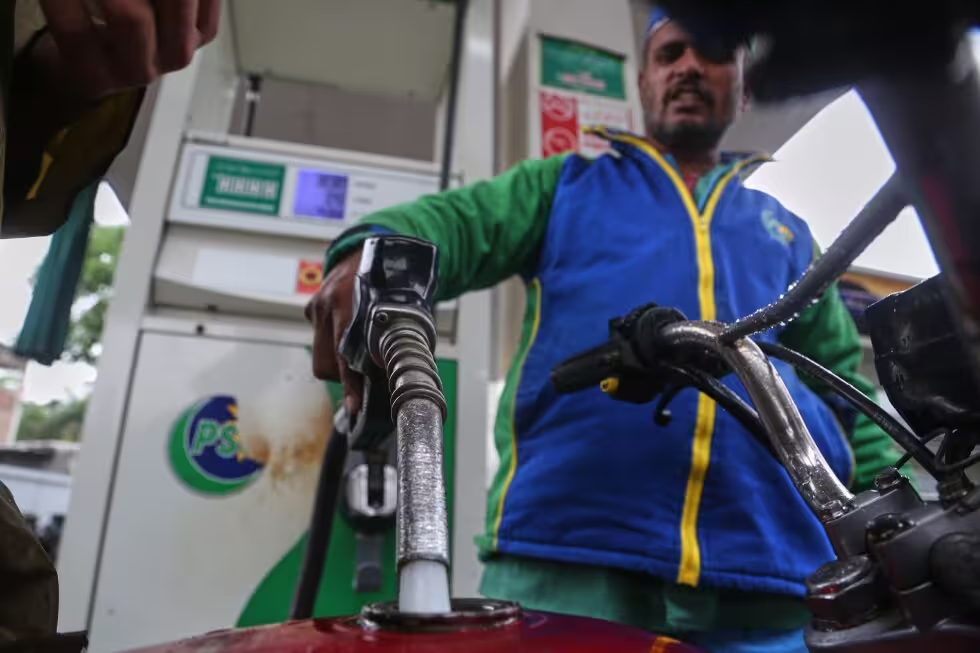
Surging Fuel Prices in Pakistan: A 54% Crisis Explained
The weekly announcement from Pakistan’s finance ministry has become a source of national anxiety. This time, the news was particularly brutal: a staggering increase of up to 54% in fuel prices, a shocking hike that has sent shockwaves through an economy already on its knees. For millions of Pakistanis, this isn’t just a headline about global oil markets; it’s a direct assault on their household budgets, their livelihoods, and their ability to make ends meet.
This unprecedented surge is more than a number—it’s a multifaceted crisis with deep roots in global geopolitics and domestic economic fragility. Let’s unpack the forces behind this perfect storm and what it means for the people of Pakistan.
The Global Spark: War and Worldwide Inflation
To understand Pakistan’s pain, one must look at the international chessboard. The primary driver is the global spike in crude oil prices, which have soared past $120 a barrel. This spike is largely a consequence of Russia’s invasion of Ukraine, which has disrupted one of the world’s major energy supply lines and triggered widespread sanctions.
Key Global Factors:
- The Russia-Ukraine Conflict: Sanctions on Russian oil and voluntary boycotts have removed millions of barrels per day from the global market, creating a severe supply crunch.
- Rebounding Global Demand: As economies worldwide recover from the COVID-19 pandemic, the demand for fuel and energy has surged, further tightening supply.
- Speculative Market Pressure: Uncertainty and fear of future shortages have led to heightened speculation in oil futures, amplifying price volatility.
For a country like Pakistan, which imports the vast majority of its oil, these global prices are transmitted directly and painfully to the pump. There is no domestic buffer to absorb the shock.
The Domestic Tinderbox: IMF Conditions and a Weakening Rupee
While global prices provided the spark, Pakistan’s economic house was already filled with tinder. The country is in the midst of a crucial $6 billion International Monetary Fund (IMF) bailout program. To secure the release of essential funds and stabilize its economy, the government has committed to tough austerity measures.
A central pillar of these IMF conditions is the removal of subsidies on fuel and energy. The previous government had frozen prices for months, accumulating massive circular debt in the energy sector. The new administration, to comply with the IMF and avoid default, had no choice but to reinstate a “petroleum levy” and pass on the full cost of international oil to consumers. This policy shift, combined with the global spike, created the 54% perfect storm.
Furthermore, the plummeting value of the Pakistani Rupee has exacerbated the crisis. As the rupee loses value against the US dollar, the cost of importing oil becomes exponentially more expensive. This double whammy—higher dollar-based oil prices and a weaker rupee to pay for them—has made the price hike even more severe.
The Ripple Effect: How a Fuel Hike Paralyzes an Economy
Fuel is the lifeblood of any modern economy. A shock of this magnitude doesn’t just mean paying more at the pump; it triggers a devastating chain reaction of inflation that touches every single citizen.
- Transportation & Essential Goods: The immediate impact is on transport costs. Fares for buses, rickshaws, and trains have skyrocketed overnight. More critically, the cost of transporting food and other essential goods has surged, which vendors and shopkeepers immediately pass on to consumers.
- Food Inflation: From the diesel used in tractors and harvesters to the trucks that carry produce to market, every step of the agricultural supply chain becomes more expensive. This directly translates to higher prices for staples like wheat, vegetables, and fruit.
- Industrial Slowdown: Factories and industries reliant on fuel and generated power face soaring operational costs. This can lead to reduced production, layoffs, and even shutdowns, further straining employment.
- Power Generation Crisis: A significant portion of Pakistan’s electricity is generated from imported oil. Higher fuel costs mean more expensive power generation, leading to increased electricity tariffs and more frequent load-shedding, crippling homes and businesses alike.
Human Impact: Stories Behind the Statistics
Beyond the economic indicators are real human struggles. For the average Pakistani family already allocating over 50% of its income to food, this hike is catastrophic.
Daily wage earners, like rickshaw drivers and construction workers, now spend a significant portion of their daily earnings just on commuting to work. Small business owners are caught between rising input costs and customers with rapidly shrinking purchasing power. Middle-class families are cutting back on meat, dairy, and even vegetables, while drastically reducing non-essential travel. The psychological toll of this relentless financial pressure is immense, fueling widespread public anger and despair.
Government’s Dilemma and the Road Ahead
The Shehbaz Sharif-led government finds itself in an impossible position. On one hand, it must adhere to IMF demands to prevent a sovereign default—a scenario that would be far more disastrous. On the other, it faces the wrath of a population pushed to the brink. The political cost is enormous, with opposition parties capitalizing on the public’s fury.
The path forward is fraught with difficulty. The government has announced a modest relief package for the poorest families, but it is a drop in the ocean compared to the scale of the crisis. Long-term solutions are desperately needed:
- Accelerating the Shift to Renewable Energy: Reducing dependence on imported fossil fuels through solar, wind, and hydropower is a national security imperative.
- Negotiating Long-Term Supply Contracts: Seeking stable oil import deals with friendly nations to mitigate spot market volatility.
- Investing in Public Transport: Building efficient, affordable mass transit systems in major cities to reduce the population’s reliance on private vehicles and motor bikes.
- Agricultural and Tax Reforms: Broader economic reforms to increase productivity and broaden the tax base, reducing the fiscal deficit that leads to such painful adjustments.
Conclusion: A Nation at a Crossroads
The 54% fuel price hike is a symptom of a deeper malaise. It exposes Pakistan’s acute vulnerability to external shocks due to its import-dependent economic structure and chronic fiscal weaknesses. While the immediate trigger is global, the severity of the impact is undeniably homegrown.
For now, Pakistanis are bracing for a long, hot summer of discontent, where the struggle is not just against the heat, but against an economic reality that grows harsher by the day. The crisis is a stark reminder that true energy security and economic resilience are not luxuries, but the foundational requirements for a stable and prosperous future. How the nation navigates this tumultuous period will define its economic trajectory for years to come.

