Pakistan Proposes Islamabad as Venue for US-Iran De-escalation Talks
In a significant diplomatic maneuver, Pakistan has formally offered to host direct talks between the United States and Iran in its capital, Islamabad. This initiative aims to de-escalate soaring tensions in the Middle East following a series of retaliatory strikes between Iran and Israel. The move positions Pakistan, a nation with complex relationships with both Washington and Tehran, as a potential peace broker in one of the world’s most volatile regions.
A Neutral Ground in a High-Stakes Conflict
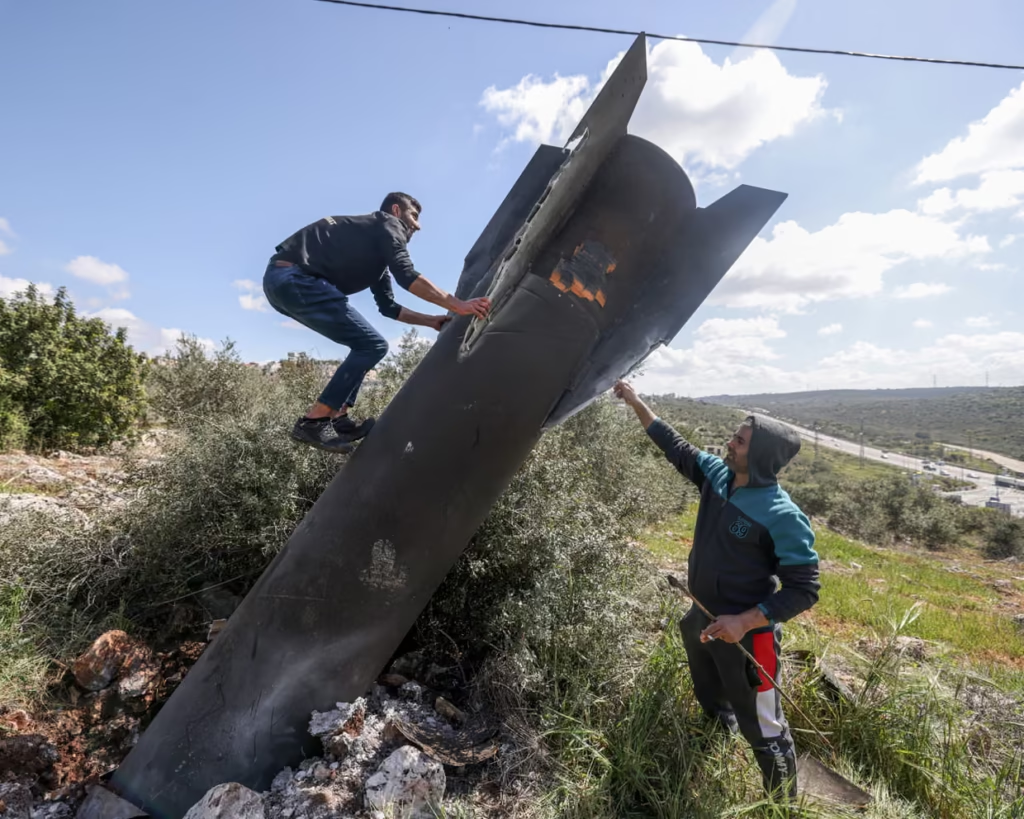
The offer comes at a critical juncture. The shadow war between Iran and Israel erupted into open confrontation with Iran launching a massive drone and missile attack on Israeli soil, which was itself a response to an alleged Israeli strike on an Iranian diplomatic compound in Damascus. While the direct exchange caused limited damage, it dramatically raised the risk of a wider regional war.
Islamabad’s proposal to serve as a mediator is rooted in its unique geopolitical standing. Unlike many of Iran’s neighbors, Pakistan has maintained a consistent, if sometimes strained, relationship with the Islamic Republic. Simultaneously, it is a long-standing security partner of the United States, despite recent friction over Afghanistan and other issues. This dual-track relationship provides Pakistan with a rare channel of communication to both sides.
Key reasons behind Pakistan’s push for mediation include:
- Regional Stability: A full-scale war between the US/Israel and Iran would have catastrophic consequences for the entire region, including Pakistan. Instability could spill over borders, exacerbate existing security challenges, and disrupt crucial trade routes.
- Economic Imperatives: Pakistan is in the midst of a severe economic crisis and is actively seeking foreign investment and International Monetary Fund (IMF) support. A regional conflict would destabilize global energy markets and economic confidence, directly threatening Pakistan’s fragile recovery.
- Diplomatic Prestige: Successfully facilitating talks would elevate Pakistan’s international standing, showcasing it as a responsible and capable diplomatic actor rather than a perennial source of regional tension.
The Delicate Dance: Pakistan’s Relations with Washington and Tehran
Pakistan’s role is not without its complications. Its relationship with the United States is often described as a transactional alliance, marked by periods of deep cooperation—particularly during the Afghan wars—and spells of intense distrust. Washington has frequently pressured Islamabad to curb militant groups and align more closely with US regional objectives.
Conversely, Pakistan’s ties with Iran are a careful balancing act. The two nations share a long, porous border and have cooperated on some security issues. However, they have also been rivals, with Saudi Arabia—a key Pakistani ally and benefactor—being Iran’s primary regional adversary. Pakistan has walked a tightrope, trying not to antagonize either Tehran or Riyadh.
Offering Islamabad as a venue is a strategic calculation that serves several purposes for Pakistan:
- It demonstrates to the US that Pakistan remains a relevant and constructive partner in regional security matters.
- It reassures Iran that it has neighbors willing to advocate for diplomatic solutions and provide a platform for its voice to be heard.
- It allows Pakistan to subtly assert its independence and strategic autonomy, showing it can craft its own foreign policy initiatives.
Historical Context and Previous Mediation Efforts
This is not Pakistan’s first foray into regional mediation. It has previously attempted to facilitate talks between the US and the Taliban, culminating in the Doha Agreement of 2020. While that process was fraught and the outcome controversial, it provided the Pakistani establishment with experience in hosting sensitive, multi-party negotiations.
The choice of Islamabad itself is symbolic. It is geographically situated between East and West, and is the capital of a nuclear-armed Muslim nation. It offers a degree of privacy and security that few other capitals in the region can guarantee for such a sensitive dialogue.
Challenges and Prospects for Success
While the offer is diplomatically significant, the path to actual talks is strewn with obstacles. The level of mutual distrust between the United States and Iran is profound, rooted in decades of hostility since the 1979 Islamic Revolution. Key sticking points remain, including:
- Iran’s Nuclear Program: The collapsed JCPOA (Joint Comprehensive Plan of Action) deal looms large. The US seeks permanent restrictions on Iran’s nuclear activities, while Iran demands guaranteed sanctions relief.
- Regional Proxy Networks: Iran’s support for groups like Hezbollah, the Houthis, and various militias in Iraq and Syria is a major point of contention for the US and Israel.
- Domestic Politics: Both Washington and Tehran face powerful hardline factions that oppose any conciliatory moves, labeling them as appeasement.
For talks to even begin, both sides would need to agree on a narrow, immediate agenda focused solely on military de-escalation and establishing communication channels to prevent miscalculation. Broader issues like the nuclear program would likely be deferred to a later, more stable phase.
The International Response and the Road Ahead
The international community, particularly European and Gulf Arab states exhausted by regional instability, has cautiously welcomed Pakistan’s initiative. Many see a neutral venue and a willing mediator as essential components for any successful dialogue. China, a close partner to both Pakistan and Iran, has also expressed support for diplomatic solutions, potentially adding its weight behind the effort.
The coming weeks will be crucial. Diplomatic sources suggest that backchannel communications are active, gauging the seriousness of both parties. Pakistan’s Foreign Office is reportedly preparing logistical and security plans in anticipation of a positive response. The success of this initiative hinges not just on Pakistan’s diplomatic skill, but more importantly, on whether the US and Iran have reached a point where the risks of conflict outweigh the perceived benefits of continued confrontation.
Conclusion: A Test for Diplomacy
Pakistan’s proposal to host US-Iran talks in Islamabad is a bold and pragmatic move. It highlights a nation attempting to leverage its unique position to foster regional stability. While the obstacles are immense and success is far from guaranteed, the very existence of such an offer creates a diplomatic off-ramp from a dangerous path.
In a region too often defined by conflict, the choice for Washington and Tehran is stark: embrace a difficult dialogue on neutral ground, or allow tensions to simmer with the ever-present risk of a catastrophic war. The world will be watching to see if the capitals of Washington and Tehran are willing to take a chance on the capital of Islamabad.