
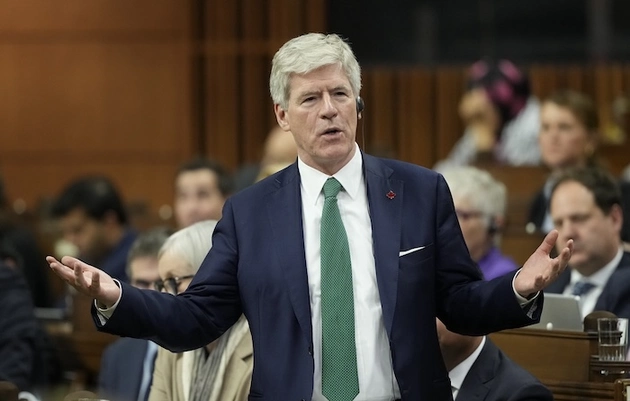
Canada’s Energy Minister Warns Trans Mountain Pipeline Deal Faces Uncertainty
In a stark assessment that has sent ripples through Canada’s energy and political sectors, Energy Minister Mark Carney has publicly cautioned that the long-awaited sale of the government-owned Trans Mountain pipeline system is on shaky ground. The warning, delivered amid complex negotiations, casts a shadow over a multi-billion dollar project intended to secure Canada’s oil export future but mired in financial and political challenges.
The Heart of the Uncertainty: A Stalled $3 Billion Deal
At the core of Minister Carney’s concern is a tentative $3 billion agreement with a consortium of Indigenous communities, known as Project Reconciliation. This deal was heralded as a historic opportunity for economic sovereignty and a path for the federal government to recoup a portion of its substantial investment. However, Carney’s recent statements indicate the negotiations have hit significant roadblocks.
The minister pointed to two primary issues threatening the sale:
- Financing Hurdles: The Indigenous-led group has reportedly struggled to secure the necessary capital to finalize the purchase, a common challenge in large-scale infrastructure acquisitions of this nature.
- Commercial Viability Concerns: Beyond the sale price, the government is scrutinizing the consortium’s long-term business plan for operating the pipeline. Questions remain about securing long-term shipping contracts (known as “throughput”) from oil producers, which is essential for the pipeline’s financial health.
“We are working diligently with them, but there are conditions that have to be met,” Carney stated, emphasizing that the government’s responsibility is to ensure any deal is “commercially viable” and in the public interest.
A Brief History of the Trans Mountain Saga
To understand the gravity of this moment, one must look back at the pipeline’s turbulent journey. The federal government purchased the Trans Mountain system in 2018 for $4.5 billion after previous owner Kinder Morgan threatened to abandon the expansion project due to relentless legal challenges and political opposition.
The expansion project, now complete, was a monumental undertaking:
- It twin the existing pipeline from Edmonton, Alberta, to the coast in Burnaby, British Columbia.
- It nearly triples the system’s capacity to 890,000 barrels per day.
- Its cost ballooned from an initial estimate of $7.4 billion to a staggering $34 billion.
The government’s stated goal was always to be a temporary steward, aiming to sell the pipeline back to the private sector once the expansion was complete and risks were mitigated. The deal with Project Reconciliation was seen as the ideal outcome, aligning economic development with Indigenous reconciliation.
Why This Sale Matters So Much
The successful sale of Trans Mountain is not merely a real estate transaction; it carries immense symbolic and fiscal weight for the Canadian government.
First, it is a critical test of the Liberal government’s dual commitment to economic development and climate action. Proceeds from the sale were intended to help fund green energy transitions. A failed or diminished sale impacts that potential funding.
Second, it represents a massive financial liability. Canadian taxpayers are on the hook for the pipeline’s construction cost overrun. A sale below expectations or, worse, no sale at all, means the government retains a multi-billion dollar asset that requires ongoing management and carries environmental risk.
Finally, it is a barometer for major energy infrastructure projects in Canada. A successful Indigenous-led acquisition would be a landmark achievement. Its failure could signal to investors that even state-backed projects face insurmountable hurdles in the Canadian landscape.
Broader Implications for Canada’s Energy Policy
Minister Carney’s warning is more than an update on a business deal; it is a commentary on the state of Canada’s energy policy crossroads. The uncertainty comes at a time when global energy demands remain high, but the pressure to transition away from fossil fuels intensifies.
The Trans Mountain expansion was built to provide Canadian oil producers with access to global markets beyond the United States, potentially fetching higher prices and improving economic returns for the sector and the government through royalties and taxes. A stalled sale and an underutilized pipeline undermine that strategic objective.
Furthermore, the situation puts the federal government in a bind. If the Project Reconciliation deal falls through, what are the alternatives?
- Pursue a sale to another private entity, potentially at a lower price?
- Continue to operate the pipeline as a crown corporation, directly involving the state in the oil business indefinitely?
- Consider a different model of ownership or a piecemeal sale?
Each option carries significant political and economic consequences.
The Path Forward: Negotiation and Alternatives
Despite the public warning, Minister Carney indicated negotiations are ongoing. The government has granted extensions to the consortium, showing a willingness to make a deal work. However, his language made clear that patience and public funds are not unlimited.
This development forces all parties to re-evaluate their positions. The Indigenous consortium must solidify its financing and commercial plans. The government must decide how much risk it is willing to absorb to fulfill its reconciliation and economic goals. Oil producers, eager to use the new pipeline capacity, are left watching nervously, their export strategies hinging on the outcome.
The coming weeks and months will be decisive. Federal officials are likely already exploring contingency plans. The minister’s public candor may be a tactic to pressure the consortium, prepare the public for a less-than-ideal outcome, or signal to other potential buyers that the asset may soon be back on the market.
A Defining Moment for Resources and Reconciliation
The fate of the Trans Mountain sale is now a high-stakes drama with national implications. It intertwines critical themes of economic pragmatism, environmental responsibility, fiscal management, and Indigenous partnership. Energy Minister Mark Carney’s stark warning has lifted the curtain on the difficult realities behind what many hoped would be a straightforward success story.
As Canada navigates its complex energy future, the Trans Mountain pipeline stands as a physical and symbolic test. Will it become a catalyst for a new model of Indigenous-led resource development, or a cautionary tale of soaring costs and unmet ambitions? The uncertainty highlighted by the Energy Minister is a reminder that in the world of mega-projects and national policy, the final chapter is often the hardest to write.

