
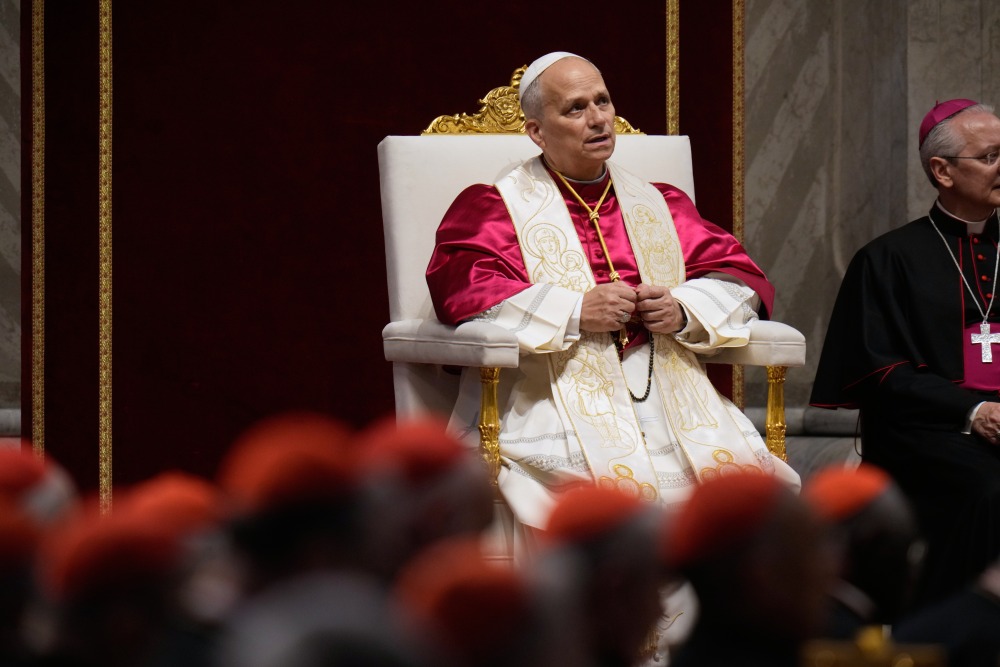
Pope Condemns US-Israeli War in Iran as a Dangerous Delusion
In a powerful and unexpected intervention into global geopolitics, a prominent voice from the Vatican has issued a stark condemnation of the ongoing conflict between the United States, Israel, and Iran. Pope Leo XIV, in a sweeping critique, has labeled the military escalation as a catastrophic failure of statecraft, driven by what he called a “delusion of omnipotence.” This forceful statement challenges the very foundations of the war’s narrative, framing it not as a necessary security measure but as a profound moral and strategic error.
The Pontiff’s Scathing Critique: A “Delusion of Omnipotence”
The core of Pope Leo XIV’s message is a direct attack on the mindset fueling the conflict. He argues that the belief in absolute military and political dominance—the “delusion of omnipotence”—has blinded key actors to the complex realities of the Middle East and the inevitable, tragic consequences of war.
This delusion, according to the Pontiff, manifests in several dangerous ways:
- The Myth of a Clean Victory: The belief that overwhelming force can decisively eliminate threats without creating new, more virulent ones.
- Strategic Arrogance: Dismissing the agency, history, and resilience of the Iranian people and the broader region.
- Moral Bankruptcy: Justifying widespread civilian suffering and regional destabilization under the banner of security, thereby eroding the very principles claimed to be defended.
The Pope’s language is deliberately theological, suggesting that the pursuit of unchecked power is not just a political mistake but a spiritual failing—a modern-day idolatry of force.
Context of the Escalating US-Israeli War with Iran
A Cycle of Provocation and Retaliation
The Pope’s statement comes after months of escalating tensions that finally erupted into open warfare. The conflict, a direct state-on-state confrontation, has its roots in a long shadow war of cyber-attacks, targeted assassinations, and proxy engagements. The tipping point was a major pre-emptive strike by US and Israeli forces aimed at crippling Iran’s nuclear and military infrastructure, which prompted a full-scale retaliatory response from Tehran.
The Human and Regional Toll
The human cost has been devastating. Major urban centers have been targeted, leading to significant civilian casualties and creating a new refugee crisis. Global energy markets have been thrown into chaos as critical shipping lanes in the Strait of Hormuz have become battlegrounds. Furthermore, the conflict risks pulling in regional actors and militias, threatening a continent-wide conflagration that diplomats have desperately, and so far unsuccessfully, tried to contain.
The Vatican’s Evolving Role in Global Diplomacy
Pope Leo XIV’s blunt condemnation marks a significant evolution in the Vatican’s diplomatic posture. While the Holy See has long been a voice for peace, this intervention is notable for its specificity and its sharp critique of named nations.
This approach aligns with a modern papal tradition of confronting global crises head-on:
- Moral Authority Over Neutrality: Moving beyond vague pleas for peace to a specific moral judgment on the actions of powerful states.
- A Platform for the Unheard: Amplifying the suffering of civilian populations whose voices are often drowned out by geopolitical rhetoric.
- Challenging the War Narrative: Offering a counter-narrative that questions the fundamental wisdom and morality of the war, rather than simply managing its consequences.
By framing the conflict as a “delusion,” the Vatican is attempting to shift the debate from tactical military objectives to foundational questions of power, pride, and human dignity.
International Reactions to the Papal Condemnation
The reaction from world capitals has been sharply divided. Leaders in Western nations involved in the conflict have largely dismissed the Pope’s remarks as naive, emphasizing the existential nature of the threat they perceive from Iran. A spokesperson for the US administration stated that while they respect the Pope’s moral concern, “the responsibility to protect our citizens and allies from aggression is not a delusion, but a solemn duty.”
Conversely, the statement has been warmly welcomed across much of the Global South and in nations critical of the war. Iranian state media featured the critique prominently, using it to bolster its claim of being a victim of Western imperialism. More importantly, humanitarian organizations and peace activists have seized upon the Pope’s words as a powerful tool to galvanize global public opinion against the war.
The Path Forward: From Delusion to Dialogue
Pope Leo XIV did not limit himself to criticism; he outlined an urgent alternative path. He called for an immediate ceasefire and a return to multilateral diplomacy, however fractured the existing institutions may be.
His proposed pillars for a lasting solution include:
- An Immediate Humanitarian Pause: To allow aid to reach devastated populations and create space for initial talks.
- Third-Party Mediation: Leveraging neutral states or bodies to facilitate dialogue where direct communication has broken down.
- Addressing Core Security Concerns: Acknowledging the legitimate security fears of all parties in the region, not just a select few, as the basis for any new framework.
- Regional Cooperation Frameworks: Investing in long-term, inclusive security architectures for the Persian Gulf that move beyond zero-sum alliances.
A Moral Reckoning in a Time of War
Pope Leo XIV’s condemnation of the US-Israeli war in Iran is more than a diplomatic missive; it is a profound moral challenge. By naming the “delusion of omnipotence,” he forces a moment of introspection about the limits of power and the vanity of believing complex human conflicts can be solved through sheer destruction. In a media environment saturated with military analysis and political posturing, the Vatican has reintroduced the language of ethics, consequence, and humility into the highest-stakes debate of our time.
Whether world leaders heed this call remains to be seen. But the Pontiff has clearly placed a stake in the ground, asserting that true strength lies not in the capacity to destroy, but in the wisdom to seek peace, and that the current path is not only destructive but fundamentally rooted in a dangerous and false belief. The world now watches to see if this powerful intervention can help break the cycle of violence or if the delusion, as warned, will lead to even greater catastrophe.

