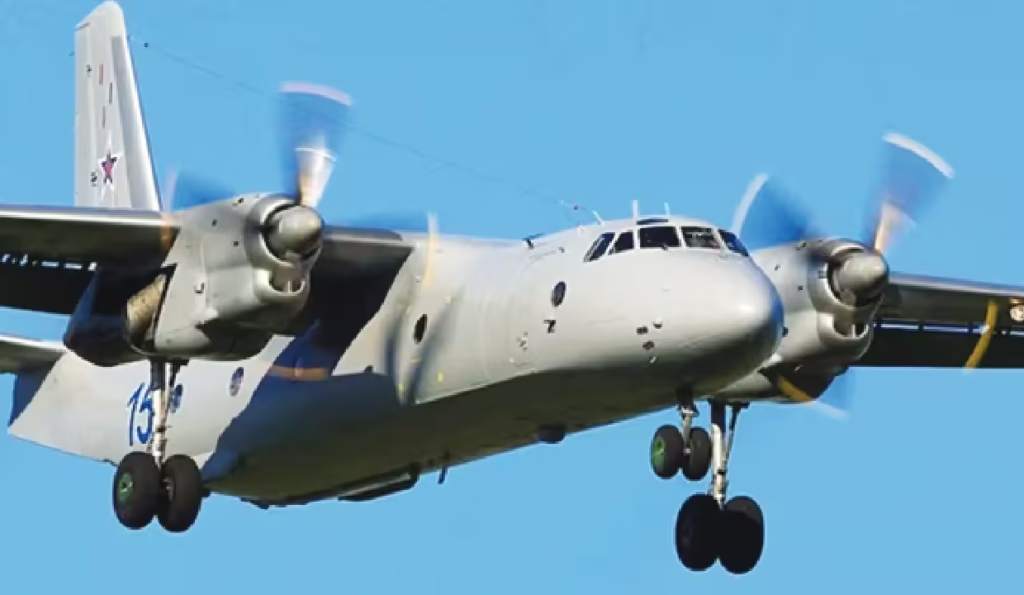
Russian Military Plane Crash in Crimea: A Tragic Incident Amidst Ongoing Conflict
The skies over Crimea witnessed a devastating tragedy when a Russian military transport plane crashed near the city of Sevastopol. Initial reports from Russian state media and local authorities indicate the aircraft was carrying dozens of people, with fears that there are no survivors. The incident immediately sent shockwaves through the region, already a focal point of intense military activity since Russia’s full-scale invasion of Ukraine in 2022.
This catastrophic event raises urgent and difficult questions about its cause, the human toll, and its potential implications for the security situation in the Black Sea. While details remain fluid and contradictory claims emerge, the loss of life marks a somber moment in the protracted conflict.
What We Know About the Crimea Military Plane Crash
The crash occurred in the early hours, with local Telegram channels and residents reporting a large fireball and plumes of dark smoke rising from the crash site in a sparsely populated area. Russian emergency services were quickly dispatched to the scene.
Key Reported Details:
- Aircraft Type: The plane has been widely reported as an Ilyushin Il-76, a heavy-lift military transport aircraft commonly used by the Russian Aerospace Forces to move troops, vehicles, and cargo.
- Location: The crash site is in the vicinity of Sevastopol, a major port city on the Crimean peninsula that hosts the historic base of Russia’s Black Sea Fleet.
- Casualties: Russian officials have stated the plane was carrying a significant number of people, with early figures suggesting dozens on board. There have been no indications of survivors from the initial rescue efforts.
- Official Russian Statement: The Russian Defense Ministry confirmed the crash, stating an “engine fire” was the preliminary cause. They have announced an investigation has been launched.
The Shadow of War: Conflicting Narratives and Immediate Reactions
In the highly charged atmosphere of the Ukraine war, any major incident is instantly met with competing narratives. Crimea, annexed by Russia in 2014 and illegally occupied since, has been a frequent target for Ukrainian strikes as Kyiv aims to degrade Russian military logistics and symbolic control.
Ukraine’s Strategic Strikes on Crimea
Ukraine has not officially claimed responsibility for downing the aircraft. However, the country’s military has consistently demonstrated a growing capability to strike deep into Russian-held territory, including Crimea. Successful attacks using Western-supplied missiles and indigenous drone technology have previously targeted:
- Russian air defense systems on the peninsula.
- Warships of the Black Sea Fleet in and around Sevastopol.
- Logistics hubs and command centers.
A Ukrainian military spokesperson stated they are “studying the information” about the crash but emphasized that Crimea is a legitimate military target as it is used as a vast staging ground for attacks on mainland Ukraine.
Russia’s Accusations and the Information War
Russian officials and state-aligned media were swift to frame the incident. While the technical cause cited is an engine failure, the broader narrative points directly at Ukrainian action. Prominent Russian figures have accused Ukraine of using anti-aircraft missiles to shoot down the transport plane, labeling it a “terrorist act” aimed at civilians and military personnel alike. This serves to bolster the domestic justification for the war and potentially galvanize public support.
Analyzing the Potential Causes
Beyond the immediate political claims, aviation experts and conflict analysts point to several possible scenarios, each with profound implications:
1. Technical Failure: The Russian military’s maintenance standards and the age of some of its fleet, including Il-76s, have been questioned in the past. A catastrophic mechanical or engine issue, as initially suggested by Moscow, is a plausible explanation.
2. Ukrainian Air Defense: If the plane was on a military logistics run, it could have entered the engagement zone of Ukrainian air defenses operating in southern Ukraine. A successful interception by a missile system would represent a significant tactical achievement.
3> Onboard Incident: The possibility of an explosion or fire originating from cargo or personnel on board cannot be ruled out, especially in a warzone where standard safety protocols may be strained.
The truth may only become clear through satellite imagery, radio intercepts, or forensic analysis of the wreckage—details that are often obscured in the fog of war.
Broader Implications for the War in Ukraine
This tragedy is not an isolated event but a stark reflection of the war’s escalating dynamics.
- Crimea’s Vulnerability: The crash underscores that no part of Crimea is safe from the conflict. It challenges Russia’s narrative of secure control over the peninsula and highlights the persistent risks to its military infrastructure there.
- Human Cost of War: Beyond the strategic calculations, the incident is a grim reminder of the immense human loss suffered on all sides. Each person on board was connected to a network of family and friends, representing a profound personal tragedy multiplied dozens of times over.
- Potential for Escalation: Depending on the final attributed cause and the status of those on board, Russia may feel compelled to launch a significant retaliatory strike. This creates a dangerous moment where a single incident could trigger a new cycle of escalation in military tactics and rhetoric.
- Logistics Under Threat: If confirmed to be a shoot-down, it signals a serious degradation of Russia’s ability to use the airbridge to Crimea for secure transport, forcing a reconsideration of how it supplies its forces in southern Ukraine.
A Somber Reminder in a Protracted Conflict
The crash of the Russian military plane in Crimea is a multi-faceted disaster. It is, first and foremost, a human tragedy for the lives abruptly lost. It is also a significant military incident that will be pored over by intelligence agencies and military planners in Kyiv, Moscow, and Western capitals.
The conflicting stories surrounding the event exemplify the modern information war, where truth is often the first casualty. As rescue operations transition to recovery and investigation, the world is left watching whether this tragedy will become a footnote in a long war or a catalyst for a dangerous new chapter. The skies over Crimea, once a symbol of Russian power projection, now serve as a deadly testament to the relentless and unforgiving nature of the ongoing conflict. The only certainty is that the reverberations from this crash will be felt far beyond the smoldering wreckage on the ground.