Canada’s Q3 GDP Report Reveals Key Economic Trends
The latest snapshot of the Canadian economy is in, and it paints a picture of an economy at a critical inflection point. Statistics Canada’s report on the gross domestic product for the third quarter confirms what many analysts had anticipated: a significant economic slowdown. The data provides crucial insights into the effectiveness of monetary policy, the resilience of households, and the underlying currents that will shape the nation’s financial future as we head into the new year.
This comprehensive breakdown of the Q3 figures goes beyond the headline number to uncover the stories of consumer spending, business investment, and international trade that are driving the Canadian economy forward—or holding it back.
A Sharp Slowdown in Economic Momentum
The most striking takeaway from the report is the pronounced deceleration in growth. Following a robust second quarter, the Canadian economy expanded at an annualized rate of just 0.4% in Q3. This figure fell well below market expectations and signals a stark cooling-off period. On a monthly basis, the GDP was essentially flat, posting 0.0% growth in September after a slight 0.1% contraction in August.
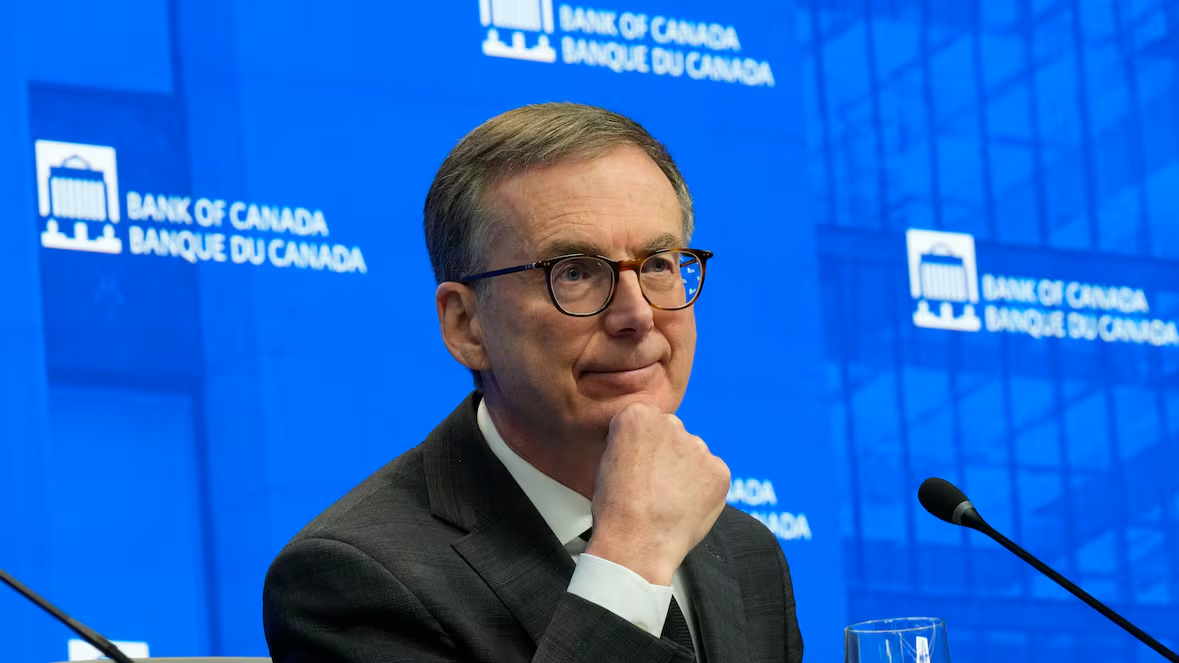
This slowdown is largely attributed to the cumulative impact of the Bank of Canada’s aggressive interest rate hiking campaign. The central bank’s efforts to tame inflation by making borrowing more expensive are now visibly rippling through the economy, dampening demand across several key sectors.
Dissecting the Drivers: Where the Economy Grew and Contracted
To understand the full story of Q3, we need to look at the components that contributed to the final GDP number. The performance was a mixed bag, with a few sectors showing resilience while others contracted under pressure.
Final Domestic Demand: A Silver Lining
Interestingly, one of the brighter spots in the report was final domestic demand, which actually rose by 0.9% in the third quarter. This metric, which includes consumer spending, government expenditures, and business investment in machinery and equipment, suggests that underlying domestic economic activity held up better than the overall GDP figure implies.
The Consumer’s Dilemma: Spending Shifts Amid High Costs
Canadian households are feeling the pinch, and their spending habits reflect it. While overall household spending increased by 0.7%, a deeper look reveals a strategic shift in behavior:
- Spending on goods declined by 0.3%, with notable pullbacks in purchases of new trucks, vans, and sport utility vehicles, as well as furniture and other durable home items.
- Spending on services grew by 1.5%, driven by a resurgence in travel and air transportation services, indicating a continued desire for experiences even as budgets tighten.
This trend highlights the classic inflation-era trade-off: consumers are cutting back on big-ticket physical goods but are still willing to allocate funds for services, particularly those related to post-pandemic “revenge travel.”
Business Investment and Housing Show Weakness
The sectors most sensitive to interest rates showed clear signs of strain. Business investment was a significant drag on growth, with two key areas suffering:
- Business investment in housing, which includes new construction and renovations, fell by 5.5%.
- Business investment in machinery and equipment dropped by 5.2%.
This widespread decline in investment signals that businesses are becoming more cautious, likely postponing major capital projects due to higher borrowing costs and economic uncertainty.
The Trade Deficit Weighs Heavily
International trade was another major factor holding back economic growth in the third quarter. A surge in imports, particularly of travel services and motor vehicles, combined with a decline in exports of farm and fishing products, led to a situation where rising imports subtracted from the overall GDP growth. When a country imports more than it exports, it acts as a drain on the calculation of its economic output.
The Inflation and Interest Rate Context
This GDP report cannot be viewed in a vacuum; it is the direct result of the Bank of Canada’s policy decisions. The central bank has raised its key interest rate to a 22-year high of 5.0% in an unwavering effort to return inflation to its 2% target. The Q3 slowdown is, in many ways, the intended outcome of this policy—a necessary cooling to prevent the economy from overheating and to bring price growth under control.
The critical question now is whether the economy is slowing enough to satisfy the Bank of Canada’s governing council. With the annual inflation rate having fallen to 3.1% in October, the restrictive monetary policy is having its desired effect. This weak GDP print provides compelling evidence that the economy is responding to higher rates, which will be a key consideration in the Bank’s upcoming interest rate announcements.
What This Means for Canada’s Economic Future
The Q3 GDP report delivers several key implications for businesses, policymakers, and everyday Canadians.
- A Pause in Rate Hikes is Likely: The significant economic slowdown makes it highly improbable that the Bank of Canada will raise interest rates further in the immediate future. The data supports a “wait-and-see” approach, allowing more time for the full effects of previous hikes to materialize.
- Heightened Recession Risks: With growth hovering near zero, the risk of the economy tipping into a technical recession—often defined as two consecutive quarters of negative growth—has increased. The flat reading for September and the contraction in August set a weak starting point for the fourth quarter.
- Consumer Resilience Will Be Tested: The report showed that the household disposable income per capita actually grew by 1.0%, the first increase in over a year. However, the savings rate remains low. The continued financial pressure on families will be a central theme to watch in 2024.
Conclusion: Navigating a Period of Economic Fragility
Statistics Canada’s third-quarter GDP report serves as a clear signal that Canada’s economy is entering a fragile phase. The era of rapid, post-pandemic recovery is over, replaced by a period of stagnation as the country grapples with the side effects of the inflation fight. While a soft landing—where the economy slows just enough to curb inflation without triggering a deep recession—remains possible, the path is narrow.
The coming months will be critical. All eyes will be on consumer spending during the holiday season, the next rounds of inflation data, and, most importantly, the Bank of Canada’s response. For now, the message from the third quarter is one of caution: the Canadian economy is cooling, and its ability to withstand the chill without freezing over is the defining challenge ahead.