
Supreme Court Skepticism Threatens Mail-In Ballot Deadlines
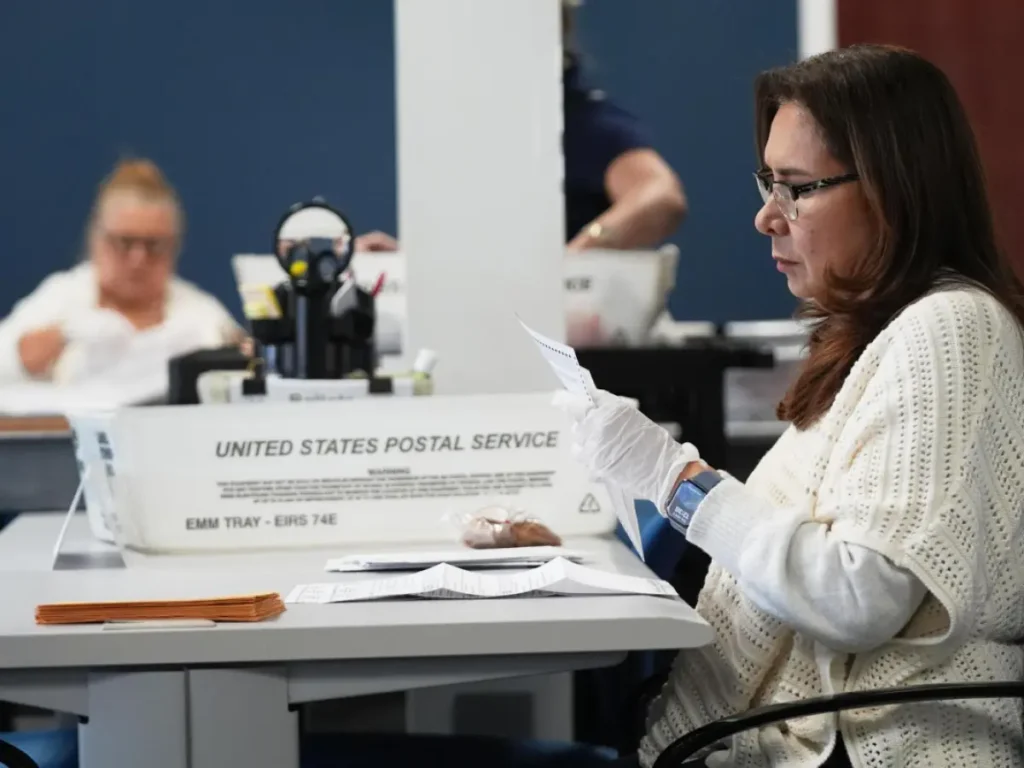
The integrity of future U.S. elections, particularly the rules governing mail-in voting, faced intense scrutiny at the nation’s highest court this week. During oral arguments in a pivotal case, several Supreme Court justices expressed significant skepticism about a key practice that became commonplace in 2020: accepting mail-in ballots for several days after Election Day.
This legal challenge, originating from Pennsylvania, directly targets the extended ballot receipt deadlines that many states adopted during the COVID-19 pandemic. The case has become a flashpoint in the ongoing national debate over election security and accessibility, with potential ramifications for voting procedures in the 2024 presidential race and beyond.
The Core of the Controversy: Election Day vs. Election Week
At the heart of the dispute is a fundamental question: Does the power to set election rules, including strict deadlines for receiving ballots, rest solely with state legislatures?
The Republican challengers in the case argue that the U.S. Constitution’s Elections Clause grants that authority exclusively to state lawmakers. They contend that when Pennsylvania’s supreme court extended the mail-in ballot receipt deadline in 2020, it unlawfully usurped the legislature’s power, creating an “election week” instead of a single, constitutionally-defined “Election Day.”
During the arguments, the Court’s conservative justices appeared sympathetic to this view. Justice Samuel Alito questioned whether such extensions create “a situation that is ripe for confusion.” Justice Brett Kavanaugh pointedly noted that the text of the Elections Clause is “clear” in vesting power in “the legislature.” This line of questioning suggests a majority may be leaning toward a ruling that could invalidate court-ordered or executive-branch extensions of ballot deadlines not explicitly authorized by a state’s legislative body.
A Practice Under the Microscope: The Rise of Mail-In Voting
The 2020 election saw an unprecedented shift to mail-in and absentee voting due to the public health crisis. To accommodate slower mail delivery and ensure votes were not disqualified for postal delays, many states—either through court rulings, executive actions, or bipartisan legislation—allowed ballots postmarked by Election Day to be counted if they arrived within a designated grace period, often three to seven days later.
Proponents of these extensions argue they are essential for:
- Protecting Voter Rights: Ensuring that ballots cast by lawful voters are not discarded due to factors beyond their control, like postal service slowdowns.
- Maintaining Public Confidence: Allowing a full and accurate count of all legally cast votes, which is fundamental to the legitimacy of an election.
- Adapting to Reality: Acknowledging that modern elections, with high volumes of mail ballots, require timelines that reflect the practicalities of the postal system.
However, critics, including former President Donald Trump who has repeatedly targeted mail-in voting, label the practice as vulnerable to fraud and a violation of established election law. They insist that a firm, uniform deadline on Election Night is necessary for clarity, finality, and security.
The Potential Impact of a Restrictive Ruling
A Supreme Court decision siding with the challengers would not immediately ban mail-in voting. However, it could have profound downstream effects:
It would likely:
- Invalidate ballot receipt deadlines established by non-legislative entities (like state courts or election officials) unless explicitly permitted by state law.
- Force a return to stricter, legislatively-set deadlines, potentially disenfranchising voters whose ballots are delayed in the mail.
- Trigger a wave of new legislation in statehouses across the country, as parties rush to codify their preferred voting rules ahead of 2024.
- Create a patchwork of rules where a voter’s ability to have their mail ballot counted depends heavily on their state’s specific legislative landscape.
The Broader Battle Over Election Administration
This case is not happening in a vacuum. It is part of a larger, highly polarized struggle over how American elections are conducted. In the wake of the 2020 election, numerous states have passed laws either expanding voting access or tightening security measures, depending on one’s perspective.
The Supreme Court’s eventual ruling will be a major landmark in this ongoing conflict. It will either reinforce the ability of state courts and executives to adapt election procedures in exceptional circumstances, or it will sharply curtail that power, centralizing it firmly in state legislatures. This could redefine the balance of power within state governments regarding election rules.
Looking Ahead: Uncertainty for 2024 and Voter Action
With another presidential election on the horizon, the uncertainty created by this case places new urgency on voters and election officials alike. The potential for a ruling that shortens ballot receipt windows means one thing is clear: voters who choose to vote by mail will need to act earlier than ever.
Election experts are already urging voters to:
- Request mail-in ballots as soon as they are available.
- Return completed ballots via mail at least one week before Election Day, or preferably, use secure drop boxes if available and legally sanctioned.
- Track their ballot using online tools provided by many state election offices to ensure it is received and accepted.
The Supreme Court’s skepticism during oral arguments signals a potential seismic shift in election logistics. While the final opinion is still months away, the message from the bench suggests that the era of pandemic-era flexibilities may be closing. The ruling will force a national recalibration, pushing the complex debate over how to balance access, security, and finality in American elections into a new and decisive chapter. The foundational mechanics of democracy are, once again, being weighed on the scales of justice.

