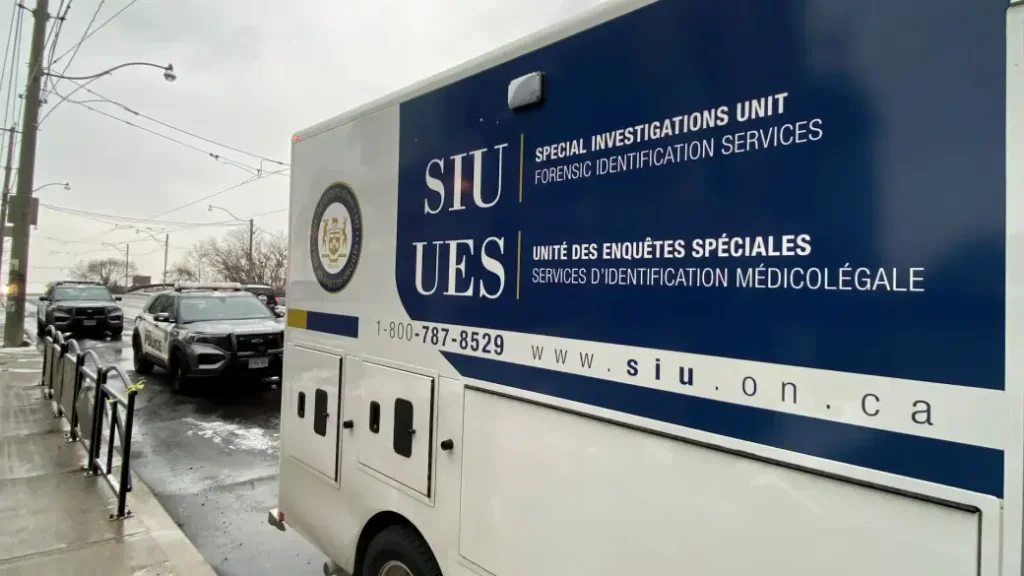
SIU Clears Toronto Officer in Fatal Danforth GO Station Shooting
The province’s police watchdog has concluded its investigation into a fatal encounter at a Toronto transit hub, determining that the officer who fired the lethal shots will not face criminal charges. The Special Investigations Unit (SIU) announced it found no reasonable grounds to believe the Toronto Police Service officer committed a criminal offense in the death of a 36-year-old man at the Danforth GO Station in October 2023.
This decision closes a case that sparked significant community concern and raises ongoing questions about police interactions with individuals in crisis, the protocols for handling edged weapons, and the legal thresholds that govern such critical incidents.
A Confrontation at the Transit Hub: The SIU’s Account of Events
According to the SIU’s detailed report, the incident unfolded on the afternoon of October 31, 2023. Police were initially called to the Danforth GO Station for a man reportedly in distress. The situation escalated when the man, identified as Riley Fairholm, allegedly armed himself with a knife and advanced toward officers and members of the public.
The SIU director, Joseph Martino, outlined the key moments that led to the shooting. He stated that officers issued repeated commands for Fairholm to drop the weapon. Despite these commands and the deployment of a conducted energy weapon (CEW), which was ineffective, Fairholm continued to advance.
The critical finding of the SIU rests on the director’s assessment of the officer’s perception of imminent threat. Martino wrote that the subject officer “had an honest and reasonably held belief” that he, other officers, and civilians were at risk of grievous bodily harm or death from the advancing armed individual. Under Canadian law, specifically Section 34 of the *Criminal Code*, a person is justified in using force intended to cause death if they believe it is necessary to protect themselves or another from such a threat.
The Legal Threshold: Understanding “Reasonable Grounds”
A common point of public confusion in SIU investigations is the standard applied. The SIU does not determine if an officer’s actions were optimal or followed best practices perfectly. Its mandate is strictly criminal. It must assess whether there are reasonable grounds to believe a criminal offense was committed.
In this case, Director Martino concluded that the evidence could not meet that high threshold. He emphasized that the officer’s decision to discharge his firearm, while tragic in outcome, fell within the legal confines of self-defense and defense of others given the circumstances as they reasonably appeared in that moment.
*
- The officer perceived an armed individual advancing despite commands and less-lethal intervention.
*
- The law permits the use of lethal force to prevent imminent grievous bodily harm or death.
*
- The SIU found the officer’s belief in the existence of that threat was reasonable.
Community Reaction and Broader Context
The SIU’s decision has been met with a mixture of resignation and renewed grief. Advocates for mental health and police reform have pointed to this case as another example of a systemic failure to de-escalate situations involving individuals experiencing crisis.
Fairholm’s family and their legal representatives have previously expressed profound disappointment with the events leading to his death. They have highlighted his personal struggles and questioned whether alternative tactics could have been employed to achieve a different outcome. This incident adds to a long list of police encounters in Canada where individuals in mental distress have died, fueling calls for:
*
- Enhanced and mandatory crisis intervention and de-escalation training for all frontline officers.
*
- Greater funding and availability of dedicated, non-police mobile crisis response teams that pair mental health professionals with specially trained officers or operate independently.
*
- Increased transparency and community involvement in the review process following police-involved deaths.
The Path Forward: Lessons and Unanswered Questions
While the SIU’s mandate is complete, the conversation it sparks is anything but over. The clearance of criminal liability does not preclude other forms of review or accountability. Key questions remain for the Toronto Police Service and policing bodies nationwide:
Could different tactics have prevented this tragedy? This is often the central question from the public and affected families. Reviews of tactics, equipment, and training protocols are typically internal police matters that occur separately from the criminal investigation.
What is the role of police in mental health calls? This incident reinforces the ongoing debate about whether armed officers are always the most appropriate first responders to calls involving mental health crises, and how to better integrate health-focused resources into emergency response.
How is “imminent threat” assessed in real-time? The legal justification hinges on this concept. Understanding how officers are trained to make this split-second assessment, and whether that training aligns with best practices for preserving life, is a critical area of public interest and policy review.
Conclusion: A Decision That Closes a Case, But Not a Conversation
The SIU’s ruling in the Danforth GO Station shooting provides a legal conclusion based on the evidence and the strict confines of criminal law. It determines that the officer involved will not be prosecuted. However, it does not—and cannot—address the profound human loss or the complex systemic issues laid bare by this event.
The death of Riley Fairholm is a stark reminder of the high-stakes, no-win scenarios that can unfold in policing, particularly at the intersection of public safety and mental health crisis. It underscores the urgent need for continued investment in prevention, alternative response models, and comprehensive support systems that might intercept individuals before they reach a point of acute crisis.
As the community processes this outcome, the broader work of re-evaluating and reforming how society responds to those in deepest need continues. The goal remains universally shared: to prevent such tragedies from occurring in the future, ensuring safety for all, including those who are suffering.