
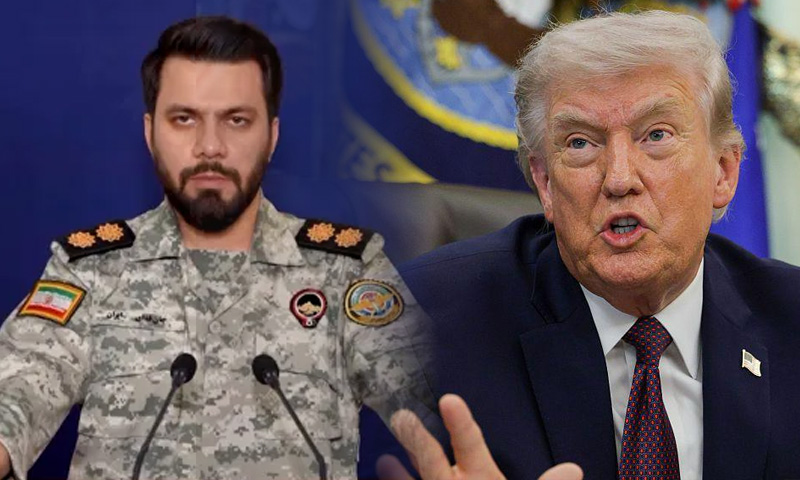
U.S. Navy Crew Rescued as Trump Renews Threats Over Iran Power Plant
A dramatic rescue of a U.S. Navy crew in the Gulf of Oman has collided with renewed political threats from former President Donald Trump, creating a tense and complex moment in U.S.-Iran relations. The incident, which saw a U.S. aircraft carrier and allied forces save sailors from a sinking vessel, unfolded just as Trump took to social media to issue a stark warning concerning Iran’s nuclear ambitions.
A Rescue Operation in Strategic Waters
On a routine transit through international waters in the Gulf of Oman, a U.S. Navy patrol craft encountered sudden and severe mechanical failure. The vessel began taking on water, forcing the crew to abandon ship. A distress call was immediately issued, triggering a swift multinational response.
The U.S. 5th Fleet, headquartered in Bahrain, coordinated the effort. The nuclear-powered aircraft carrier USS Dwight D. Eisenhower, which has been operating in the region as a central pillar of U.S. naval power, played a key role. Alongside allied naval forces, helicopters and rescue teams were deployed to locate the stranded sailors.
All crew members were successfully recovered and reported to be in good health. The U.S. Navy emphasized that the operation was a testament to the readiness and coordination between the United States and its regional partners. The Gulf of Oman is a critically important shipping lane, particularly for global oil exports, and has been a site of heightened naval tensions and incidents involving Iran in recent years.
Key Details of the Naval Incident:
- Location: International waters in the Gulf of Oman.
- Assets Involved: USS Dwight D. Eisenhower carrier strike group and allied forces.
- Outcome: All sailors rescued safely; the patrol craft was lost.
- Strategic Context: A vital maritime chokepoint near the Strait of Hormuz.
Trump’s Provocative Warning Amplifies Tensions
Almost simultaneously with news of the rescue, former President Donald Trump posted a message on his Truth Social platform that cast a long shadow over the event. He issued a blunt threat directed at Iran’s nuclear infrastructure, specifically naming a major facility.
“IRAN’S BUSHEHR NUCLEAR POWER PLANT SHOULD BE TAKEN OUT BY ISRAEL OR THE U.S. BEFORE IT IS TOO LATE!!!” Trump wrote. The Bushehr plant is Iran’s only operational nuclear power station and is subject to monitoring by the International Atomic Energy Agency (IAEA). While it is a civilian energy facility, its location and symbolic significance make it a flashpoint.
This statement is not an isolated remark but part of a pattern of aggressive rhetoric from Trump toward Iran. His administration unilaterally withdrew from the multinational Iran nuclear deal (JCPOA) in 2018, reimposing harsh economic sanctions and adopting a policy of “maximum pressure.” His recent comments signal a potential return to that confrontational posture should he win the upcoming presidential election.
Why the Bushehr Plant is a Focal Point
While international concerns primarily focus on Iran’s uranium enrichment facilities, Bushehr represents a different dimension of the nuclear issue. Experts warn that attacking any nuclear facility, even a civilian one, carries catastrophic environmental and humanitarian risks, including the potential release of radiation. Furthermore, such an act would almost certainly trigger a major regional war, drawing in U.S. forces and allies directly.
Dueling Narratives: Rescue vs. Rhetoric
The coincidence of the rescue operation and Trump’s threat creates two starkly competing narratives about American power in the Middle East.
On one hand, the successful, professional rescue mission showcases international cooperation, military competence, and a commitment to safeguarding life at sea. It represents the day-to-day reality of naval operations aimed at ensuring stability and security in volatile waterways.
On the other hand, Trump’s verbal escalation represents the volatile political undercurrent that can instantly override such operational stability. It shifts the focus from lifesaving collaboration to the specter of unilateral military action and regime change. For Iran’s leadership, such threats are used to justify their own military buildup and hardline stance, arguing that the U.S. cannot be trusted under any circumstances.
Regional and Global Implications
The juxtaposition of these events places the current U.S. administration in a delicate position. President Biden’s team has struggled to revive the nuclear deal and de-escalate tensions, with limited success. Incidents at sea and fiery rhetoric from political opponents complicate these diplomatic efforts immensely.
Regional allies, particularly Gulf Arab states, are caught in a difficult position. While they share deep concerns about Iran’s regional activities and nuclear program, they also fear being dragged into an open conflict that would destabilize their economies and security. The professional naval rescue is the kind of predictable, stabilizing presence they support; the threat of a sudden strike on a nuclear plant is the kind of unpredictable action they dread.
For the international community, the situation underscores the fragile state of non-proliferation efforts in the region. The IAEA has repeatedly reported difficulties in fully monitoring Iran’s program. Trump’s suggested action would not only violate international law but would likely cause Iran to expel all inspectors and accelerate weapons development in secret.
Potential Consequences of Escalation:
- Wider Regional Conflict: Retaliatory strikes by Iran and its proxy networks across the Middle East.
- Global Economic Shock: Closure of the Strait of Hormuz, spiking oil prices worldwide.
- Nuclear Proliferation Crisis: Collapse of all monitoring, pushing Iran toward a bomb.
- Diplomatic Isolation: International condemnation of the U.S. or Israel for a first strike.
Navigating a Perilous Course
The story of the rescued U.S. Navy crew and the threatening words from a former president are now inextricably linked. They serve as a powerful microcosm of the U.S.-Iran relationship: moments of professional, even cooperative, interaction existing within a broader context of deep-seated hostility and the ever-present risk of catastrophic miscalculation.
The safe return of the sailors is a clear success. However, it occurs against a backdrop where the political discourse in Washington can quickly turn toward talk of bombing nuclear plants. This duality defines the current challenge. The path forward requires a steady, strategic hand that can separate necessary military preparedness and presence from incendiary political rhetoric that benefits no one except those who thrive on perpetual crisis.
As the U.S. navigates this perilous course, the world watches, hoping that the skill and coordination demonstrated in the rescue mission, not the destabilizing threats, will define the future of this critical region.

