Two Women Review: A Bold French-Canadian Sex Comedy Reimagined
The landscape of sex comedy is getting a refreshingly frank and distinctly Québécois update. The newly released film, Two Women, is not merely a remake; it’s a cultural reclamation and a vibrant reimagining that has critics drawing comparisons to a very specific, cheeky corner of cinema history. Dubbed by some as the French-Canadian answer to the infamous British franchise Confessions of a Window Cleaner, this film takes the premise of sexual awakening and farcical escapades and plants it firmly in the heart of modern Montreal, delivering a story that is as much about identity and friendship as it is about ribald humor.
From British Farce to Québécois Charm: A Genre Transformed
To understand the buzz around Two Women, one must glance back at its spiritual predecessor. The Confessions series, a staple of 1970s British cinema, was built on a simple formula: a wide-eyed young man stumbles into a profession that conveniently places him in increasingly absurd, sexually charged situations with a parade of willing women. The humor was broad, the scenarios fantastical, and the perspective unapologetically male.
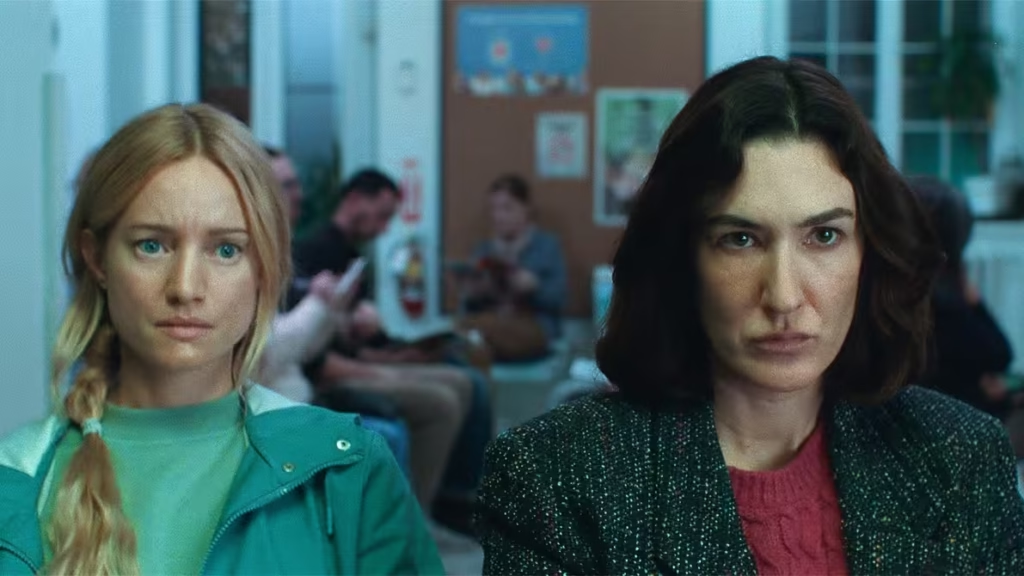
Two Women flips this script—literally and figuratively. The film follows the misadventures of Chloé and Marianne, two university friends in their late twenties who, frustrated with their stagnant love lives and predictable routines, make a bold pact to radically overhaul their approach to sex and relationships. What begins as a series of awkward, empowering, and hilarious experiments soon spirals into a journey of self-discovery that neither saw coming.
The genius of the transposition lies in its cultural specificity. Gone are the stock characters and cartoonish scenarios. Instead, we get:
- A Montreal Backdrop: The city is not just a setting but a character—from the vibrant plateau apartments to the eclectic nightlife, the film is steeped in a uniquely Québécois atmosphere.
- Female-Centric Narrative: The gaze is decisively shifted. The comedy arises from authentic female experiences, perspectives, and conversations, offering a fresh and long-overdue take on the genre.
- Emotional Depth: While the Confessions films were largely episodic farces, Two Women uses its comedic framework to explore themes of friendship, societal expectation, and the complex pursuit of personal freedom.
More Than Laughs: The Substance Beneath the Sex Comedy
To label Two Women as just a sex comedy would be a disservice. Director Élise Tremblay has crafted a film that uses its provocative premise to ask deeper questions. The “confessions” here aren’t salacious anecdotes told to a buddy; they are vulnerable admissions the women share with each other, and more importantly, with themselves.
A Celebration of Female Friendship
At its core, the film is a testament to a powerful, platonic bond. Chloé, the more impulsive and adventurous of the pair, and Marianne, the thoughtful and initially reserved one, anchor each other through every cringe-worthy date, unexpected heartache, and triumphant breakthrough. Their friendship is the real love story, providing both the film’s heart and its funniest, most relatable moments. Their dynamic proves that the most profound confessions are often shared between best friends over a bottle of wine, dissecting the chaos of modern dating.
Navigating Autonomy and Expectation
The film cleverly uses its comedic setup to critique the paradoxical pressures placed on young women. Are they seeking liberation for themselves, or performing it for an imagined audience? Is their pact an act of empowerment or a new form of pressure? Two Women doesn’t offer easy answers but allows its characters to navigate these messy questions with humor and humanity, making their journey feel authentic and earned.
Standout Performances and Stylish Direction
The film’s success hinges on the chemistry of its leads, and Sophie Deslauriers (Chloé) and Léa Roy (Marianne) deliver in spades. Their performances are nuanced, balancing physical comedy with genuine emotional resonance. You believe in their friendship, root for their individual growth, and laugh *with* them, never *at* them.
Director Élise Tremblay’s style is energetic and intimate. She employs a bright, contemporary visual palette that feels miles away from the grainy, muted tones of 70s sexploitation. The pacing is brisk, the soundtrack is a perfectly curated mix of indie pop and Québécois hits, and the comedic timing is impeccable. Tremblay handles the film’s more risqué moments with a light touch and a focus on character, ensuring they serve the story rather than overshadow it.
Final Verdict: A Confident and Clever Reinvention
Two Women is a triumph of modern genre filmmaking. It takes the DNA of a classic, cheeky format—the sexual misadventure saga—and successfully transplants it into new soil, where it grows into something richer, smarter, and more relevant.
Is it the French-Canadian Confessions of a Window Cleaner? In spirit and playful audacity, yes. But it is also so much more. It’s a witty, warm, and wonderfully performed film about the messy, hilarious, and ultimately human journey of figuring out who you are and what you want. It proves that stories of sexual exploration can be both uproariously funny and deeply substantive when told from a fresh perspective.
For audiences tired of recycled Hollywood comedies, Two Women offers a bold, bilingual, and brilliantly executed alternative. It’s a confident declaration that Québécois cinema has a unique and vital voice, one that can take a familiar concept and remake it into a contemporary classic. This is one confession worth hearing.