Canada’s $3.8 Billion US Fighter Jet Weapons Deal Explained
In a significant move to bolster its military capabilities, Canada has finalized a major arms purchase from its closest ally. The federal government has entered into a multibillion-dollar agreement with the United States to acquire advanced air-to-air missiles and other precision-guided munitions for its fleet of F-35 fighter jets. This deal, valued at up to $3.8 billion CAD, marks a critical step in modernizing the Royal Canadian Air Force (RCAF) and ensuring interoperability with key NATO partners.
The Core of the Deal: What Canada is Buying
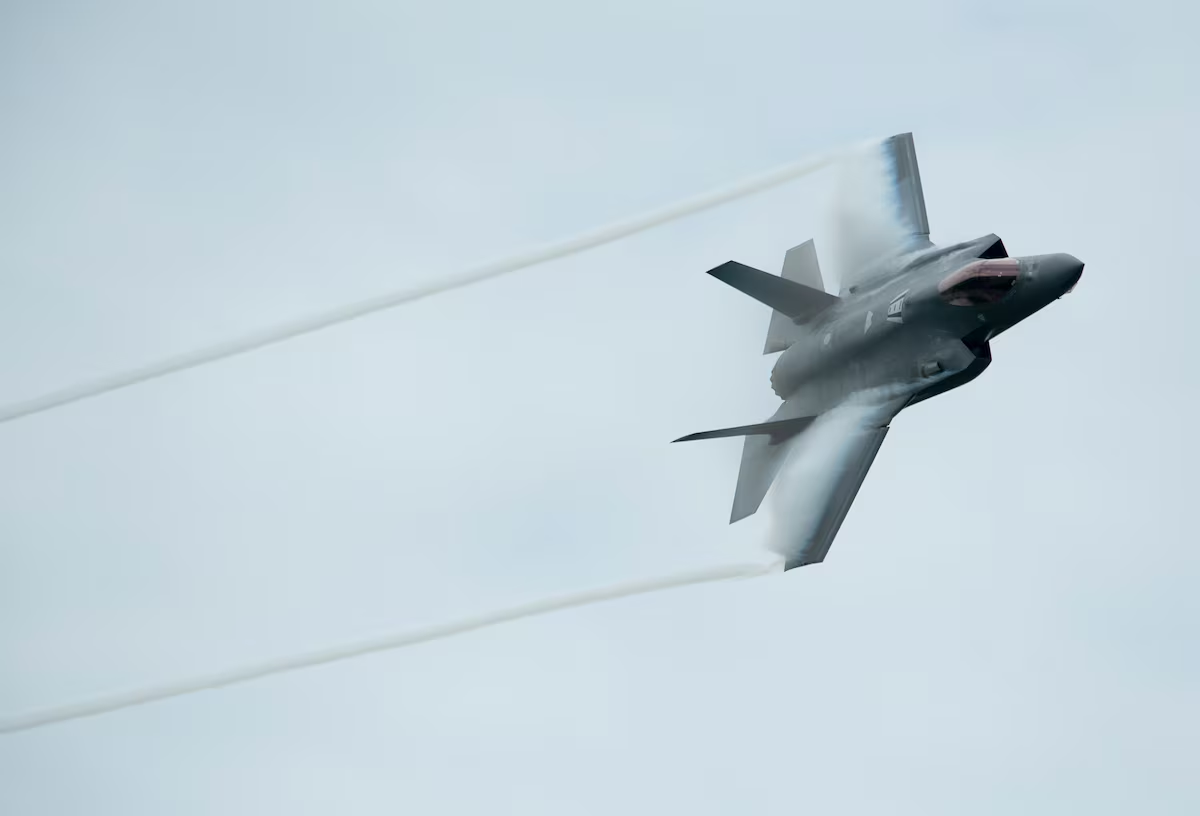
The agreement, managed through the U.S. government’s Foreign Military Sales program, is not for a single weapon but a sophisticated suite of air-to-air and air-to-ground systems. These munitions are designed for the RCAF’s future fleet of 88 F-35A Lightning II stealth fighters, the first of which are expected to arrive in 2026.
The cornerstone of this purchase is a large quantity of AIM-120 Advanced Medium-Range Air-to-Air Missiles (AMRAAM). These are the primary “beyond visual range” weapons for modern fighter jets, allowing pilots to engage enemy aircraft from dozens of miles away. To complement these, Canada is also procuring AIM-9X Sidewinder missiles, which are highly agile, heat-seeking weapons used for close-range dogfighting.
Beyond air-to-air combat, the deal includes precision strike capabilities. Canada is acquiring:
Why This Purchase is Strategically Crucial
This massive investment is driven by several overlapping strategic, operational, and political imperatives.
1. Fulfilling NATO and NORAD Commitments
Canada faces increasing pressure from NATO allies to meet the alliance’s defence spending target of 2% of GDP. While this purchase alone doesn’t close that gap, it demonstrates a tangible investment in high-end capabilities that the alliance values. More importantly, it directly enhances Canada’s ability to contribute to collective defence in both NATO and the North American Aerospace Defense Command (NORAD). Modernizing the RCAF’s weaponry is essential for defending North American airspace and participating in allied operations abroad.
2. Replenishing Dwindling and Aging Stocks
The RCAF’s current stock of advanced missiles is limited and, in some cases, decades old. The existing AIM-120 AMRAAMs are older models, and the inventory of precision-guided bombs is insufficient for a sustained conflict. This deal is, in part, a necessary replenishment and technological upgrade. It ensures that when the F-35s arrive, they will have a full magazine of the latest-generation weapons to be effective from day one.
3. Ensuring Full Interoperability with the U.S. and Allies
The F-35 is the cornerstone fighter jet for the U.S. and many key allies, including the UK, Australia, Norway, and Denmark. By arming its F-35s with the same standard weapons used by the U.S. Air Force, Canada guarantees seamless interoperability. This means Canadian jets can share targeting data, conduct joint missions, and draw from common supply chains during coalition operations, a critical factor for modern warfare.
4. Navigating a Complex Geopolitical Landscape
The deal comes amid rising global tensions and a renewed focus on Arctic sovereignty. As potential adversaries like Russia modernize their own air forces and air defence systems, Canada requires weapons that can counter these threats. The long-range AIM-120 and the stealthy F-35 are seen as a direct response to this challenge, particularly in the vast and strategically vital Arctic region.
Logistics, Costs, and the Road Ahead
The $3.8 billion figure is a ceiling value, meaning the final cost could be lower depending on the exact quantities and associated support finalized. The procurement will be rolled out over the coming years, aligned with the delivery schedule of the F-35 aircraft.
A significant aspect of this deal is its structure as a U.S. Foreign Military Sale (FMS). While this streamlines the process by dealing directly with the U.S. government and Pentagon, it often means less transparency and less opportunity for Canadian industrial benefits compared to a direct commercial contract. However, U.S. officials have stated that the deal will still support jobs in both countries through the complex supply chains of major defence contractors like Raytheon and Lockheed Martin.
Analysis: A Necessary but Costly Step for Canadian Defence
This weapons purchase is widely viewed by defence analysts as a non-negotiable, foundational investment. An F-35 armed with outdated weapons loses most of its technological edge. Therefore, this package is essential to unlocking the full potential of Canada’s new fighter jet fleet.
However, it also highlights the immense cost of maintaining a modern air force. The $3.8 billion for weapons comes on top of the $19 billion committed for the 88 F-35 airframes themselves, plus billions more for long-term maintenance, training, and infrastructure. It underscores the difficult fiscal choices facing Canada as it seeks to rebuild its military capabilities across all domains.
Critics may question the scale of the purchase or the prioritization of offensive strike weapons. Proponents, however, argue that in an era of great power competition, credible deterrence requires these advanced capabilities. A fighter jet that can only defend itself but not strike meaningful targets is of limited value to allies expecting a full-spectrum contributor.
Conclusion: Arming the Future Force
Canada’s $3.8 billion weapons deal with the United States is more than just a large arms purchase; it is a definitive statement of intent. It signals a commitment to fielding a truly capable, interoperable, and lethal fighter force for the 21st century. By equipping its future F-35s with top-tier American munitions, Canada is ensuring that the Royal Canadian Air Force can hold its own alongside allied forces, protect North American sovereignty, and fulfill its international defence obligations for decades to come. The road to a fully modernized RCAF is long and expensive, but this agreement represents a crucial milestone on that path.