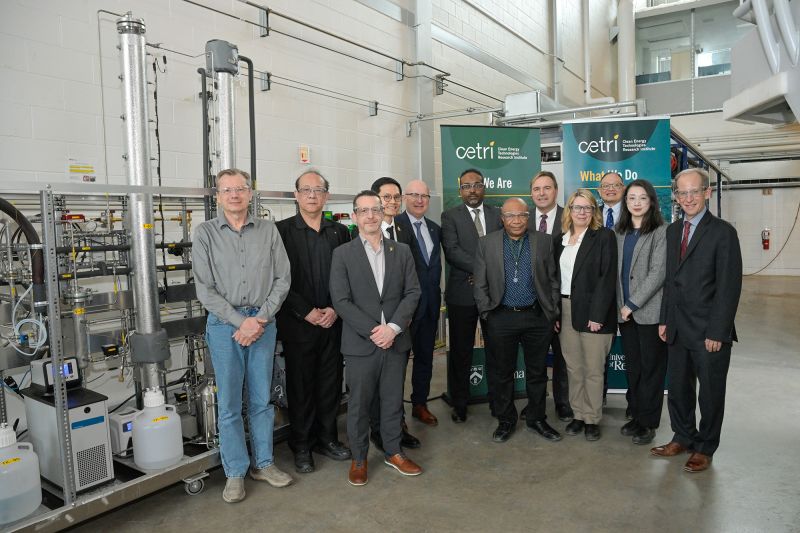
University of Regina Exports Carbon Capture Tech to Thailand
In a significant stride for global climate action, the University of Regina is exporting its world-renowned carbon capture technology to Thailand. This landmark partnership, facilitated through the university’s commercial arm, ISC International Carbon Capture and Storage (ICCS) Knowledge Centre, represents a powerful fusion of Canadian innovation and international collaboration. It’s a story that moves climate solutions from the prairies of Saskatchewan to the heart of Southeast Asia, demonstrating that the fight against climate change knows no borders.
Bridging Continents with Climate Innovation
The core of this international exchange is the University of Regina’s ICCS Knowledge Centre, a global leader in carbon capture, utilization, and storage (CCUS) research and commercialization. The Centre has signed a pivotal agreement with Thailand’s PTT Exploration and Production Public Company Limited (PTTEP), a national leader in the energy sector.
This isn’t just a simple technology sale; it’s a comprehensive knowledge transfer. The partnership will see U of R experts provide PTTEP with critical engineering support, proprietary software, and specialized training. The goal is to equip Thai engineers and researchers with the tools and expertise to implement CCUS technology tailored to Thailand’s unique industrial and geological landscape.
Why This Partnership Matters for Global Emissions
Thailand, like many rapidly developing nations, faces the dual challenge of sustaining economic growth while reducing its carbon footprint. Its national commitment to achieving Carbon Neutrality by 2050 and Net Zero emissions by 2065 requires practical, scalable technologies. This is where Saskatchewan’s expertise becomes invaluable.
The University of Regina and its research partners have pioneered some of the most advanced and cost-effective carbon capture systems in the world, notably at the Boundary Dam Power Station. By transferring this hard-earned knowledge, Canada is helping Thailand leapfrog years of development, accelerating its own decarbonization journey. This export is a tangible example of how developed nations can support global climate targets through technology sharing.
The Technology at the Heart of the Deal
So, what exactly is being exported? The collaboration focuses on several key technological pillars developed through decades of research in Saskatchewan:
- Advanced Solvent Systems: The U of R’s research into amine-based solvents is central to efficiently capturing CO2 from industrial flue gases. These solvents are designed for high performance and lower energy consumption, a critical factor for economic viability.
- Proprietary Process Simulation Software: Thai engineers will gain access to sophisticated modeling tools that allow them to design and optimize carbon capture systems for specific power plants or industrial facilities in Thailand, predicting performance and costs with high accuracy.
- Geological Storage Expertise: Capturing carbon is only half the battle; safely storing it underground is the other. The Knowledge Centre will provide guidance on site selection, monitoring, and risk assessment for secure, permanent CO2 storage in geological formations.
This suite of technologies provides a holistic, ready-to-adapt blueprint for Thailand’s emerging CCUS industry.
Beyond Technology: Building Capacity and Forging Relationships
The impact of this agreement extends far beyond hardware and software. It’s fundamentally about building human capacity. Thai researchers and engineers will receive hands-on training, engaging in a deep technical exchange with their Canadian counterparts. This fosters long-term professional relationships and creates a community of experts in Thailand who can champion and advance CCUS for decades to come.
Furthermore, this partnership strengthens the diplomatic and economic ties between Canada and Thailand, positioning Saskatchewan as a global hub for clean energy solutions. It proves that Canadian intellectual property and engineering prowess are in high demand worldwide, creating economic opportunity at home while contributing to a global public good.
A Model for Future International Collaboration
The U of R-PTTEP deal is not an isolated event; it serves as a potential model for future international climate tech partnerships. It demonstrates a successful framework:
- Leveraging Academic Leadership: Utilizing a university’s research excellence and neutral, knowledge-centric reputation.
- Engaging Industry Partners: Working directly with the key industrial players who will deploy the technology at scale.
- Focusing on Holistic Transfer: Moving beyond a simple sale to include training, software, and ongoing support.
This approach ensures the technology is not just purchased, but effectively understood, implemented, and sustained.
The Saskatchewan Advantage on the World Stage
This export is a testament to Saskatchewan’s unexpected role as a climate technology leader. From a province historically known for fossil fuel production, a world-class CCUS ecosystem has emerged. This ecosystem includes:
- Groundbreaking research at the University of Regina.
- Real-world, large-scale demonstration at Boundary Dam.
- A skilled workforce of engineers and technicians.
- A supportive policy environment that has learned from direct experience.
This “Saskatchewan advantage” is now a valuable export commodity. The province’s practical, proven experience in making carbon capture work in an industrial setting is precisely what emerging economies need.
Conclusion: A Win for the Planet, a Win for Innovation
The University of Regina’s mission to export carbon capture technology to Thailand is a clear win on multiple fronts. It’s a win for Thailand, which gains a powerful tool to meet its climate goals and transition its energy sector. It’s a win for Canada and Saskatchewan, showcasing innovation, creating economic value from research, and enhancing its international stature. Most importantly, it’s a win for the global climate.
By sharing proven solutions and building capacity worldwide, we can accelerate the collective path to net-zero emissions. This partnership between a Canadian university and a Thai energy giant is a powerful reminder that while climate change is a global problem, the solutions can—and must—be shared globally. The knowledge forged in the labs and facilities of Regina is now poised to make a profound difference thousands of miles away, proving that effective climate action is a collaborative endeavor.