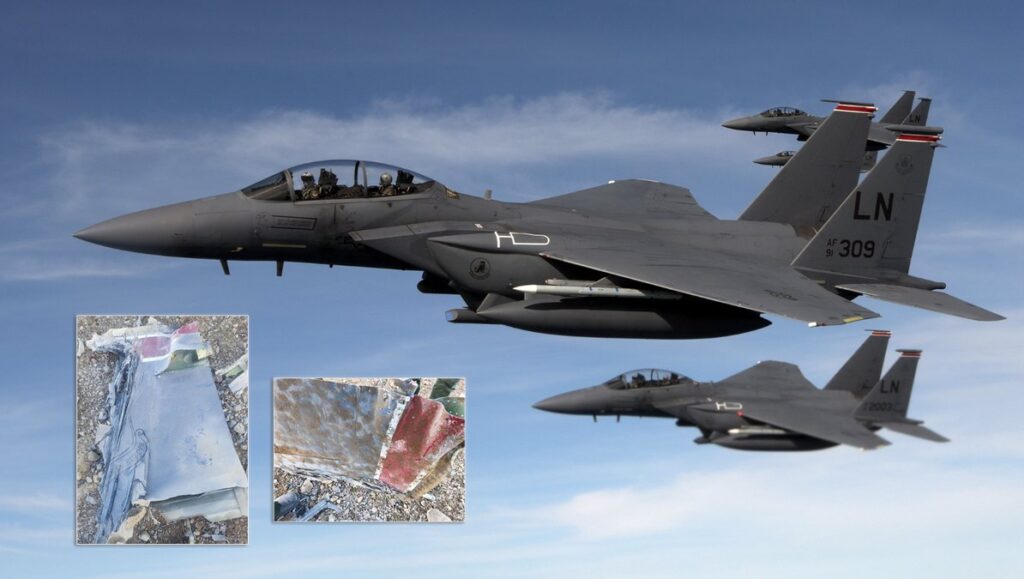
US F-15 Pilot Rescued After Being Shot Down Over Iran
In a dramatic and high-stakes operation, a United States Air Force F-15 pilot has been successfully rescued after his fighter jet was shot down over Iranian airspace. The incident, which has sent shockwaves through international diplomatic and military circles, underscores the ever-present volatility in the region and the razor-thin line between routine patrols and international crisis.
According to U.S. defense officials, the pilot was conducting what was described as a “routine reconnaissance mission” near the sensitive border region when his aircraft was engaged by Iranian air defense systems. Ejecting safely, the pilot landed in a remote, mountainous area within Iran, triggering an immediate and clandestine search-and-rescue operation.
A Covert Nighttime Rescue Mission
The successful recovery of the downed pilot was no small feat. It involved a complex, joint-operation between several elite U.S. military branches, executed under the cover of darkness to avoid further escalation or detection.
Key elements of the rescue operation included:
- Real-Time Tracking: The pilot’s ejection seat was equipped with a survival radio and GPS beacon, allowing rescue coordinators to pinpoint his location within minutes of the crash.
- Stealth Infiltration: A team of special operations forces was rapidly deployed, likely using stealth helicopters or other low-observable aircraft, to infiltrate Iranian airspace undetected.
- On-the-Ground Evasion: Initial reports suggest the pilot evaded capture for several hours, utilizing survival training to stay hidden from potential Iranian military patrols.
- Rapid Exfiltration: The rescue team located the pilot, secured the area, and extracted him to a pre-determined safe location, all within a critically short operational window.
The mission highlights the immense capability and global reach of U.S. combat search and rescue (CSAR) teams, who train relentlessly for such worst-case scenarios. “This operation was a textbook example of planning, precision, and bravery,” a Pentagon spokesperson stated. “Our personnel are trained to bring our people home, no matter the environment or the risk.”
Geopolitical Tensions and the Question of Airspace
A Persistent Flashpoint
This incident did not occur in a vacuum. The skies over the Persian Gulf and the surrounding region have long been a arena of heightened tension between the United States and Iran. The U.S. maintains a significant military presence in the area, citing the need to ensure freedom of navigation and deter aggression, while Iran views these patrols as provocative acts of espionage and intimidation.
The immediate and critical question now revolves around the exact circumstances of the shoot-down. U.S. officials have firmly stated the F-15 was operating in international airspace at the time of the incident. Iran, however, has a history of claiming airspace violations and has not yet issued an official statement regarding this specific event. This conflicting narrative is a familiar and dangerous pattern that has led to confrontations in the past.
The potential for miscalculation is extremely high in these scenarios. Advanced military aircraft operate at incredible speeds, and air defense radar systems must make split-second decisions. An unintentional drift across a poorly defined or contested border, or a misinterpretation of a jet’s flight path, can have catastrophic consequences.
Historical Precedents and the Risk of Escalation
The shadow of past incidents looms large. The 2019 downing of an American RQ-4 Global Hawk drone by Iran brought the two nations to the brink of direct conflict. Similarly, the tragic 1988 shoot-down of Iran Air Flight 655 by the U.S. Navy remains a painful memory in Iran. Each event layers on more complexity and animosity, making de-escalation in future crises more difficult.
Analysts are closely watching how both capitals will respond in the coming days. The successful rescue of the pilot may act as a pressure valve, allowing the U.S. to respond with measured diplomatic pressure rather than immediate military retaliation. However, the act of penetrating Iranian airspace for the rescue itself—a necessary military action—could be framed by Tehran as a further violation of its sovereignty.
Analysis: What This Means for Regional Security
The rescue, while a tactical success, reveals several unsettling truths about the current state of U.S.-Iran relations and regional stability.
- Failed De-escalation Mechanisms: The incident suggests that existing communication channels or “rules of the road” to prevent such aerial encounters are either ineffective or not being adhered to. The risk of a direct, intentional clash is growing.
- Show of Force and Capability: For the U.S., the mission demonstrates an unwavering commitment to recover personnel and a formidable ability to project power deep within denied territory. For Iran, the initial shoot-down showcases its continued investment in and willingness to use its air defense network.
- The Human Element in High-Tech War: Amidst discussions of drones, cyber warfare, and satellite surveillance, this event is a stark reminder that human pilots are still in the cockpit and on the ground. Their skill and courage, as well as their vulnerability, remain central to modern conflict.
The international community, including allies and neutral states in the region, is likely urging extreme caution. Another incident could easily spiral, disrupting vital global oil shipping lanes through the Strait of Hormuz and drawing other actors into a broader conflict.
Looking Ahead: Diplomacy in the Aftermath
In the wake of the pilot’s safe return, the focus must now shift to crisis management and diplomacy. The United States will undoubtedly issue formal protests and demand explanations through Swiss intermediaries, who represent U.S. interests in Iran. The priority will be to establish a clear account of the incident to prevent a repeat.
However, with broader nuclear negotiations stalled and deep-seated hostility defining the relationship, the prospects for a meaningful diplomatic breakthrough are slim. This event is more likely to become another data point in a long history of mutual distrust, reinforcing both sides’ defensive postures.
The ultimate takeaway is one of sober relief. A pilot is home safe, and a potentially explosive international crisis was, for the moment, averted by a brilliantly executed military operation. Yet, the underlying conditions that led to the F-15 being shot down remain unaddressed. Until channels of communication are reopened and clear boundaries are established, the skies over the Gulf will remain dangerously contested, with the next pilot potentially facing a far different fate.