
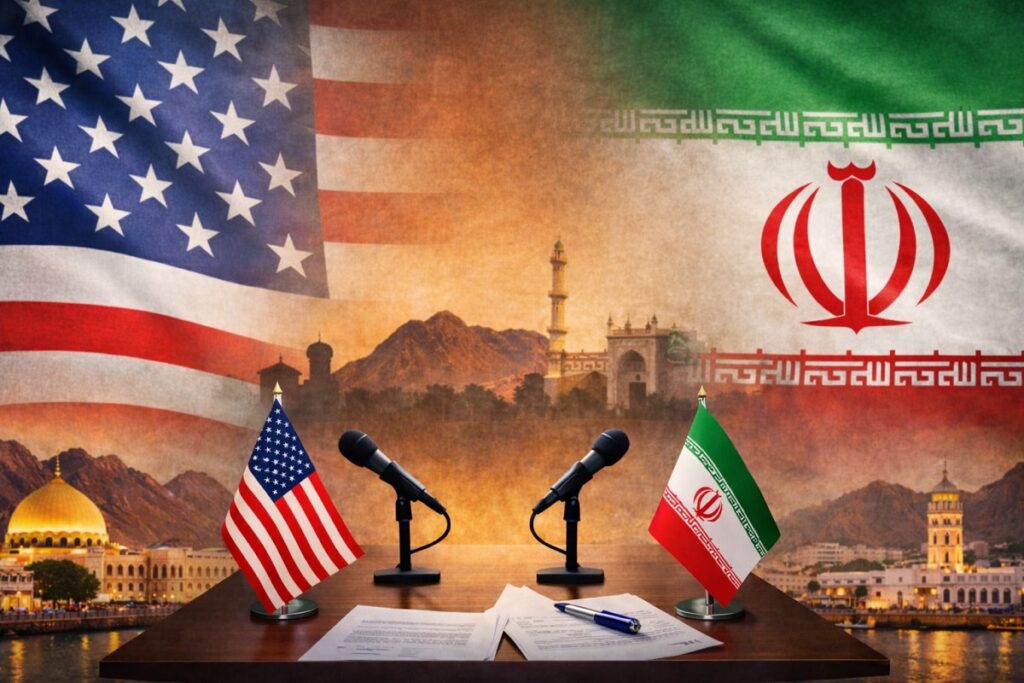
Crucial US-Iran Peace Talks in Islamabad Aim to De-Escalate Tensions
In a significant diplomatic maneuver, the geopolitical spotlight has shifted to Islamabad, where high-stakes talks between the United States and Iran are underway. This dialogue, occurring against a backdrop of heightened regional volatility, represents a critical effort to prevent a wider conflict and establish a sustainable framework for peace. The choice of Pakistan as the host nation underscores its strategic role as a potential mediator in one of the world’s most fraught relationships.
A Delicate Moment for Diplomacy
The talks in Pakistan’s capital arrive at a moment of extreme fragility. Recent escalations in the Middle East, including direct confrontations, have pushed the region to the brink. The primary objective of these discussions is to establish clear channels of communication and create actionable de-escalation protocols to avoid miscalculations that could spiral into a broader war.
Key areas of focus for the negotiators include:
- The security of critical maritime chokepoints, notably the Strait of Hormuz.
- Mechanisms for addressing security concerns without resorting to military posturing.
- Pathways to rebuild a degree of mutual trust, however minimal.
The involvement of senior officials from both nations indicates the seriousness with which both Washington and Tehran are approaching this forum, even as fundamental disagreements persist.
Pakistan’s Strategic Role as Mediator
Pakistan’s facilitation of these talks is a calculated diplomatic move. With historical ties to both the West and the Muslim world, and a complex relationship with each party, Pakistan positions itself as a neutral ground. The presence of high-level Pakistani officials, including Prime Minister Shehbaz Sharif and Army Chief General Asim Munir, highlights the national security priority Islamabad places on regional stability.
Why Islamabad?
Pakistan has a vested interest in preventing regional chaos. Conflict in the Middle East directly impacts its economic and security environment. By hosting these talks, Pakistan aims to:
- Bolster its international standing as a responsible state actor.
- Mitigate spillover effects of conflict that could affect its own borders.
- Demonstrate its capability to manage complex diplomatic engagements.
This role also comes with immense pressure, as the success or failure of the dialogue will reflect on Pakistan’s diplomatic clout.
The Shadow of Domestic US Politics
An unavoidable subtext to the Islamabad talks is the looming US presidential election. The stance of the current administration is being carefully weighed against the potential policies of a future one. Figures like Senator J.D. Vance, a close ally of Donald Trump, have voiced strong opinions on foreign policy, suggesting a possible dramatic shift in approach towards Iran should there be a change in leadership.
This political uncertainty adds a layer of complexity for Iranian negotiators, who must consider whether any agreements reached could be overturned in a matter of months. It creates a narrow window for achieving tangible outcomes that can withstand political transitions.
Regional Reactions and the Israeli Factor
While the talks are bilateral, the entire region is watching closely. Israel, a key US ally and Iran’s foremost regional adversary, views these negotiations with deep skepticism. Israeli officials have consistently argued that diplomacy with Iran is futile without the leverage of maximum pressure. The talks in Islamabad will undoubtedly be scrutinized in Tel Aviv and could influence Israel’s own strategic calculations.
Concurrently, other Gulf nations, while publicly supportive of de-escalation, have their own security concerns. They seek assurances that any US-Iran understanding does not come at the expense of their interests or empower Iranian proxy networks in the region.
Challenges on the Road to De-escalation
Despite the diplomatic initiative, the path to meaningful de-escalation is strewn with obstacles. Deep-seated mistrust built over decades is the largest hurdle. Both sides enter the room with fundamentally opposing views on a range of issues, from nuclear program limitations to regional influence.
Major sticking points include:
- The future of the JCPOA (Iran nuclear deal) and sanctions relief.
- Iran’s ballistic missile program and its support for regional militias.
- The presence and posture of US military forces in the Gulf.
Overcoming these issues requires not just political will but also a willingness to make politically difficult compromises at home—a challenge for both governments.
The Global Stakes: Beyond the Middle East
The implications of these talks extend far beyond the immediate region. A failure to de-escalate threatens global energy security, given that a significant portion of the world’s oil transits through the volatile Strait of Hormuz. It risks drawing other global powers into the fray and could destabilize already fragile economies worldwide.
Conversely, even modest success in Islamabad could set a precedent. It could demonstrate that direct dialogue, even between arch-rivals, is possible and necessary. It could create a blueprint for managing crises through diplomacy rather than military action, offering a glimmer of hope in a tense geopolitical landscape.
A Cautious Hope for Stability
The US-Iran peace talks in Islamabad are a testament to the recognition that the cost of open conflict is too high for all involved. While a comprehensive breakthrough is unlikely in a single meeting, the very act of sustained, high-level dialogue is a victory in itself. It opens a valve to release pressure and creates space for incremental progress.
The world watches as diplomats in Islamabad navigate this high-wire act. Their success or failure will not only shape the future of US-Iran relations but will also determine whether the region steps back from the precipice of war or moves closer to it. In this pivotal moment, the pursuit of peace, however arduous, remains the most strategic path forward.

