
Venezuela Protests: Police Confront Pension and Wage Demonstrations
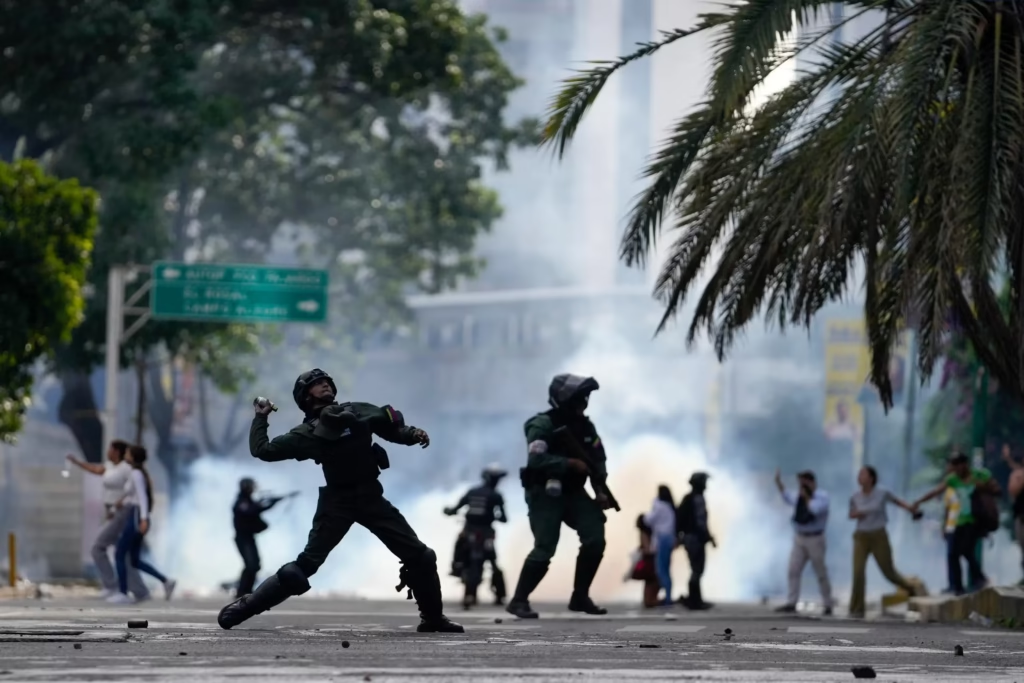
In a stark reminder of the enduring economic crisis gripping the nation, Venezuelan security forces recently moved to block a protest in Caracas where retirees and public sector workers demanded higher pensions and wages. The scene, captured in images circulating online, shows a line of police in riot gear standing between demonstrators and the headquarters of the state-run oil company PDVSA, a symbol of the country’s vast but faltering petroleum wealth. This confrontation underscores the growing desperation among Venezuela’s most vulnerable populations as hyperinflation continues to erode their already meager incomes to near worthlessness.
The Heart of the Discontent: Pensions That Can’t Buy Bread
At the core of the protests is a simple, devastating reality: monthly pension payments in Venezuela are now equivalent to just a few dollars. For many retirees, this amount is insufficient to purchase even a single kilogram of meat or a basic basket of groceries for the month. The pension system, like much of the country’s social infrastructure, has been crippled by years of hyperinflation and economic contraction.
A Cycle of Protest and Response
The recent demonstration is not an isolated incident. It is part of a recurring cycle where:
- Retirees and workers, organized by groups like the National Union of Retirees and Pensioners, gather to voice their demands.
- They call for the government to peg pensions to the cost of the basic food basket, which is estimated to be hundreds of times higher than the current payout.
- Protests are frequently met with a strong police presence, limiting access to key government or symbolic buildings.
- Brief dialogues may occur, but systemic change remains elusive, leading to repeated demonstrations.
This pattern highlights a profound disconnect between the economic suffering of the people and the official government narrative that emphasizes resistance to external sanctions as the primary cause of hardship. For the protester holding a sign that reads, “We demand a decent pension,” the immediate crisis is domestic and urgent.
The Broader Economic Landscape: More Than Just Pensions
While the pensioners’ plight is particularly acute, their struggle reflects a nationwide economic catastrophe. Venezuela, once Latin America’s wealthiest nation, has seen its economy shrink by over 80% in the last decade. The collapse of the oil industry, mismanagement, and sweeping international sanctions have created a perfect storm.
Public sector teachers, nurses, and administrative workers also survive on minuscule salaries, often forced to seek secondary incomes or rely on remittances from family abroad. The bolivar is in a state of perpetual devaluation, making cash savings obsolete and pushing the population toward dollarization for everyday transactions—a privilege not accessible to those dependent on state-issued bolivar pensions.
The Government’s Stance and the Sanctions Factor
The administration of President Nicolás Maduro consistently attributes the country’s economic woes to “imperialist” sanctions imposed by the United States and other nations. Officials argue that these measures block the country’s access to international financial markets and oil revenue, crippling its ability to fund social programs.
While economists agree sanctions have exacerbated the situation, many point to long-standing issues of corruption, lack of investment in infrastructure, and failed economic policies as root causes. The government’s response to protests often focuses on maintaining public order, framing demonstrations as potential destabilization efforts rather than addressing the underlying economic grievances.
Human Impact: Stories Behind the Statistics
Beyond the headlines of police lines and protest chants are human stories of endurance and despair. Many retirees, who dedicated decades to public service, now survive on the generosity of neighbors, charity, or by selling personal belongings in informal street markets. The psychological toll is immense, with a generation that planned for a peaceful retirement now facing daily uncertainty and hunger.
The situation also fuels continued mass emigration, with over 7 million Venezuelans having left the country, draining it of professionals and further straining the social fabric. Those who remain, particularly the elderly without the means to leave, feel trapped in an impossible situation.
Looking Ahead: Is There a Path to Resolution?
The resolution to the pension and wage crisis is inextricably linked to Venezuela’s broader political and economic future. Potential paths forward are complex and fraught with challenge:
- Comprehensive Economic Reform: Any lasting solution requires a credible plan to stabilize the currency, curb hyperinflation, and restart economic production. This is a monumental task that would require significant political consensus and potentially international cooperation.
- Humanitarian Agreements: There have been calls for specific, protected agreements to channel resources directly to the most vulnerable, including the elderly, bypassing broader political blockades. The success of such efforts has been limited and piecemeal.
- Political Negotiation: Ongoing dialogues between the government and elements of the opposition, facilitated by international actors, occasionally touch on social protection issues. However, translating dialogue into tangible improvements for pensioners has been slow.
For now, the retirees’ movement shows no sign of relenting. Their public demonstrations, despite the risks of confrontation, are one of the few tools left to assert their dignity and demand their rights. The image of elderly citizens facing down police lines is a powerful indictment of the depth of the nation’s crisis.
A Nation at a Crossroads
The blocked protest in Caracas is more than a news event; it is a symptom of a deep societal fracture. Venezuela stands at a crossroads where addressing the fundamental needs of its people—for food, medicine, and a livable income—must become an urgent priority above all else. The world watches to see if the cries of its pensioners will be the catalyst for change or another echo in a long history of unmet promises. The stability of the nation may very well depend on the answer. The resilience of the Venezuelan people is being tested daily, and their quest for a dignified life continues against formidable odds.

