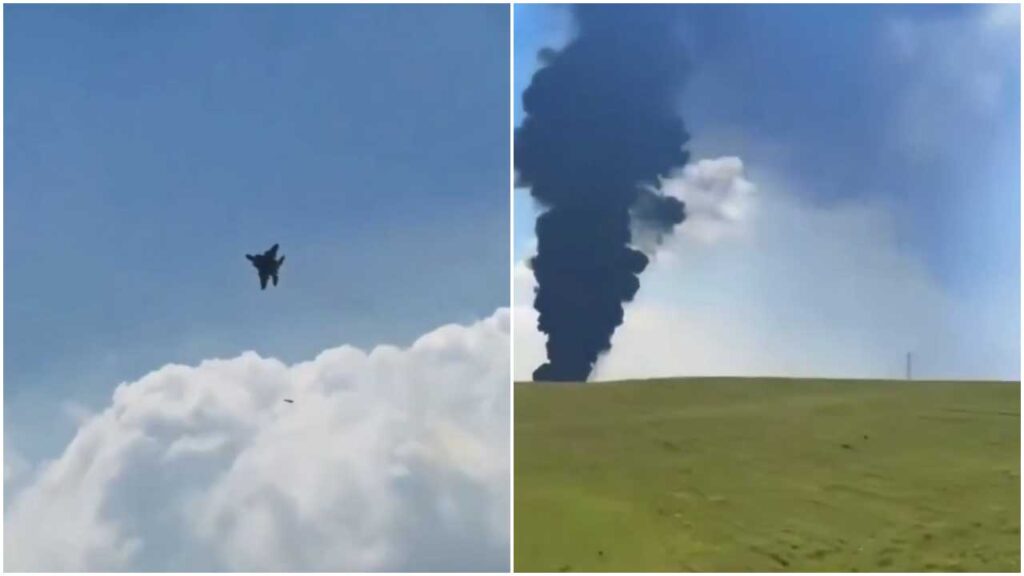
US F-15’s High-Speed Chase of Iranian Shahed Drone Over Iraq Revealed
A recently surfaced video has pulled back the curtain on a dramatic and high-stakes aerial encounter in the skies over Iraq, showcasing a US Air Force F-15E Strike Eagle fighter jet in a high-speed pursuit of an Iranian-made Shahed-136 drone. The footage, which has garnered significant attention from defense analysts and global observers, provides a rare, real-time glimpse into the persistent shadow war and aerial cat-and-mouse games playing out in the Middle East. This incident underscores the ongoing tensions and the complex security challenges facing US and coalition forces stationed in the region.
The Chase: A Fighter Jet vs. a “Flying Moped”
The video, reportedly taken from the cockpit of another aircraft, shows the powerful twin-engine F-15E maneuvering at high speed to intercept the slower, propeller-driven Shahed drone. The visual starkly highlights the technological disparity between the two aircraft.
A Mismatch of Speed and Sophistication
*
- The F-15E Strike Eagle: A premier multi-role fighter capable of speeds exceeding Mach 2.5, equipped with advanced radar, avionics, and a formidable arsenal of air-to-air and air-to-ground missiles.
*
- The Shahed-136: A low-cost, slow-flying loitering munition, often crudely described as a “flying moped” or “suicide drone.” Its primary advantages are its low radar signature, small size, and the difficulty of tracking it against ground clutter.
The pursuit raises an immediate question: why would a multi-million dollar fighter jet need to chase down a cheap drone? The answer lies in the rules of engagement and the critical need for positive visual identification (VID). Before engaging, pilots must often confirm the target’s identity to avoid catastrophic mistakes, such as shooting down a civilian or allied aircraft. The F-15 was likely closing in to get a “visual” on the drone before taking action.
The Strategic Significance: More Than Just an Intercept
This single incident is a microcosm of a much larger and more dangerous strategic reality. The presence of Iranian-designed drones over Iraq is not an anomaly but a feature of Tehran’s evolving military doctrine and its strategy of projecting power across the region.
Iran’s Drone Doctrine: Asymmetry and Deniability
Iran has invested heavily in developing and proliferating unmanned aerial systems (UAS). The Shahed-136, in particular, has become a symbol of its asymmetric warfare strategy. These drones are:
*
- Cost-Effective: They can be produced en masse for a fraction of the cost of a single interceptor missile, posing a severe economic challenge to defense systems.
*
- Proliferated to Proxies: Iran supplies these systems to allied militias across the region, including in Iraq, Syria, and Yemen, providing deniability while extending its reach.
*
- A Persistent Threat: Their slow speed and low altitude make them difficult for traditional air defense networks to detect and track consistently.
The drone in the video was reportedly heading in the direction of Erbil, the capital of Iraq’s semi-autonomous Kurdistan region—a location where US forces are stationed and which has been targeted by drone and rocket attacks in the past.
The Broader Context: A Region on Edge
This aerial chase did not occur in a vacuum. It comes amid a period of heightened regional tensions, fueled by the ongoing conflict in Gaza and a series of escalatory actions between Iran-backed groups and US forces.
A Pattern of Provocation and Defense
Since late 2023, Iranian-backed militias in Iraq and Syria have launched dozens of attacks against US bases using drones, like the Shahed, and rockets. The US has responded with targeted airstrikes against militia facilities and commanders. This video exemplifies the daily defensive posture US forces must maintain. The F-15 pilot’s mission was likely part of a broader Counter-Unmanned Aerial System (C-UAS) effort to protect personnel and assets on the ground.
The incident also highlights the critical role of airpower in maintaining a protective umbrella. The US maintains a significant fleet of fighter aircraft and advanced early-warning systems in the region specifically to counter these evolving drone threats.
Military and Diplomatic Implications
The public release of such footage carries weight beyond the military sphere.
For the US Military: A Validation and a Challenge
The video demonstrates the vigilance and capability of US forces to respond to airborne threats. However, it also starkly illustrates the tactical and strategic dilemma posed by drone swarms. Using a $30 million jet and a $400,000 missile to destroy a $20,000 drone is an unsustainable equation. This reality is driving rapid investment and innovation in directed-energy weapons (lasers), electronic warfare systems, and other cost-effective C-UAS technologies.
For Iran: A Message Sent and Received
For Tehran, the flight of the Shahed—even one that was ultimately intercepted—serves as a message of resolve and capability. It signals to the US, its regional allies, and its own proxies that it can project threat and complicate the operational environment at will. The drone’s journey deep into Iraqi airspace is a demonstration of reach.
For Iraq: A Sobering Sovereignty Issue
For the Iraqi government, repeated violations of its airspace by both Iranian drones and US jets conducting intercepts is a stark reminder of its fragile sovereignty. Baghdad is caught in a difficult position, trying to maintain relationships with both Washington and Tehran while its territory becomes a battleground for proxy conflicts.
Conclusion: A Glimpse into the Future of Conflict
The video of the F-15 chasing the Shahed drone over Iraq is more than just compelling footage; it is a case study in modern hybrid warfare. It shows how advanced militaries are adapting to counter low-tech, proliferated threats that define today’s conflict zones. The silent, slow-moving drone represents one of the most disruptive and persistent challenges to global security, forcing a reevaluation of traditional defense postures and budgets.
As tensions continue to simmer, such intercepts will likely become more common. The encounter serves as a powerful reminder that the skies over the Middle East remain a contested domain, where the whir of a small propeller engine can trigger the roar of a fighter jet’s afterburners, and where a single chase scene encapsulates a world of geopolitical rivalry. The race is on—not just between jet and drone, but between evolving threats and the next generation of defenses designed to stop them.