Will Canada Cut Gas Taxes to Lower Soaring Fuel Prices?
As Canadians watch the numbers on gas station signs climb with a familiar sense of dread, a pressing question is echoing from kitchen tables to the House of Commons: will the federal government step in and cut gas taxes to provide relief? With prices at the pump reaching painful heights, the pressure is mounting on Ottawa to act. Yet, when pressed for answers, key ministers like François-Philippe Champagne are remaining tight-lipped, leaving drivers and economists alike to wonder what, if anything, is coming down the pipeline.
The Pressure at the Pump: A Nation Feeling the Pinch
For many Canadians, filling up the tank has become a significant line item in the household budget. The surge in fuel prices is a complex storm driven by global factors—from international conflicts disrupting supply chains to increased post-pandemic demand and refinery constraints. This isn’t just about the cost of a commute; it’s a ripple effect that increases the price of groceries, goods, and services across the board, contributing to the wider affordability crisis.
In this high-stakes environment, provincial governments have been the first to move. Several have implemented temporary cuts to their provincial fuel taxes or provided direct rebates to residents. These measures have provided a degree of localized relief, but they also spotlight the relative silence from the federal level, where two major taxes apply: the federal carbon tax and the Goods and Services Tax (GST).
The Federal Tax Equation: Carbon Pricing and the GST
To understand the debate, we need to break down the federal government’s potential levers. The most prominent—and politically charged—is the federal carbon price. Designed as a cornerstone of Canada’s climate plan, it adds a cost to fossil fuels to incentivize lower consumption and fund climate action initiatives. A temporary suspension would be a major policy reversal, sparking fierce debate about environmental commitments versus economic relief.
The other component is the GST, which is applied to the final price at the pump, including all other taxes. This means when gas prices rise, the federal government collects more GST revenue—a phenomenon critics call “taxing the tax.” A proposal to remove the GST on gasoline has been floated repeatedly, arguing it would provide direct, percentage-based relief.
Minister Champagne’s Calculated Silence
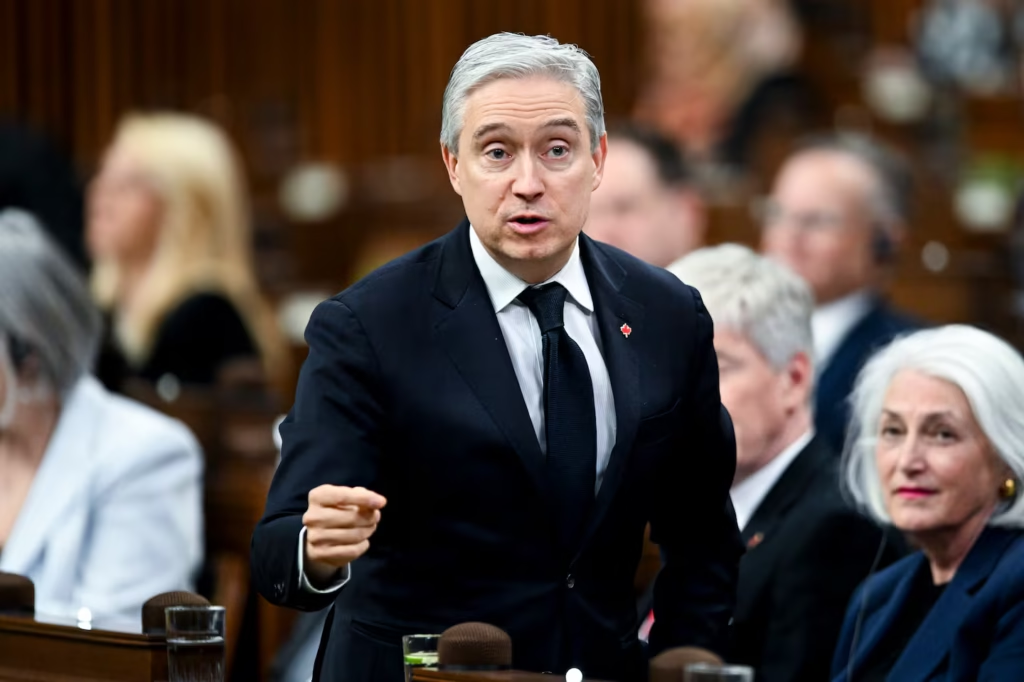
When asked directly if the government would consider cutting federal gas taxes, Industry Minister François-Philippe Champagne notably declined to give a definitive answer. This strategic ambiguity is telling. It suggests the issue is under active and serious consideration within cabinet, weighing several competing priorities:
- Immediate Relief vs. Long-Term Goals: Cutting taxes offers quick, visible relief but could undermine the price signal central to the carbon pricing system, potentially increasing consumption.
- Fiscal Responsibility: Fuel taxes generate billions in revenue that fund essential services and climate programs. Suspending them creates a significant budget hole that must be addressed.
- Targeted vs. Broad Measures: A gas tax cut benefits all drivers, including higher-income households, whereas targeted support (like rebates to low-income Canadians) could be more fiscally efficient but less politically popular.
- Inflation Concerns: Some economists warn that putting more money into the economy via tax cuts could stimulate demand and exacerbate broader inflation, though the effect on a single commodity like gas is debated.
The Precedent of Provincial Action
The actions taken by provinces add another layer. If Ottawa were to suspend the federal carbon price, it would likely need to negotiate with provinces that have their own systems, like Quebec and British Columbia, creating an administrative patchwork. The simpler move of cutting the GST portion would be federally controlled but provides less dramatic relief per litre than pausing the carbon levy.
What Are the Potential Paths Forward?
As the government deliberates behind closed doors, several scenarios could unfold. The path chosen will reveal much about the government’s reading of the political and economic landscape.
- The Status Quo Hold: The government may decide to stay the course, arguing that the carbon rebates most households receive offset the cost and that long-term climate strategy cannot be sacrificed for short-term politics. They could point to existing targeted supports, like the doubling of the GST credit, as sufficient.
- A Targeted “Surgical” Move: Ottawa could opt to remove the GST on gasoline and diesel for a set period. This would be a simpler legislative move than touching the carbon price framework and would provide across-the-board relief without directly dismantling a climate policy.
- A Full or Partial Carbon Price Pause: This is the most dramatic option. It could involve a temporary suspension of the fuel charge or an increase in the rural top-up and rebate amounts to further offset costs without removing the price signal entirely.
- Enhanced Direct Rebates: Instead of cutting taxes at the pump, the government could choose to send more money directly to Canadians via enhanced climate action incentive payments or one-time cheques, arguing this helps with overall affordability without encouraging more fossil fuel use.
The Bottom Line for Canadian Drivers
For now, the waiting game continues. Minister Champagne’s non-answer is, in itself, an answer—it confirms the pressure is real and the option is on the table. The decision is a delicate balancing act between providing tangible cost-of-living relief, maintaining fiscal anchor, and upholding environmental credibility.
While the call to “axe the tax” is a potent political slogan, the reality of governing is more nuanced. Any intervention will be measured against its effectiveness, its cost, and its unintended consequences. Canadians hoping for cheaper fill-ups will be watching the next federal fiscal update or ministerial announcement closely, looking for any sign that Ottawa is ready to turn the valve on federal gas taxes.
In the meantime, the soaring prices serve as a stark reminder of the volatility of global energy markets and the complex journey toward a more stable and sustainable energy future. The government’s next move, whether it’s action or continued restraint, will be a defining moment in Canada’s ongoing conversation about affordability, energy, and climate.