
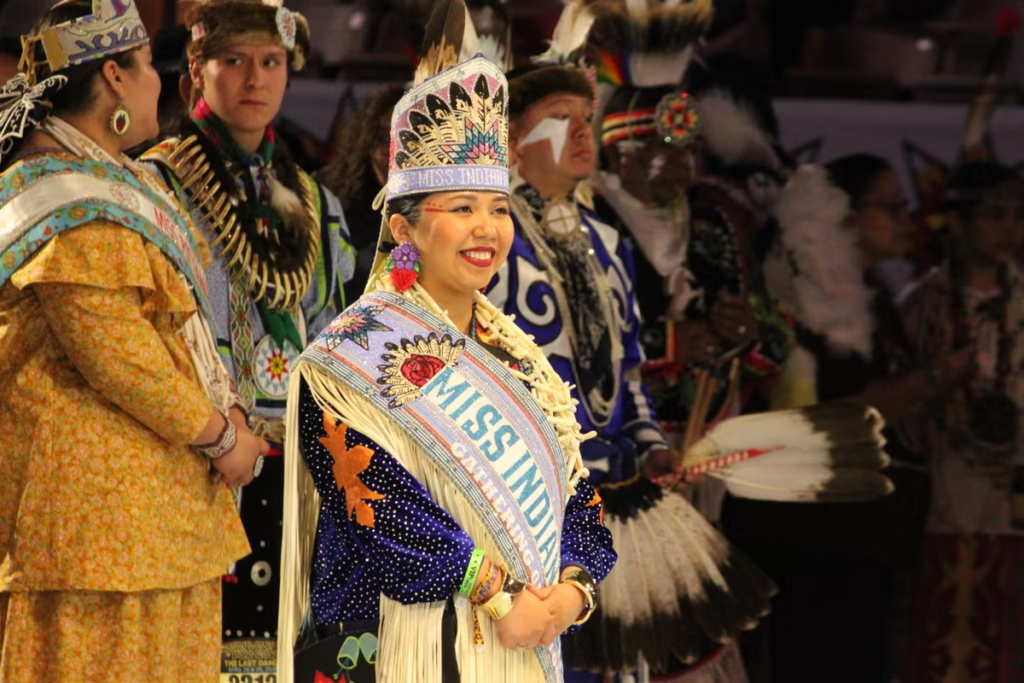
The Final Crown: Miss Indian World 2025 Winners Mark the End of a Celebrated Tradition
The Miss Indian World pageant has reached its final chapter. The 2025 winners have been crowned, closing a long-standing tradition that has honored Indigenous womanhood, culture, and leadership across North America and beyond.
For more than three decades, Miss Indian World was not just a pageant. It was a cultural platform where Indigenous women shared their voices, represented their nations, and advocated for their communities. As the final titleholders take their place, the event leaves behind a deep legacy and a meaningful transition in Indigenous representation.
A Storied Legacy Comes to a Close
Held annually at the Gathering of Nations in Albuquerque, New Mexico, Miss Indian World was recognized as one of the most prestigious Indigenous pageants in the world. Since 1984, it has been a symbol of cultural pride and identity.
Unlike traditional beauty contests, contestants were evaluated on cultural and leadership qualities such as:
- Cultural knowledge of tribal history, language, and traditions
- Public speaking on issues affecting Indigenous communities
- Traditional dance and regalia presentation
- Community service and advocacy work
The titleholder was more than a winner. She became an ambassador representing hundreds of Indigenous nations, traveling to speak on issues like Indigenous rights, environmental protection, and cultural preservation.
The 2025 Winners: The Last to Hold the Title
The 2025 pageant, held in late April, carried a deeply emotional atmosphere. It was understood that this would be the final time the crown would be awarded.
The 2025 Miss Indian World title was awarded to Cheyenne Kippenberger (Cree/Dene). She is known for her advocacy work on Missing and Murdered Indigenous Women (MMIW) and youth mental health, as well as her focus on reclaiming Indigenous narratives in media and education.
Alongside her, junior winners and regional princesses were also named, becoming the final representatives of the pageant’s legacy.
During her final walk, Kippenberger shared a message of transition rather than loss: “This is not an ending of our spirit. It is a transformation. We are closing this chapter to open a new door for Indigenous leadership.”
Why End a Successful Tradition?
The decision to end Miss Indian World was made after careful consideration by organizers at the Gathering of Nations. Several key factors influenced the move:
- A shift away from pageant-style structures and Western beauty standards
- A desire to focus more on community service and real-world impact
- Growing preference for platforms without physical judging or ranking
- Financial and logistical challenges of maintaining a large-scale event
This decision reflects a wider cultural shift in how communities define recognition and leadership.
The Impact: Beyond the Crown
The influence of Miss Indian World extends far beyond the stage. Many past winners have gone on to become:
- Lawyers and judges advocating for tribal sovereignty
- Medical professionals addressing Indigenous health issues
- Authors and filmmakers sharing Indigenous stories
- Political leaders at local and national levels
For many, the pageant served as an early platform for leadership at a time when Indigenous representation in mainstream spaces was limited.
One former titleholder reflected: “That crown gave me confidence and a voice in spaces where I was often the only Indigenous person present.”
What Comes Next for Indigenous Women’s Leadership?
The end of Miss Indian World does not mean the end of recognition or celebration. Instead, it opens the door to new forms of leadership development.
Emerging initiatives include:
- Community-led leadership and mentorship programs
- Digital storytelling platforms for Indigenous voices
- Regional cultural events without competitive ranking
- Indigenous film, art, and cultural showcases
The legacy of the pageant continues through the opportunities it helped inspire. Many young Indigenous girls who watched the event grew up seeing leadership reflected in themselves.
Honoring the Past, Embracing the Future
As the final titleholders complete their year of service, they carry both responsibility and opportunity. Their role now shifts toward shaping what comes next.
Cheyenne Kippenberger has already announced plans to launch a mentorship network for Indigenous youth focused on leadership without competition or ranking.
Meanwhile, the Gathering of Nations will continue its broader cultural celebration through powwows, music, and arts events, even as the pageant itself comes to a close.
A Final Bow
For many families and communities, Miss Indian World was more than an event—it was a tradition of pride, visibility, and representation. Its ending marks an emotional moment in Indigenous cultural history.
As one elder shared, “Our queens are never gone. They live in every woman who stands for her people.”
The 2025 winners are the last to hold the crown, but they also represent the beginning of a new chapter—one where Indigenous women continue to lead, inspire, and redefine leadership on their own terms.

