
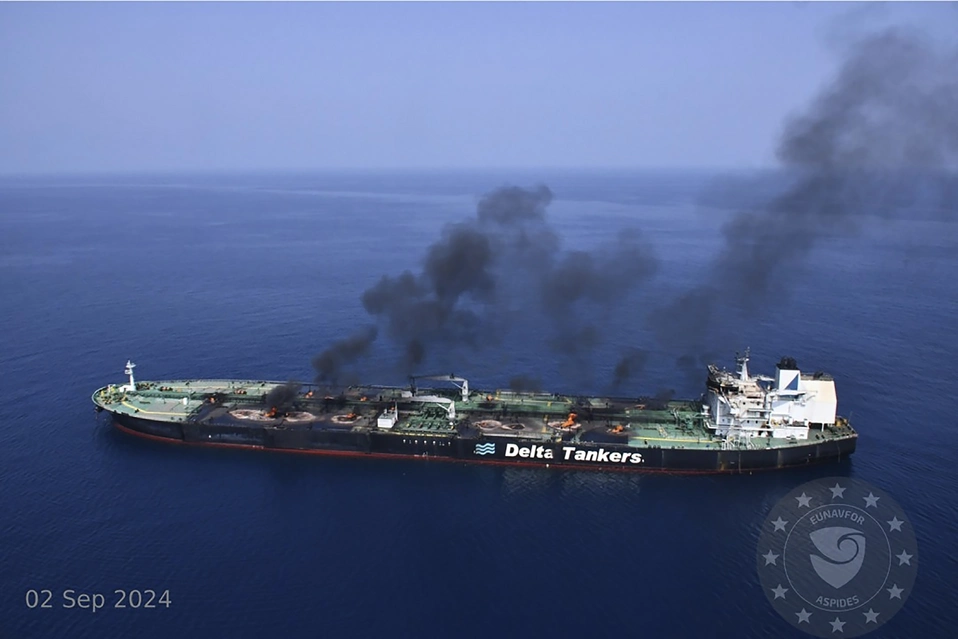
The Strategic Threat to Global Shipping at the Bab el-Mandeb Strait
For centuries, the Bab el-Mandeb Strait has been a silent sentinel at the crossroads of global commerce. This narrow choke point, whose name translates ominously as “Gate of Grief,” connects the Red Sea to the Gulf of Aden and the wider Indian Ocean. Today, this ancient waterway is at the epicenter of a modern geopolitical storm, posing one of the most significant threats to global energy security and supply chains in decades. The strategic calculus of regional powers, particularly Iran and its network of proxies, has transformed this vital maritime artery into a potential flashpoint for international conflict.
Why the Bab el-Mandeb Strait is a Global Chokepoint
To understand the current crisis, one must first grasp the staggering economic importance of this 20-mile-wide passage. It is not an exaggeration to call it one of the world’s most critical pieces of maritime real estate.
The sheer volume of trade that transits the Bab el-Mandeb is staggering:
- Nearly 12% of global seaborne trade passes through this corridor.
- It is the primary conduit for oil and liquefied natural gas (LNG) traveling from the Persian Gulf to Europe, North America, and Asia.
- An estimated 9 million barrels of oil per day flow northward through the strait towards the Suez Canal.
- Virtually all maritime traffic between the Mediterranean and Asia, including container ships carrying everything from consumer goods to food, must navigate this passage.
A closure or sustained disruption of the Bab el-Mandeb would force ships to reroute around the southern tip of Africa, adding thousands of nautical miles, weeks of delay, and millions in extra fuel and operational costs to every journey. The ripple effects would be felt in increased prices for goods, energy market volatility, and crippling delays for just-in-time manufacturing.
The Iranian Strategy: Asymmetric Warfare in a Key Corridor
The recent escalation of attacks on commercial shipping in the Red Sea and near the Bab el-Mandeb is not a series of random events. It reflects a calculated strategy of asymmetric maritime warfare, largely attributed to Iranian-backed Houthi forces in Yemen. By leveraging a relatively low-cost arsenal of drones, missiles, and fast-attack boats, a non-state actor can project power and threaten the economic interests of global superpowers.
Tools of Disruption
- Anti-Ship Missiles and Drones: These weapons, often supplied or facilitated by Iran, allow land-based groups to target vessels dozens of miles offshore with increasing accuracy.
- Seizure and Harassment: The threat of ship hijackings or aggressive approaches by small boats forces commercial carriers to invest heavily in security and insurance, driving up costs.
- Mining Threats: The potential for naval mines, even if not widely deployed, creates a climate of fear that can halt or slow maritime traffic.
This strategy allows Iran to exert pressure on its adversaries—namely the United States, Israel, and Saudi Arabia—without engaging in direct, conventional military conflict. It creates a persistent state of insecurity, driving up global energy prices and testing the resolve and capabilities of international naval coalitions.
The Global Response and Escalating Tensions
The international community, led by the United States, has responded by forming naval task forces, such as Operation Prosperity Guardian, to patrol the area and escort commercial vessels. These defensive measures are crucial but reactive. They address the symptom—the attacks on ships—but not the root cause: the ongoing regional conflicts and the willingness of state actors to use proxy forces to destabilize global commerce.
The situation creates a dangerous cycle:
- Houthi or other proxy attacks threaten shipping.
- International naval forces intercept threats and sometimes strike launch sites in Yemen.
- Iran continues to supply its proxies, viewing the instability as a strategic advantage.
- The risk of a miscalculation or a successful catastrophic attack on a vessel escalates, potentially drawing regional and global powers into a broader conflict.
This precarious standoff turns every commercial tanker and container ship into a potential trigger for a wider war.
Broader Implications for Energy and Global Trade
The volatility at the Bab el-Mandeb Strait has profound implications beyond immediate security concerns. It exposes a critical vulnerability in the interconnected global economy.
Energy Markets on Edge: The oil and gas markets are intensely sensitive to supply disruptions. Persistent threats in the Red Sea lead to a “risk premium” on oil prices, meaning consumers worldwide pay more at the pump due to geopolitical fear, not actual supply shortages. For LNG, crucial for European energy security post-Ukraine, any delay or rerouting creates immediate pressure on reserves and prices.
The Suez Canal’s Relevance: The Bab el-Mandeb is the southern gateway to the Suez Canal. If shippers deem the Red Sea route too dangerous, they will abandon the Suez Canal entirely for the longer Cape of Good Hope route. This would devastate Egypt’s economy and permanently alter major global shipping lanes.
Supply Chain Resilience Tested Again: Following the lessons of the COVID-19 pandemic and the Suez Canal blockage by the *Ever Given*, companies are once again forced to reconsider their reliance on single, vulnerable chokepoints. This may accelerate trends like “friendshoring” and inventory building, but at a significant cost to efficiency and economic growth.
Navigating an Uncertain Future
The crisis at the Bab el-Mandeb Strait is a stark reminder that in our globalized world, a conflict in one region can quickly become a problem for every nation. There is no easy or quick solution. A lasting resolution requires addressing the complex web of regional conflicts, from the war in Yemen to the broader tensions between Iran and its rivals.
For now, the world relies on a tense, military-led deterrence in the waters off Yemen. Shipping companies must weigh the risks of transit against the costs of diversion. And global leaders face the relentless challenge of protecting the free flow of commerce while navigating a region where instability has become a potent weapon. The “Gate of Grief” lives up to its name, reminding us that the most vital pathways are often the most perilous. The security of this narrow strait will remain a bellwether for global stability and economic health for the foreseeable future.

