
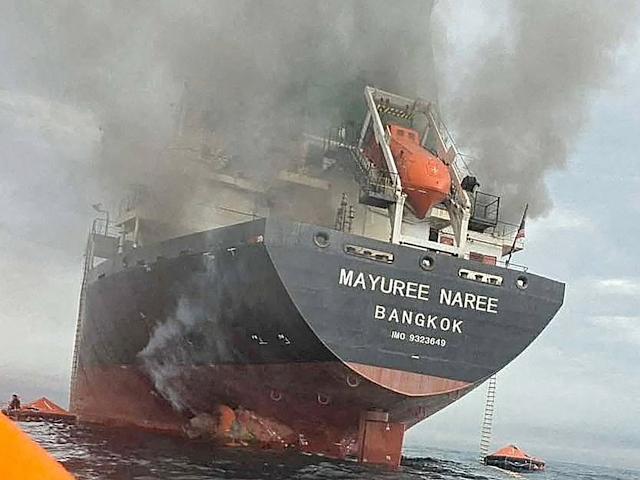
Life on Edge: Sailors Trapped in the Persian Gulf Crisis
The turquoise waters of the Persian Gulf, a vital artery for global energy supplies, have become a prison for dozens of international sailors. Far from the headlines of geopolitical maneuvering, a human crisis is unfolding aboard cargo ships anchored in the Strait of Hormuz. These seafarers, hailing from countries like the Philippines, India, and Russia, are the forgotten collateral of a tense standoff between Iran and the West, their lives and livelihoods suspended indefinitely.
The Unseen Human Cost of Geopolitical Tension
The story begins not with a single dramatic event, but with the slow grind of international sanctions and legal disputes. Many of the stranded vessels are linked to companies or cargoes targeted by U.S. sanctions against Iran. In a tit-for-tat response, Iranian authorities have effectively seized these ships through legal pretexts, refusing to let them leave. The result? Crews who signed up for months-long voyages now face years of isolation, uncertainty, and psychological strain aboard their stationary vessels.
For these sailors, the crisis is deeply personal. They are mechanics, cooks, and deckhands, not political actors. Their primary concerns are the families they support from thousands of miles away and the passage of time they can never reclaim. Contracts have expired, but there is no one to relieve them. They are trapped in a legal and diplomatic limbo, their fates tied to negotiations they cannot see and decisions over which they have no influence.
A Day in the Life of a Stranded Mariner
Life aboard a stranded ship is a bizarre parody of normal seafaring. The routine maintenance continues—painting, cleaning, repairing—but without the purpose of a journey. The horizon, once a symbol of freedom and destination, is now a constant, unchanging view. Resources and morale dwindle in tandem.
*
- Financial and Emotional Strain: While some continue to receive base pay, many face reduced wages or uncertain compensation. The emotional toll is heavier. Missed birthdays, anniversaries, and the first steps of children back home are losses that no salary can repay.
*
- Deteriorating Conditions: Fresh food and supplies are difficult to obtain. Medical care is a constant worry, with crew members reporting untreated chronic conditions and dental problems. The mental health impact of such prolonged isolation and stress is profound.
*
- The Weight of Uncertainty: The most crushing burden is not knowing. There are no answers to the questions that define their lives: “When will I go home?” This endless uncertainty erodes resilience and hope.
The Strait of Hormuz: A Chokepoint for Global Trade and Lives
The Strait of Hormuz is no ordinary waterway. It is a narrow passage through which about one-fifth of the world’s seaborne oil passes. This strategic significance makes it a flashpoint. When geopolitical tensions rise here, the world worries about oil prices and market stability. Yet, the sailors on these floating prisons are a stark reminder that the first and most direct casualties are human.
Their plight underscores how global conflicts are no longer confined to battlefields. Economic warfare, sanctions, and maritime seizures create new kinds of hostages—not in cells, but on tankers and bulk carriers. The international maritime community has raised alarms, with unions and advocacy groups pleading for a “humanitarian corridor” to allow crew changes, but progress is achingly slow against the backdrop of high-stakes diplomacy.
The Ripple Effects Beyond the Hull
The impact of this crisis extends far beyond the railings of the stranded ships. It exposes critical vulnerabilities in the global shipping industry and the principle of crew welfare.
*
- A Warning to the Maritime Workforce: The situation serves as a dire warning to the global workforce of nearly two million seafarers. It highlights the potential personal risks they assume when geopolitical fault lines shift, potentially deterring future generations from this essential career.
*
- Pressure on Flag States and Companies: The crisis places immense pressure on the ships’ flag states and owning companies, who have a fundamental duty of care for their crews. Their ability—or inability—to secure their employees’ release is under scrutiny.
*
- Diplomatic Stalemate: Ultimately, the sailors’ freedom is entangled in the wider U.S.-Iran relationship, including negotiations over Iran’s nuclear program and sanctions relief. Their lives are bargaining chips in a game they never chose to play.
A Plea for Humanity Amidst Politics
As world powers engage in a delicate dance of diplomacy, the basic human rights of these sailors must not be sacrificed. International maritime law and the principles of the International Labour Organization’s Maritime Labour Convention are clear on the rights of seafarers to repatriation, medical care, and fair treatment.
Humanitarian organizations argue that crew welfare should be decoupled from political disputes. Allowing for the rotation of tired, ill, or contract-expired sailors is a minimal gesture of humanity that would not prejudice the underlying legal or diplomatic claims. It is a matter of recognizing that these individuals are not instruments of state policy, but fathers, mothers, sons, and daughters.
Is There a Path Forward?
Resolving this crisis requires concerted, quiet diplomacy focused specifically on humanitarian grounds. Neutral intermediaries, such as the United Nations’ International Maritime Organization or the Swiss, who often represent U.S. interests in Iran, could facilitate talks aimed solely at crew exchanges. Shipping companies and flag states must also be more proactive and transparent in their efforts, providing consistent support to the crews and their anxious families.
The story of the sailors stranded in the Persian Gulf is a sobering reflection of our interconnected world. It shows how the tremors of international conflict ripple outward, ensnaring ordinary people in extraordinary circumstances. The blue waters that should connect nations have, for these men and women, become walls. Until the world remembers the human faces behind this stalemate, they remain adrift, waiting for a signal that someone, somewhere, is working to bring them home. Their endurance is a testament to the human spirit, but their continued captivity is a failure of global diplomacy to prioritize people over politics.

