
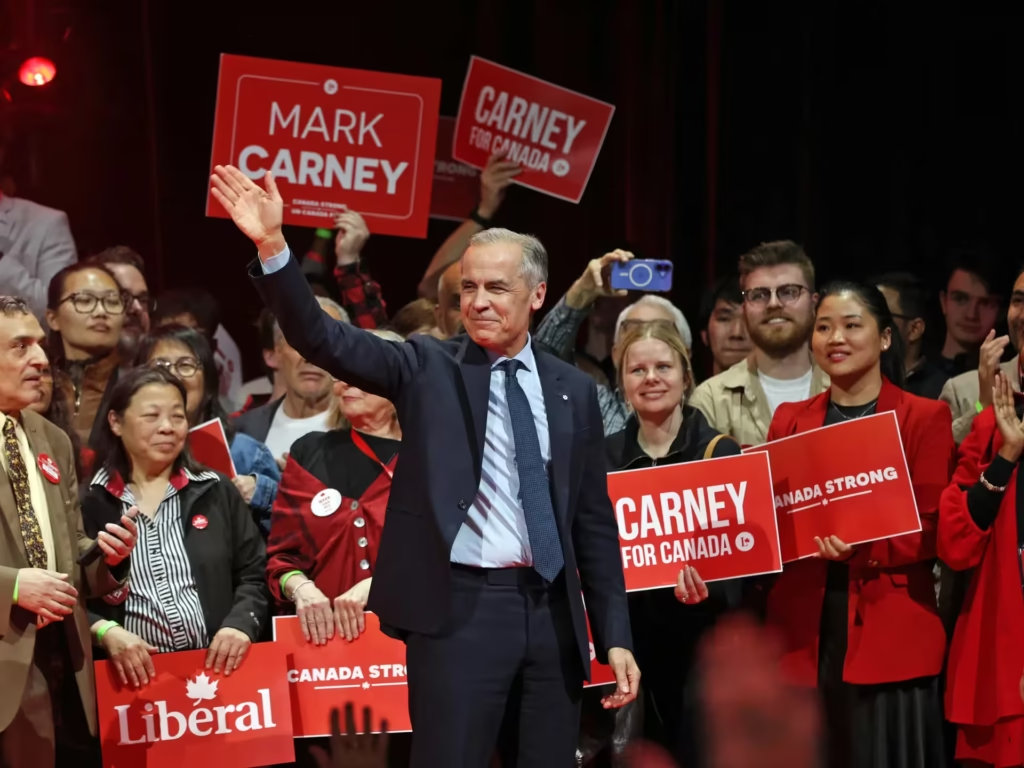
Majority Support for Carney Liberals in Byelections: New Poll Reveals Shifting Political Landscape
A new seismic reading from the Canadian political landscape suggests the ground is moving. An exclusive Ipsos poll for Global News has delivered a striking finding: a majority of decided voters now back the Liberal Party, under the leadership of Mark Carney, to win a majority in the upcoming crucial byelections. This isn’t merely a marginal lead; it’s a statistical signal that could foreshadow a fundamental recalibration of power in Ottawa. With 53% of the decided electorate leaning this way, the poll transforms these localized contests into a high-stakes national referendum. Let’s delve into what these numbers mean, why they matter, and the potential ripple effects across the country.
Decoding the Byelection Poll: A Deep Dive into the Numbers
The Ipsos survey provides more than a simple headline figure. It offers a granular look at voter intention at a precisely critical moment. The finding that 53% of decided Canadian voters want a Carney Liberal majority in these byelections is the cornerstone. This level of consolidated support, especially in the often-fragmented landscape of Canadian politics, indicates a potent combination of strategic voting and genuine approval.
Regional Breakdowns and Riding-Level Implications
While the national number is commanding, the true story often lies in the regional seams. The poll suggests significant Liberal strength is coalescing in key urban and suburban ridings, the very battlegrounds that decide modern elections. Furthermore, there appears to be growing appeal in traditionally competitive or swing ridings, a sign that the Carney appeal may be breaking through entrenched partisan lines. This data is the ultimate campaign roadmap, highlighting where the Liberals are surging and where opponents must mount a desperate defense.
The Decided Voter Dynamic
It’s crucial to analyze who makes up this 53%. The poll captures decided voters, a segment that is particularly engaged and likely to cast ballots. Their overwhelming preference for a Carney-led majority suggests:
- A desire for stability: After periods of minority government, many voters may be prioritizing clear governance over proportional representation.
- Economic focus: This aligns with Carney’s core brand as an economic technocrat, appealing to voters seeking pragmatic financial management.
- Strategic consolidation: Supporters of other centrist or left-leaning parties may be lending their support to the Liberals to prevent a conservative alternative.
Why a Byelection Majority Would Be a Political Game-Changer
Byelections are typically viewed as localized affairs, but this batch carries the weight of a national election. Securing a majority here would be transformative for the Carney Liberals, with implications far beyond a simple seat count.
Governing with a Mandate, Not Just Maneuvers
A majority win would immediately shift the government’s posture in Ottawa. Instead of navigating a delicate balance with opposition parties on every bill, the Carney Liberals could:
- Advance their legislative agenda with predictability and speed.
- Set the parliamentary calendar with confidence, focusing on long-term priorities rather than short-term survival.
- Present a unified front on the world stage, backed by a clear domestic mandate.
This stable footing is precisely what the poll suggests a majority of decided voters are seeking: effective and unencumbered governance.
The Psychological and Symbolic Victory
Beyond the practicalities, the symbolic impact cannot be overstated. Winning a majority through these specific contests would be interpreted as a powerful, personal mandate for Mark Carney and his policy direction. It would:
- Validate his leadership transition and quiet any remaining internal dissent.
- Demoralize opposing parties, potentially triggering leadership debates and strategic pivots.
- Set a dominant narrative heading into the next general election, framing the Carney Liberals as the inevitable, majority-ready choice.
In essence, it would move the party from a position of persuasion to one of proven authority.
Dissecting Voter Sentiment: What’s Driving the Carney Surge?
Polls capture the “what,” but the “why” is critical for understanding sustainability. The Ipsos data points to several key drivers behind this shifting sentiment.
The Carney Factor: Credibility and Economic Pragmatism
Mark Carney’s unique profile continues to resonate. His background as the former Governor of the Bank of Canada and the Bank of England has crafted an image of non-partisan economic competence. In a time of global uncertainty and domestic cost-of-living concerns, his campaign’s focus on:
- Economic resilience and sustainable growth
- Pragmatic, evidence-based policy solutions
- Fiscal responsibility with a social conscience
is cutting through. Voters, according to this poll, appear to be trading traditional partisan loyalty for a perceived safe pair of hands on the economic tiller.
The Fatigue with Minority Governance
The recent era of minority Parliaments, while reflective of a divided electorate, has also bred a certain fatigue. The constant electioneering, legislative brinkmanship, and perceived political games can disillusion voters seeking progress. The majority support indicated in this poll strongly implies a segment of the electorate is saying, “Enough. Just govern.” The desire for decisive action is outweighing concerns about concentrated power.
The Road Ahead: From Polling Data to Polling Stations
While the Ipsos poll paints a compelling picture, it is a snapshot, not a prophecy. The final days of the byelection campaigns will be fiercely contested.
Opposition Strategy in the Face of the Poll
Expect opposing parties to drastically adjust their messaging. Their playbook will likely include:
- Motivating their base: Framing the vote as a last stand to prevent an unchecked majority.
- Undercutting Carney’s appeal: Attempting to paint his economic stance as elitist or out of touch with local struggles.
- Hyper-local focus: Shifting the conversation away from national leadership to community-specific issues where the Liberal candidate may be vulnerable.
The poll’s data is as much a tool for them as it is for the Liberals, showing exactly where and how they must fight back.
A Bellwether for the National Future
Ultimately, these byelections have been elevated to a national bellwether. The results will be dissected for clues about the national mood, the durability of Carney’s appeal, and the viability of the current opposition landscape. A Carney Liberal majority will send a shockwave through Canadian politics, suggesting a durable realignment. A failure to secure it, despite this poll, will reveal the limits of national polling in local contests and ignite a new phase of political uncertainty.
As the campaigns enter their final, frantic hours, one thing is clear: what was once a series of individual riding battles is now a unified national story. The Ipsos poll has confirmed that the stakes could not be higher, and the entire country will be watching to see if the promise of a majority becomes a political reality.

