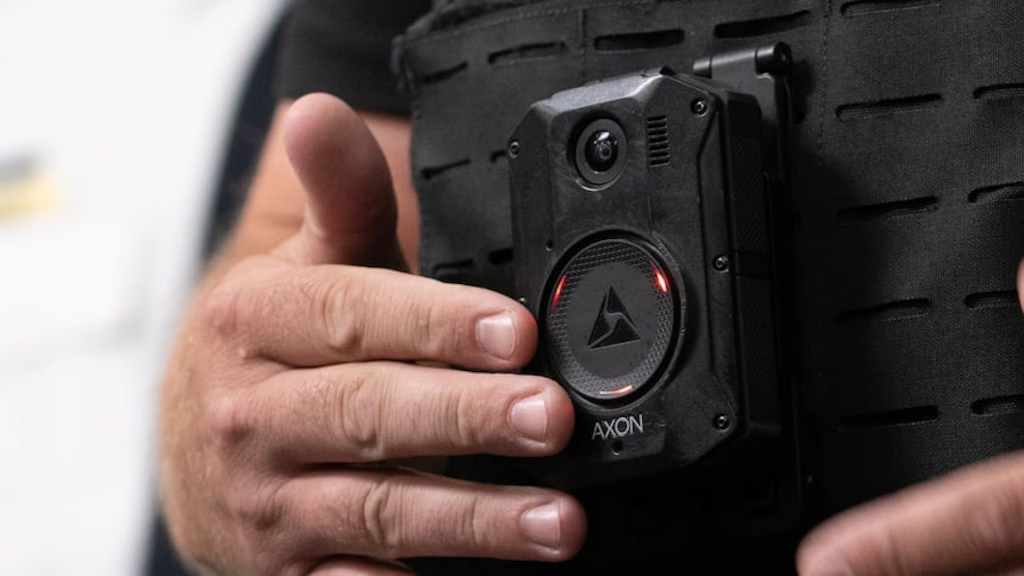
Inside Edmonton’s AI Facial Recognition Body Camera Pilot Program
A recent release of internal emails and documents from the Edmonton Police Service (EPS) has pulled back the curtain on a controversial and now-defunct pilot program. The initiative, which involved pairing body-worn cameras with artificial intelligence-powered facial recognition software, has ignited a fresh wave of debate over privacy, policing, and the ethical limits of surveillance technology in Canada.
While the pilot was publicly acknowledged to have ended in 2023, the newly disclosed records reveal previously unknown details about its scope, the specific technology tested, and the internal concerns that ultimately led to its termination.
The Pilot Program: A Closer Look at the Technology and Goals
The pilot, conducted in partnership with the Canadian tech firm Telus, was not a simple body camera trial. It was a specific test of Telus’s “Command Centre” video analytics platform. This system was designed to process footage from body cameras in near real-time, using AI to scan for and match faces against a police database.
The stated goal from EPS was to enhance officer and public safety, improve evidence collection, and increase efficiency in identifying suspects. Officials argued the technology could help locate missing vulnerable persons or identify individuals in critical incidents more swiftly.
However, the internal documents show the pilot faced significant technical and practical hurdles from the start. Officers reported issues with the functionality of the AI software, and there were concerns about the accuracy of matches, especially in diverse, real-world conditions.
Key Details Revealed by the Documents
The released emails and reports provide concrete specifics that were not part of the public narrative:
- Vendor and Software: The pilot explicitly utilized Telus’s AI-driven “Command Centre” platform for facial recognition analysis.
- Database Used: The AI was comparing captured faces against the EPS’s own internal mugshot database, not a broader national or driver’s license database.
- Operational Problems: Officers noted the system was “cumbersome,” and the AI matching often required them to be stationary for extended periods, which is impractical in dynamic police work.
- Internal Skepticism: Some within the EPS expressed early doubts about the technology’s readiness and its alignment with the service’s needs, questioning whether it was a solution in search of a problem.
The Privacy Backlash and Program Termination
Public and expert reaction to the pilot was swift and critical. Civil liberties groups, including the British Columbia Civil Liberties Association (BCCLA) and Privacy International, raised alarm bells. They argued the program constituted a form of mass surveillance and was deployed without adequate public consultation, legal framework, or transparency.
The core concerns centered on:
- Lack of Consent: Individuals in public spaces would have their biometric data (facial geometry) scanned and analyzed without their knowledge or consent.
- Racial Bias and Inaccuracy: Extensive studies have shown that many facial recognition systems are less accurate for women and people of color, raising the risk of misidentification and wrongful detention.
- Mission Creep: The fear that once implemented, the technology’s use would expand beyond its original, narrow intent, leading to pervasive tracking.
- Chilling Effect: The knowledge of constant facial scanning could deter people from participating in protests or freely assembling in public spaces.
The documents confirm that this intense public and legal pressure was a primary factor in the pilot’s cancellation. Facing a potential legal challenge from the BCCLA and growing public scrutiny, EPS leadership decided to halt the program in May 2023.
Broader Implications: A Canadian Case Study in AI Policing
The Edmonton pilot serves as a crucial case study for all Canadian municipalities considering similar technologies. It highlights the growing tension between law enforcement’s desire for high-tech tools and the public’s demand for privacy and accountability.
The Legal and Regulatory Vacuum
A significant takeaway is that Canada currently lacks comprehensive federal legislation specifically governing the use of facial recognition technology by police or private entities. This regulatory gap leaves municipalities to navigate the ethical and legal minefield on their own, often leading to ad-hoc decisions and public mistrust.
The EPS’s experience suggests that proceeding without clear legal authority and robust public dialogue is a recipe for controversy and failure.
What Does “Ended” Really Mean?
While the pilot is officially over, privacy advocates warn that the issue is far from settled. The documents reveal that the EPS may have retained some data from the pilot, and the underlying technology continues to be marketed to police services across the country.
The end of this specific trial does not mean facial recognition in Canadian policing is off the table. It underscores the need for an ongoing, national conversation to establish clear rules before such programs are tested, not after.
The Path Forward: Transparency, Regulation, and Public Trust
The story of Edmonton’s AI body camera pilot offers clear lessons for the future:
- Prioritize Public Consultation: Police services must engage communities in a meaningful way before deploying invasive surveillance technologies, explaining the benefits, risks, and safeguards.
- Demand Legislative Clarity: There is an urgent need for provincial and federal lawmakers to create a legal framework that sets strict limits, mandates transparency reports, and establishes independent oversight for police use of biometric surveillance.
- Focus on Proven Solutions: Resources might be better directed toward community-based policing, addressing systemic issues, and investing in technologies with less societal risk.
- Insist on Transparency: As this case shows, freedom of information requests are vital for public accountability. Proactive disclosure from police services is essential.
The collapse of Edmonton’s pilot program is not merely a story of a failed tech experiment. It is a demonstration of informed public pushback and the vital role of civic engagement in the digital age. It proves that when faced with opaque surveillance plans, citizens, advocates, and the media can demand answers and influence policy.
As AI continues to evolve at a breakneck pace, the debate in Edmonton will likely be repeated in cities across Canada. The question remains: Will we allow surveillance technology to define our public spaces, or will we define the strict, democratic limits under which it can operate? The outcome of this debate will shape the nature of privacy, liberty, and policing in Canada for generations to come.