Hezbollah Rejects Lebanon-Israel Border Talks and US Diplomacy
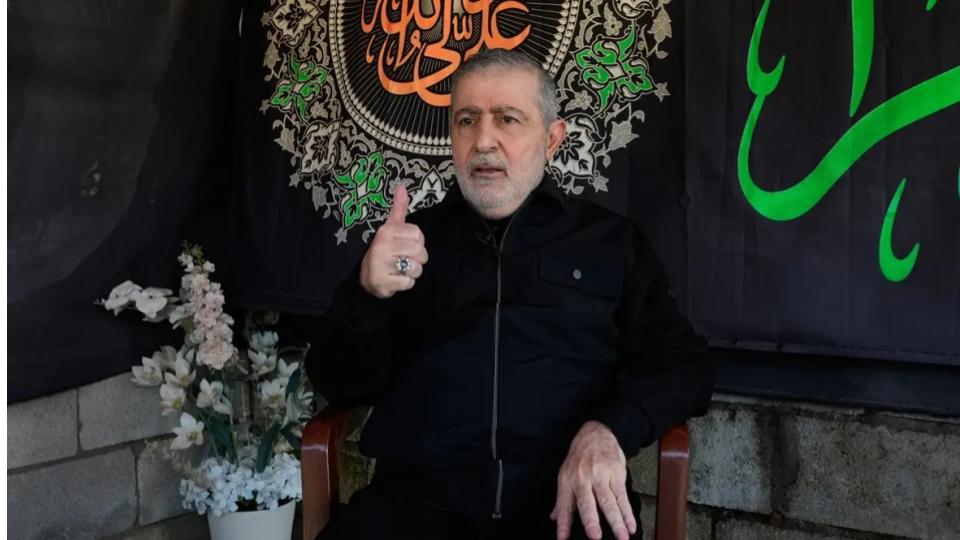
In a definitive statement that underscores the complex geopolitical landscape of the Middle East, Hezbollah’s top security official has publicly rejected the framework of ongoing U.S.-mediated talks between Lebanon and Israel. The militant group’s stance, delivered by Wafiq Safa, throws a significant obstacle in the path of diplomatic efforts aimed at resolving a long-standing and volatile border dispute. This rejection is not merely a negotiating position; it is a fundamental challenge to the authority of the Lebanese state and the international community’s approach to regional stability.
The core of the disagreement lies in Hezbollah’s unwavering demand: the complete withdrawal of Israeli forces from all occupied Lebanese territories, specifically the contested areas of Shebaa Farms and the Kfar Shuba hills. For Hezbollah, these areas are non-negotiable symbols of Lebanese sovereignty, and they insist that any talks must begin with this precondition met. This directly contradicts the incremental, step-by-step approach favored by U.S. envoy Amos Hochstein, who has been shuttling between Beirut and Jerusalem in an attempt to de-escalate tensions and establish a permanent land border.
The Stakes: More Than Just a Line on a Map
The Lebanon-Israel border is not a quiet frontier. It has been a flashpoint for conflict for decades, most recently witnessing near-daily exchanges of fire since the outbreak of the war in Gaza. The potential for a minor incident spiraling into a full-scale war is a constant concern for regional and global powers. A formal border agreement, akin to the 2022 maritime deal brokered by the U.S., is seen by many diplomats as a critical step toward cooling tensions and allowing both nations to focus on development rather than defense.
Hezbollah’s Strategic Calculus
Hezbollah’s rejection is deeply rooted in its identity and strategic objectives. Analysts point to several key reasons behind their hardline position:
- Preserving the “Resistance” Identity: Hezbollah has built its political and military legitimacy on being the vanguard of “resistance” against Israel. Agreeing to U.S.-led diplomacy, especially while the war in Gaza rages, could be perceived internally as a sign of weakness or compromise of its core principles.
- Leverage for Gaza: The border skirmishes serve as a pressure tool. Hezbollah has explicitly linked its actions on the Lebanon-Israel front to the situation in Gaza, using its military posture to divert Israeli resources and signal solidarity with Hamas. A border deal now would diminish this crucial leverage.
- Undermining State Authority: By setting its own foreign policy conditions, Hezbollah reinforces its status as a state-within-a-state. Its rejection directly challenges the authority of the Lebanese government and army, which are officially party to the U.S.-mediated talks.
- Distrust of US Mediation: Hezbollah views the United States not as a neutral arbiter but as a biased party fully aligned with Israel. Therefore, any proposal emerging from Washington is inherently suspect and unlikely to address what the group sees as fundamental injustices.
The U.S. and Lebanese Government’s Dilemma
This rejection places the Lebanese government in an extraordinarily difficult position. Officially, Beirut supports a diplomatic solution and has engaged with Hochstein’s mission. However, the government lacks the political or military power to override Hezbollah’s veto, especially on an issue central to the group’s *raison d’être*. The result is a paralyzed state, unable to finalize an agreement that could bring economic and security benefits to its beleaguered citizens.
For the United States and envoy Amos Hochstein, the challenge is now monumental. Their strategy relied on a sequenced approach: first calm the fighting through a ceasefire in Gaza, then work diligently on the land border agreement. Hezbollah’s preemptive dismissal of the diplomatic framework threatens to collapse this process before it truly begins. It forces a reevaluation of whether any deal is possible without Hezbollah’s direct and explicit buy-in—a scenario that seems increasingly unlikely.
The Specter of Escalation
The most immediate and dangerous consequence of this diplomatic impasse is the heightened risk of a wider war. With no political track to fall back on, the situation remains governed by the logic of military deterrence and retaliation. A single miscalculation, a errant rocket, or a targeted assassination could quickly shatter the precarious “rules of engagement” that have so far prevented all-out conflict. Hezbollah’s statement signals that it sees continued military pressure, not diplomacy, as the primary tool for achieving its goals in the current climate.
Looking Ahead: A Region at a Crossroads
The rejection of border talks by Hezbollah is more than a regional dispute; it is a microcosm of the larger struggles defining the Middle East. It highlights the diminishing power of sovereign states in the face of well-armed non-state actors. It underscores the severe limitations of U.S. diplomacy in a region where America is often viewed as a partisan player rather than an honest broker. Furthermore, it demonstrates how the war in Gaza has effectively frozen, or even reversed, potential normalization processes across the Levant.
The path forward is fraught with risk. The international community, led by the U.S., must now decide whether to double down on diplomacy, seeking creative ways to address Hezbollah’s core grievances (or those of its Lebanese political allies), or to prepare for the grim possibility of a containment strategy should open war erupt. For the people of Lebanon and northern Israel, the continued stalemate means more displacement, more economic devastation, and life under the constant shadow of sirens and shells.
Ultimately, Wafiq Safa’s words are a stark reminder that in the Middle East, the most intractable conflicts are rarely just about borders. They are about history, identity, resistance, and the raw balance of power. Until these deeper currents are navigated, any line drawn on a map by foreign diplomats will remain fragile and contested. The rejection of talks is not the end of the story, but it is a clear signal that the chapter of quiet U.S.-led diplomacy, as previously envisioned, has closed. What comes next will depend on the battlefield, the political corridors of Beirut and Tehran, and the unpredictable trajectory of a war being waged over 100 miles away in Gaza.