
Vibrant Asian New Year Festivals Celebrate Faith and Harvest Traditions
While the stroke of midnight on December 31st is a global phenomenon, vast regions of Asia celebrate the New Year on a different, more celestial schedule. These celebrations, deeply rooted in ancient agricultural cycles and spiritual beliefs, offer a dazzling tapestry of rituals, colors, and community spirit. From the fireworks over bustling cities to the quiet prayers in rural temples, Asian New Year festivals are a profound testament to the enduring connection between humanity, faith, and the land.
More Than a Date: The Lunar and Solar Foundations
Unlike the fixed Gregorian calendar, many traditional Asian New Years are lunisolar, meaning their dates are determined by both the moon’s phases and the sun’s position. This system inherently ties the celebration to the rhythms of nature. The most widely observed is the Lunar New Year, marking the first new moon of the lunisolar calendar, typically falling between January 21 and February 20. This timing is no accident; it traditionally coincides with the end of the winter harvest and the beginning of spring, a period of renewal and hope.
Similarly, festivals like Songkran in Thailand and Pi Mai Lao in Laos align with the solar calendar, usually in mid-April. This period marks the end of the dry season and the hottest time of the year, making the symbolic and literal act of cleansing through water both practical and spiritual. These calendars remind us that for countless generations, the “New Year” was less about a party and more about a crucial pivot in the cycle of survival and gratitude.
A Tapestry of Celebrations: From Lion Dances to Water Fights
The ways in which these festivals are manifested are as diverse as the cultures themselves, yet common threads of purification, gratitude, and family unity weave them together.
Lunar New Year: Family, Feasts, and Fortunes
Celebrated across China, Vietnam (Tết), Korea (Seollal), and diasporas worldwide, Lunar New Year is a multi-day spectacle. Core traditions include:
- Reunion and Respect: The festival is anchored by the family reunion dinner on New Year’s Eve, an event so important it sparks the world’s largest annual human migration. Paying respect to ancestors is also paramount, with visits to tombs and offerings made at home altars.
- Symbolic Cleansing: Homes are thoroughly cleaned before the New Year to sweep away any lingering bad luck, making way for incoming fortune.
- Vibrant Symbolism: The color red, representing luck and vitality, is everywhere—in decorations, clothing, and lai see (red envelopes containing money). Lion and dragon dances, with their thunderous drums, are performed to ward off evil spirits.
- Propitiatory Foods: Every dish carries meaning. Dumplings resemble ancient gold ingots, whole fish symbolizes abundance, and sticky rice cakes promise a “higher” year.
Songkran and Pi Mai Lao: The Great Water Festival
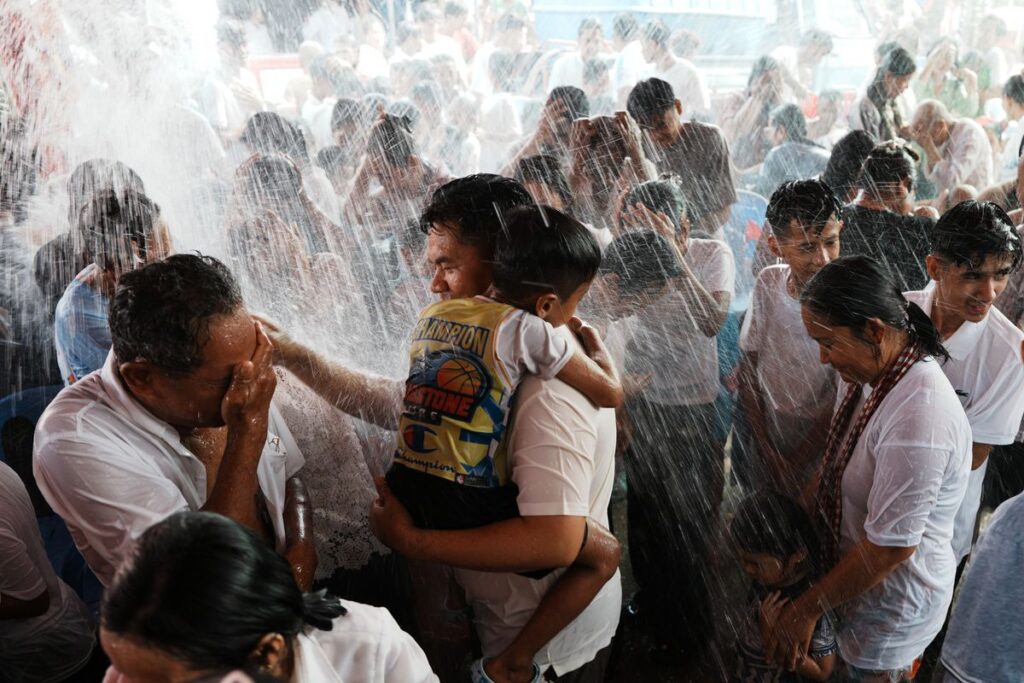
In Southeast Asia, the New Year in April takes a dramatically refreshing form. Rooted in Buddhist tradition, Songkran and Pi Mai Lao begin with serene acts of merit-making:
- People visit temples to offer food to monks, bathe Buddha statues in fragrant water, and gently pour water over the hands of elders to seek blessings and show respect—a practice known as rod nam dam hua.
- This act of symbolic washing away of the past year’s misfortunes evolves into joyous, large-scale water fights on the streets. Water guns, buckets, and hoses become tools of communal joy, cooling off the community and literally washing everyone into the New Year with a clean slate.
- Sand is brought into temple courtyards to be sculpted into stupas (pagodas), often decorated with flags, as an act of merit and a symbolic return of the dust carried away on one’s feet throughout the year.
Other Harvest-Focused Celebrations
Beyond these major festivals, other regions mark their New Year with direct gratitude for the harvest. For instance, the Aluth Avurudu in Sri Lanka and Puthandu in Tamil communities, also in April, center on the consumption of the first harvest fruits and the lighting of hearths at an astrologically auspicious time.
The Enduring Spirit: Faith, Community, and Cultural Identity
At their core, these varied New Year traditions serve profound purposes that transcend mere festivity. They are powerful engines for cultural preservation</b, passing down languages, rituals, and values to younger generations. They reinforce social and familial bonds, mandating a return to one’s roots and reinforcing respect for the family structure and ancestry.
Furthermore, they are living expressions of religious and spiritual faith. Whether offering prayers at a Buddhist temple, making offerings at a home altar for Taoist deities or ancestors, or performing Hindu rites, the spiritual dimension is inseparable from the celebration. It is a time to express gratitude for the past year’s bounty and to pray for health, prosperity, and good fortune in the year to come.
In an increasingly globalized and fast-paced world, these festivals act as an annual anchor. They are a scheduled reminder to pause, reflect on one’s place in the natural and spiritual order, express gratitude for the harvest—be it agricultural or personal—and step into the future surrounded by the strength of community and tradition. The vibrant reds of Lunar New Year, the respectful water pouring of Songkran, and the shared meals across all these cultures are more than just beautiful customs; they are the heartbeat of a living heritage, continually renewing itself with each passing year.

