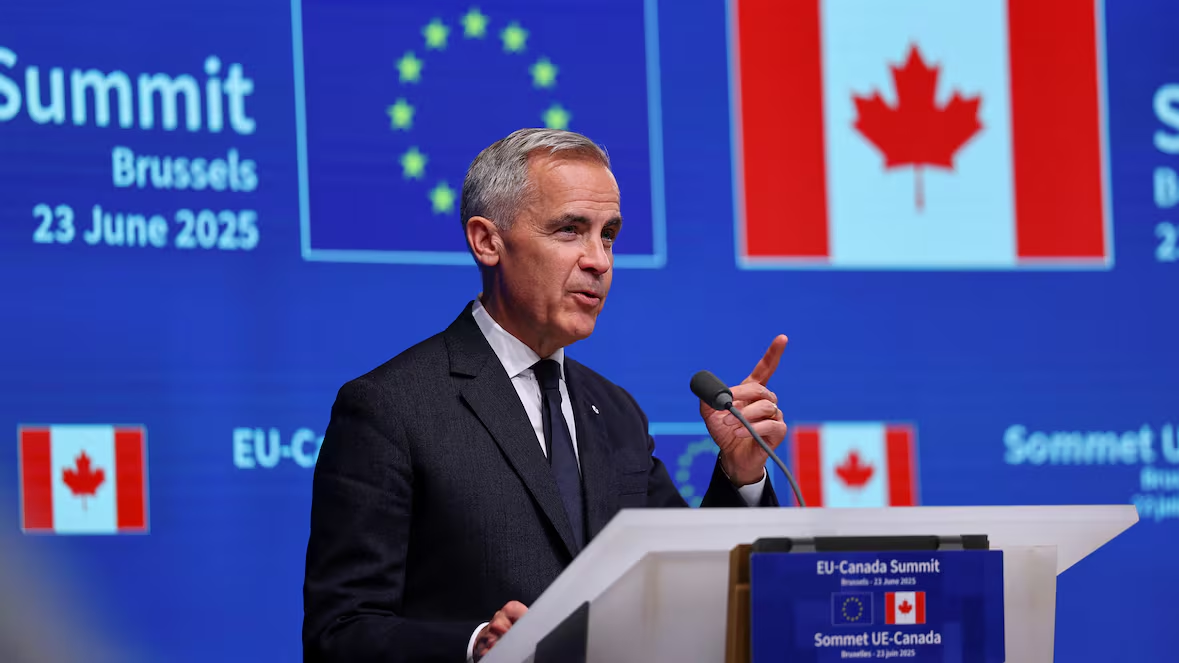
In a significant move to bolster international defense cooperation, Canada has officially become a contributing partner to the European Union’s European Peace Facility (EPF). This strategic decision, announced by Foreign Affairs Minister Mélanie Joly, marks Canada’s formal entry into the EU’s primary mechanism for financing military aid and peacekeeping operations worldwide. By aligning with this key European initiative, Canada is not only deepening its transatlantic ties but also amplifying its capacity to support global stability and assist allied nations in need.
What is the European Peace Facility?
To understand the weight of Canada’s new commitment, it’s essential to grasp what the EPF represents. Established in 2021, the European Peace Facility is a financial instrument outside the EU’s regular budget that allows the bloc to act more swiftly and flexibly in the realm of defense and peace. It serves a dual, critical purpose:
- Funding Military Assistance: The EPF provides lethal and non-lethal military equipment to partner countries, such as Ukraine, and supports the capacity-building of armed forces globally.
- Supporting Peace Missions: It finances the common costs of EU-led military missions and operations, including those under the Common Security and Defence Policy (CSDP).
In essence, the EPF is the EU’s tool for turning strategic defense priorities into tangible, on-the-ground support. Canada’s participation means it will now help fund and shape these crucial initiatives.
Why Canada’s Partnership Matters
Canada’s accession to the EPF is more than a symbolic gesture; it’s a practical and powerful enhancement of collective security efforts. For a nation like Canada, which has historically contributed to global peace through NATO and UN missions, this opens a new, direct channel for coordinated action with its European allies.
Amplifying Support for Ukraine
The most immediate and visible impact of this partnership will be on the support for Ukraine. The EPF has been a multibillion-euro lifeline for Kyiv, reimbursing member states for the military aid they send. By contributing to the EPF, Canada is effectively multiplying the value of its own aid. Its funds will help replenish the pot that reimburses all donors, encouraging continued and enhanced contributions from European nations and ensuring a steady, unified flow of assistance to the Ukrainian front lines.
Deepening Transatlantic Bonds
This move strategically deepens Canada’s security relationship with the European Union at a pivotal time. It signals a commitment to burden-sharing and integrated defense planning beyond the NATO framework. As global threats become more complex, such flexible, multi-layered cooperation between like-minded democracies is indispensable. Canada is positioning itself as a core partner in the European security architecture.
Expanding Global Reach and Impact
Beyond Ukraine, the EPF funds missions and assistance in Africa, the Middle East, and the Balkans. Canada’s contribution will now help stabilize regions far from its shores, supporting initiatives like military training in Mozambique or peacekeeping in the Horn of Africa. This allows Canada to project its commitment to a rules-based international order in a more direct and impactful way, leveraging the EU’s extensive diplomatic and operational networks.
The Mechanics of Canada’s Contribution
Canada has committed an initial 15 million euros (roughly CAD $22 million) to the EPF for the 2024 fiscal year. This financial contribution grants Canada a seat at the table—literally. As a participating partner, Canada will have observer status on the EPF’s committee, allowing it to provide input on how the facility’s funds are allocated and which initiatives are prioritized. This ensures Canadian values and strategic interests are reflected in the program’s operations.
While Canada will not have a veto, its voice in these deliberations will be influential, fostering a true partnership of shared decision-making. This model of contribution is similar to how non-EU nations like Norway have engaged with the facility, creating a blueprint for effective third-country participation.
A Strategic Shift in Canadian Foreign Policy
This decision reflects a broader and more assertive evolution in Canada’s approach to international security. For years, critics have pointed to a gap between Canada’s diplomatic rhetoric and its defense spending or tangible military support mechanisms. Joining the EPF is a concrete step to close that gap.
It demonstrates a recognition that in today’s world, security is indivisible. Threats to stability in Europe or Africa have direct repercussions for Canadian security and prosperity. By investing in a shared instrument like the EPF, Canada is making a pragmatic choice to address these challenges collectively, ensuring its resources are used with maximum efficiency and impact alongside its closest allies.
Addressing Potential Criticisms
Some may question the focus on military financing. However, the EPF and Canada’s involvement must be seen as part of a comprehensive strategy. Military aid, particularly in the face of unprovoked aggression like Russia’s invasion of Ukraine, is a necessary component of preserving sovereignty and creating the conditions for diplomacy and long-term development to succeed. This move complements, rather than replaces, Canada’s significant investments in humanitarian aid and reconstruction.
The Road Ahead: A More Secure and Cooperative Future
Canada’s entry into the European Peace Facility is a landmark development. It is a clear signal that Canada is ready to shoulder its responsibilities in a more dangerous world through innovative and cooperative means. This partnership will:
- Enhance the speed and scale of Western military assistance to Ukraine.
- Forge stronger institutional links between Canadian and European defense establishments.
- Extend Canada’s positive influence on stability operations in critical regions globally.
In an era defined by strategic competition and complex conflicts, no single nation can uphold peace alone. By choosing to become a tent in the EU’s loan system for arms and aid, Canada is strengthening the entire alliance. This decision fortifies global security networks, reaffirms Canada’s role as a dedicated and pragmatic ally, and ultimately, contributes to a world where sovereignty and stability are collectively defended. The path to a more secure future is paved with such partnerships, and Canada has now firmly planted its flag on that road.