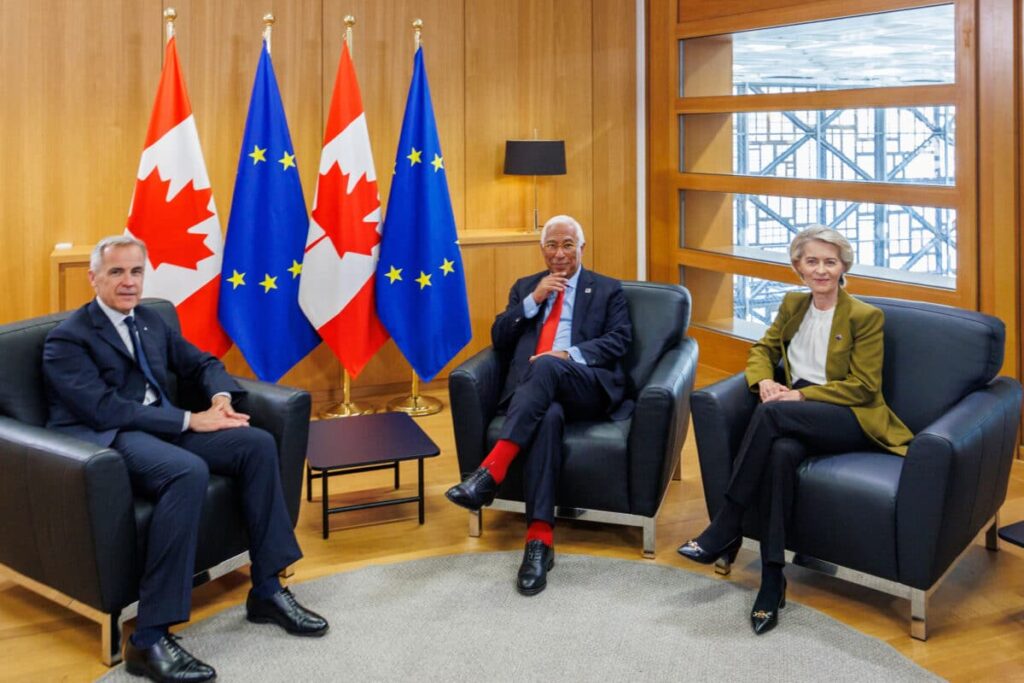
In a landmark decision that reshapes the landscape of international security, the European Union has formally agreed to welcome Canada into its flagship defence initiative, the Permanent Structured Cooperation (PESCO). This historic move marks the first time a non-European, non-EU associated country has been granted such access, signaling a powerful commitment to deepening transatlantic bonds in an era of heightened geopolitical uncertainty. For Canada, this is more than an invitation; it is a strategic seat at the table where Europe’s future defence capabilities are being forged.
What is PESCO and Why Does This Decision Matter?
Established in 2017, PESCO represents the EU’s most ambitious step toward a stronger and more integrated European defence. It’s a framework where 25 EU member states collaborate on joint defence projects, from developing next-generation military platforms and enhancing cyber resilience to improving strategic mobility and medical response. The goal is clear: to build a more capable, agile, and interoperable European defence technological and industrial base.
Canada’s accession is a game-changer for several reasons:
- Breaks New Ground: It sets a precedent for like-minded democratic partners to engage directly with EU defence integration.
- Strengthens NATO’s European Pillar: By aligning Canadian innovation and military expertise with European projects, it reinforces the transatlantic alliance from within the EU’s own structures.
- Enhances Practical Cooperation: It moves beyond political statements to tangible collaboration on research, development, and the acquisition of critical capabilities.
The Strategic Drivers: A Convergence of Interests
This decision did not occur in a vacuum. It is a direct response to a rapidly evolving global security environment, most notably the war in Ukraine. The conflict has been a stark reminder of the need for democracies to pool resources, share technology, and present a united front against aggression and authoritarianism.
For the European Union
The EU gains a proven, capable, and geographically strategic partner. Canada brings:
- Arctic Expertise: As an Arctic nation with vast experience in northern operations, Canada’s knowledge is invaluable for projects related to domain awareness and security in the High North.
- Technological and Industrial Capacity: Canadian firms are leaders in fields like artificial intelligence, space technology, and cyber defence—all priority areas for PESCO.
- A Reinforced Transatlantic Link: Embedding a key NATO ally into EU defence projects helps ensure compatibility and reduces duplication, making the entire Atlantic alliance stronger.
For Canada
This agreement represents a strategic deepening of its engagement with Europe, offering:
- Direct Access to Innovation: Canadian companies and researchers can now compete for and contribute to cutting-edge EU defence projects, boosting innovation at home.
- Influence on Standards: Participation allows Canada to help shape the technical standards and operational concepts that will define future allied interoperability.
- A Tangible Commitment to European Security: Following its significant support for Ukraine, this is a long-term investment in a stable and secure Europe, which is directly in Canada’s national interest.
The Path to Participation: What Comes Next?
The EU’s agreement is the crucial political green light, but the journey is just beginning. The next steps are procedural and practical:
- Framework Agreement Finalization: Canada and the EU will now work to finalize a formal administrative arrangement. This will outline the specific terms, conditions, and security protocols for Canada’s involvement.
- Project-by-Project Approval: Canada will not have blanket access to all 70+ PESCO projects. Interested Canadian entities will need to apply to join specific projects, and the participating member states for each project must unanimously agree to their inclusion.
- Industry and Research Mobilization: The onus will be on Canadian government departments, defence contractors, and academia to identify opportunities and build the partnerships necessary to contribute meaningfully.
Potential Projects and Areas of Collaboration
While the specific projects Canada will join are yet to be determined, several PESCO initiatives align perfectly with Canadian strengths and strategic priorities:
- Cyber Rapid Response Teams (CRRTs): Enhancing collective resilience against hybrid threats.
- Strategic Air Transport for Outsized Cargo (SALIS): Improving the ability to move heavy equipment—a lesson underscored by the Ukraine war.
- Maritime Unmanned Anti-Submarine System (MUSAS): Leveraging Canadian naval and undersea expertise.
- EU Space Surveillance and Tracking (EU SST): Collaborating in the increasingly critical domain of space security.
Challenges and Considerations
Despite the overwhelming positive momentum, this new partnership is not without its complexities.
- Third-Country Status: Canada will participate as a “third country,” meaning it will have contributing status without decision-making rights on the overall PESCO governance.
- Protecting Sensitive Information: Robust mechanisms for securing classified information and intellectual property will be paramount and require meticulous negotiation.
- Managing Expectations: The benefits will be realized over the long term through sustained commitment and investment from both sides.
A Watershed Moment for Transatlantic Ties
The inclusion of Canada in PESCO is far more than a bureaucratic adjustment. It is a symbolic and substantive leap toward a new model of transatlantic defence cooperation. It acknowledges that the threats facing democratic nations—from conventional warfare to cyber attacks and disruptive technologies—are too complex for any single country or even traditional alliance structures to handle alone.
This move creates a flexible, project-driven pipeline for transatlantic innovation, ensuring that Canadian and European forces can operate seamlessly together for decades to come. It solidifies Canada’s role not just as a supporter of European security from across the ocean, but as an integrated contributor to its very foundation.
As the administrative details are finalized, one thing is clear: the door to a deeper, more practical transatlantic partnership has been opened. The collaboration between Canada and the European Union in PESCO promises to build a more secure, technologically advanced, and united democratic front in an increasingly contested world. The new era for transatlantic security has officially begun.