
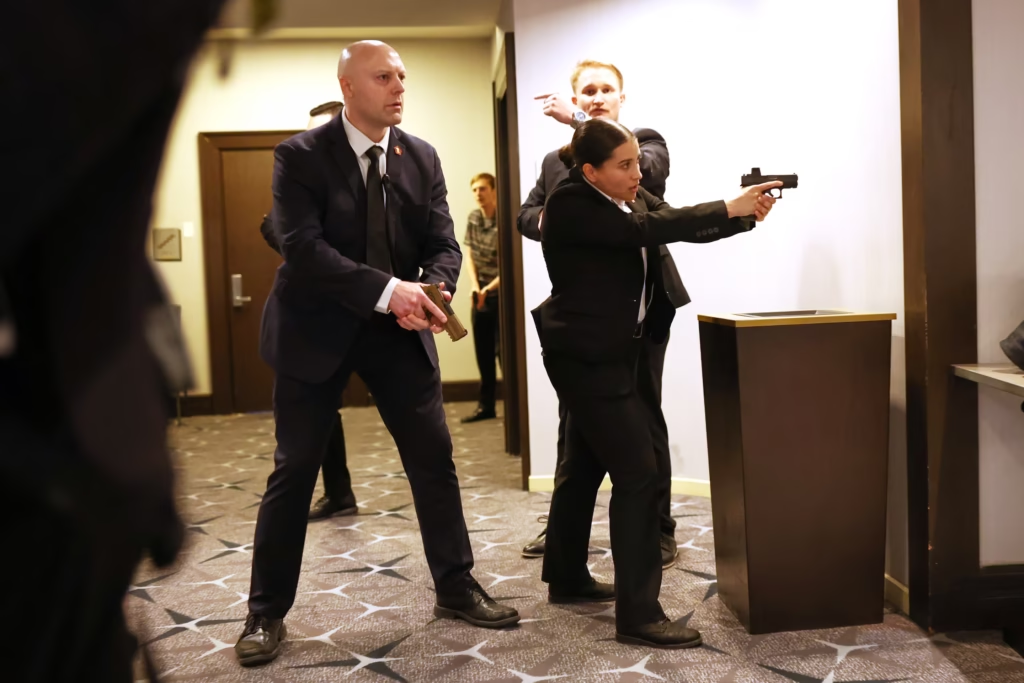
Shooting Suspect In White House Correspondents’ Dinner Incident Identified As California Teacher
The quiet, predictable life of a California high school teacher has been shattered, following his arrest in connection with a dramatic incident near the White House Correspondents’ Dinner. The suspect, now at the center of a national security investigation, held a position of public trust in the classroom, a detail that has stunned students, parents, and law enforcement alike.
This article delves into the profile of the accused, the sequence of events that led to the lockdown, and the broader implications for security at high-profile national events.
Who Is The Suspect? A Look At The Accused
Authorities have officially named the suspect as William B. Owens, a 42-year-old resident of Garden Grove, California. For the past eight years, Owens has been employed as a special education teacher at a local high school, where he was reportedly well-regarded by some colleagues for his dedication to students with learning disabilities.
However, a starkly different picture emerges from law enforcement records and social media analysis. Investigators are currently delving into Owens’ digital footprint, which allegedly contains a trail of radical political rhetoric and fascination with violent acts.
Key details about the suspect:
- Occupation: Special education teacher at a public high school in Orange County.
- Prior Record: No significant criminal history beyond minor traffic violations.
- Motivation: Authorities cite “manifestos” and online posts indicating deep-seated grievances against the political establishment and mainstream media.
- Method of Attack: Used a rented U-Haul truck to breach security barriers near the White House.
The transition from educator to alleged assailant has prompted intense scrutiny of how such radicalization can go undetected in community-facing roles.
The Incident: Chaos At The White House Correspondents’ Dinner
The event unfolded on a Saturday evening, just as the annual White House Correspondents’ Dinner was concluding. Hundreds of journalists, politicians, and celebrities were inside the hotel when the suspect allegedly drove a rented truck into a security checkpoint.
Timeline of Events
- 10:30 PM ET: The suspect approaches the vehicle barrier near Lafayette Square.
- 10:32 PM ET: A U-Haul truck breaches the outer security perimeter, striking a temporary barricade.
- 10:34 PM ET: Secret Service personnel swarm the vehicle; two officers sustain non-life-threatening injuries.
- 10:45 PM ET: The suspect is subdued and taken into custody without further incident.
While initial reports suggested a shooting, the suspect was disarmed before he could fire a weapon. However, law enforcement recovered a loaded handgun, a knife, and several rounds of ammunition from the vehicle. The attack was deliberately timed to coincide with the dinner’s end, when maximum chaos could be inflicted.
From Classroom To Courtroom: The Radicalization Factor
The most jarring aspect of this case is the suspect’s profession. How does a man entrusted with the education of children become a violent extremist? Preliminary investigations point toward a classic pattern of online radicalization.
The Digital Paper Trail
Friends and former colleagues describe Owens as a quiet, introverted individual who rarely discussed politics in person. However, online, a different persona emerges. Investigators uncovered accounts on fringe forums and encrypted messaging apps where the suspect allegedly:
- Posted detailed grievances against the “corporate media machine.”
- Praised the actions of previous lone-wolf attackers.
- Shared materials related to “accelerationism,” a belief that society must be destabilized to trigger a revolution.
This stark dichotomy between his professional life and private beliefs raises critical questions about the limitations of background checks and workplace surveillance.
Security Implications For National Events
This attack, while ultimately contained, exposes significant vulnerabilities in the security architecture around the White House and its associated events. The White House Correspondents’ Dinner is a highly publicized affair, and while the hotel perimeter is secure, the outer streets remain public thoroughfares.
Lessons learned from this breach:
- Vehicle Bombs Still a Primary Threat: Rented trucks and vans remain the weapon of choice for attackers seeking mass casualties due to their availability and ease of concealment.
- Human Intelligence Gaps: The fact that a teacher with radical views slipped through the net highlights the need for more proactive monitoring of threat indicators, even in non-conventional terrorist profiles.
- Media Target Symbolism: The dinner itself is a symbol of the press-politician relationship. Attacking it sends a clear message of contempt for democratic institutions.
Current Legal Status And Next Steps
William B. Owens is currently being held in federal custody without bond. He faces federal charges including assault on a federal officer, attempted murder, and use of a dangerous weapon during a crime of violence.
A preliminary hearing is scheduled for next week. The defense is expected to argue for a competency evaluation, citing the suspect’s history of mental health struggles. Meanwhile, the very school district that employed him is launching an internal review of their hiring practices and employee monitoring systems.
The Bigger Picture: A Teacher’s Betrayal of Trust
The community in Garden Grove is reeling. Parents are expressing outrage and confusion. “He seemed like a normal guy,” one parent told local reporters. “You think you know someone. You let them into your child’s life. Then this.”
The case serves as a chilling reminder that extremism does not always wear a uniform. It can exist behind a desk, grading papers, hiding in plain sight. For now, the suspect remains in a D.C. holding cell, his former life as an educator shattered by the weight of the accusations against him.
Conclusion
The White House Correspondents’ Dinner shooting suspect, identified as a California teacher, presents a complex profile that defies easy categorization. This incident is not just a story about a failed attack; it is a story about radicalization in the digital age, the hidden lives of public servants, and the constant vigilance required to protect democratic rituals. As the legal process unfolds, the nation watches to understand how a man who taught children could allegedly attempt to murder those who report on the nation’s leaders.

