
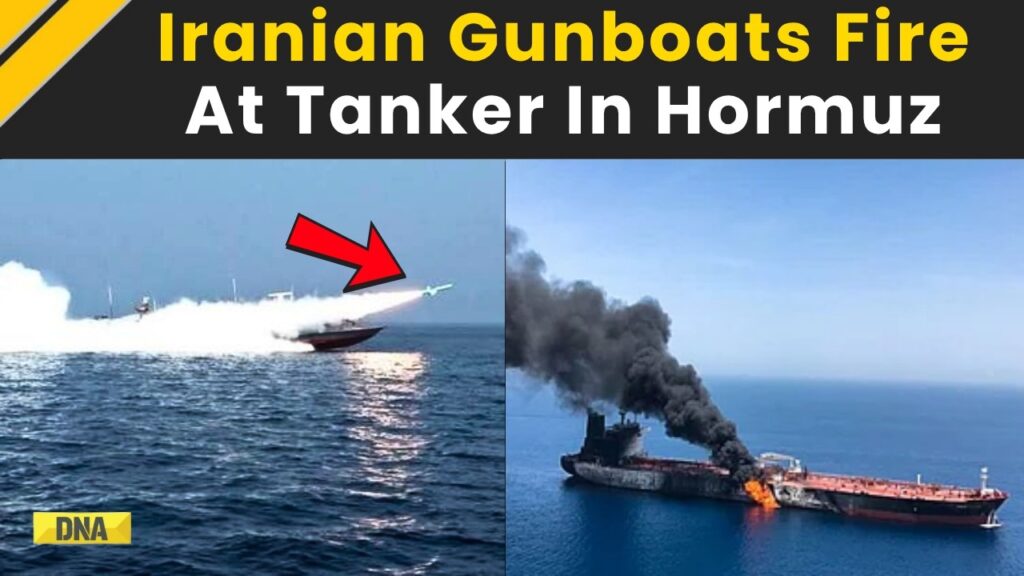
Iranian Forces Fire on Commercial Tanker in Strategic Strait
The world’s most critical maritime chokepoint is once again the flashpoint for a dangerous confrontation. In a serious escalation of regional tensions, Iranian naval forces opened fire on a commercial oil tanker transiting the Strait of Hormuz. This incident, involving the Marshall Islands-flagged vessel *Advantage Sweet*, has sent shockwaves through global energy markets and underscored the ever-present risk of a wider conflict in the Middle East.
The narrow Strait of Hormuz is the artery through which approximately one-fifth of the world’s seaborne oil passes. Any disruption here has immediate consequences for global energy security and prices. This latest attack is not an isolated event but part of a troubling pattern of harassment and seizure of vessels, raising urgent questions about the safety of international shipping and the stability of a region already on edge.
The Incident: A Detailed Account of the Attack
According to reports from the United States Navy’s Fifth Fleet, the incident occurred in the afternoon hours as the *Advantage Sweet*, a Suezmax crude oil tanker, was transiting international waters in the Strait. The vessel was approached at high speed by multiple fast-attack craft belonging to Iran’s Islamic Revolutionary Guard Corps (IRGC) Navy.
Here is a breakdown of the key events:
- Aggressive Approach: Multiple IRGC fast boats closed in on the tanker, a tactic often used to intimidate merchant crews.
- Direct Fire: Personnel on the Iranian craft then opened fire with crew-served and small arms directly at the *Advantage Sweet*.
- Bridge Impact: Several rounds struck the ship’s accommodation block and bridge windows, causing damage but, critically, no injuries to the crew.
- Swift Departure: Following the firing, the Iranian vessels broke contact and departed the area. The *Advantage Sweet* continued on its course, reportedly sustaining only minor damage.
The U.S. Navy stated that its forces monitored the entire incident. The tanker’s crew is safe, and the vessel has since made port. The motive appears to have been harassment and intimidation, as no attempt was made to board or seize the ship on this occasion.
Why the Strait of Hormuz is a Global Flashpoint
To understand the gravity of this event, one must grasp the strategic importance of the location. The Strait of Hormuz is a narrow passage between Oman and Iran, connecting the oil-rich Persian Gulf with the Gulf of Oman and the open ocean.
The World’s Energy Lifeline
This waterway is indispensable to the global economy. Each day, millions of barrels of oil from Saudi Arabia, the United Arab Emirates, Kuwait, Iraq, and Qatar flow through this choke point. A major closure or sustained conflict in the Strait would trigger an immediate and severe global energy crisis, spiking prices and threatening economic stability worldwide. It is, quite literally, the world’s most important oil transit corridor.
A History of Tension and Confrontation
Iran has long viewed its proximity to the Strait as a key strategic lever. For decades, Tehran has threatened to disrupt shipping in the Strait in response to international pressure, particularly over its nuclear program. This latest firing incident follows a pattern of increasingly bold actions by the IRGC Navy, which has seized or harassed over a dozen internationally flagged merchant vessels in the past two years alone. These actions are widely seen as a form of asymmetric warfare and a means for Iran to project power and retaliate against perceived adversaries without triggering a full-scale war.
Analyzing Iran’s Motives: What is Tehran’s Endgame?
The attack on the *Advantage Sweet* did not happen in a vacuum. It is a calculated move within a broader geopolitical struggle. Analysts point to several potential motivations behind Iran’s aggressive posture.
Key strategic objectives likely include:
- Bargaining Chip: Disrupting or threatening shipping provides Iran with a high-stakes bargaining chip in its negotiations with the West, particularly regarding sanctions relief and the nuclear deal (JCPOA).
- Retaliation: These actions are often framed as retaliation for perceived slights, such as the U.S. seizure of Iranian oil cargoes or actions by Israel, which Iran accuses of targeting its interests.
- Regional Dominance: By demonstrating control over the Strait, Iran seeks to position itself as the indispensable regional power, forcing neighbors and global powers to contend with its influence.
- Military Messaging: Harassing commercial ships serves as a live-fire exercise and a demonstration of the IRGC’s capability to execute its threat to close the Strait if necessary.
Global Response and Implications for Shipping
The international response has been one of condemnation and concern. The United States has vowed to continue its patrols in the region and protect the “rules-based international order.” Regional Gulf partners, whose economies are entirely dependent on the free flow of oil, view these incidents with extreme alarm.
For the global shipping and insurance industries, the risks are now tangibly higher. The Strait of Hormuz has been designated a “High Risk Area” by marine insurers for years. Incidents like this will likely lead to:
- Increased war risk insurance premiums for vessels transiting the region.
- Higher operational costs for shipping companies, which may be passed on to consumers.
- Potential rerouting of some vessels, adding time and cost to voyages.
- Enhanced security protocols and possible demands for naval escorts for commercial convoys.
Navigating a Perilous Future
The firing on the *Advantage Sweet* is a stark reminder that the simmering tensions in the Middle East can boil over at any moment, with global consequences. While a full-scale closure of the Strait remains a worst-case scenario, the persistent low-level harassment creates a climate of fear and uncertainty for the 30% of the world’s seaborne crude oil that passes through these waters.
The incident underscores the fragile nature of global energy security and the complex challenges of maintaining freedom of navigation in a contested region. As long as deep-seated geopolitical conflicts between Iran, the West, and regional rivals remain unresolved, the Strait of Hormuz will continue to be a tinderbox, with commercial tankers caught in the crossfire. The world will be watching closely, hoping that this latest provocation does not spark the conflagration that all sides wish to avoid.

